The agencies at Bouges-le-Château
These agencies offer a selection of luxury properties vente at Bouges-le-Château. Feel free to contact them for personalized assistance.

 English$ USD · m²


The advertiser did not provide an english description for this listing.
…By Patrice Besse


Majestic castle built in the 19th century, with 930 m² of living space, flanked by several outbuildings, the whole offering simply exceptional usable floor space (currently 25 bedrooms in all the buildings, as well as numerous reception rooms, seminar rooms, technical and practical rooms). Uninterrupted views over the parklands, pond and woods that make up the entire property, which spans exactly 29.8 hectares. ECD: D/B Price before tax €1,390,000 (Price excluding fees: €1,320,000 - Agency fees: app. 5% VAT payable by the purchaser) Property presented by Barnes Centre Sologne Val de Loire : +(33)06.26.10.46.13 – [email protected]. ‘Information on the risks to which this property is exposed is available on the Géorisques website: www.georisques.gouv.fr'
…By Barnes Sologne Val De Loire


Located in a small municipality in the Indre department, the property is about 35 kilometers from Châteauroux, 30 kilometers from Vierzon, and 2 hours and 30 minutes from Paris. It includes a castle, a caretaker's house, farm buildings, and predominantly wooded land, complemented by a recreational park. The Castle was built in two parts, as the central part burned down in the 19th century. The main building is a quadrangular construction with two levels, each pierced by three bays. It is topped with a high hipped roof. The tower has three levels, the last of which is illuminated by a hanging dormer window, surmounted by a triangular pediment. On each side, but oriented differently, are two wings. Their roofs, in the Mansard style, combining tiles and slates, indicate that these parts are older. The exteriors were renovated a few years ago, as were some of the roofs. The castle rises on two main levels (excluding the attic). The ground floor includes the main living rooms (three lounges, a dining room), a technical area with the kitchen, pantry, laundry room, and a sleeping area with a bedroom and a bathroom. The first floor has 7 bedrooms and 3 bathrooms. The bedrooms are comfortable and warm, mostly with a washbasin. A staircase provides access to the unconverted attic. Several dependencies complement this property. On the right of the Castle, a long building was constructed in the early 20th century, which now houses the caretaker's apartment, divided into a living room, kitchen, and three bedrooms on two levels. Then, a relaxation area with a large living room on the garden level and two bedrooms and a bathroom upstairs. Finally, there is an old saddlery. The land consists of a 28-hectare forest massif, mainly populated by cedars undergoing conversion to regular coppice, managed under a Simple Management Plan (PSG). The rest of the property includes a leisure park. EPC: F/E Price HAI: €695,000 (net seller price: €660,000 - fees of 5.3% including VAT borne by the purchaser). Presented by Pierre-Antoine GUINOT: +33(0)6.30.77.08.75 - [email protected]. Information on risks associated with this property is available on the site: www.géorisques.gouv.fr.]}]}>
…By Barnes Sologne Val De Loire


19th century castle with outbuildings, swimming pool and pond on 29ha 75a 17ca In the heart of Boischaut Nord, 20 minutes from Valençay, 19th century castle of approx. 930 m² on 3 levels includes 45 rooms of which 20 bedrooms, 11 shower rooms and 5 bathrooms. Numerous outbuildings covering approx. 1500 m²: an apartment, conference rooms, relaxation rooms, reception rooms, video recording room, bar with license 4, chapel, dovecote, greenhouse, agricultural buildings Central heating: chipped wood boiler The entire property extends over a park of 29ha 75a 17ca with terrace and swimming pool, orchard, pond, woods and meadows. Information on the risks to which this property is exposed is available on the Géorisks website: www.georisks.gouv.fr.
…By Chateaux Et Patrimoine

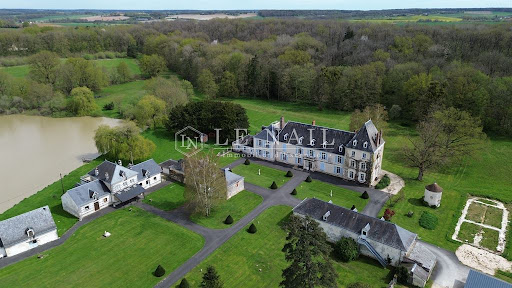


Ref.4254 : French chateau for sale with lodges and estate of 71 acres. This beautiful château is hidden within its 71 acres (29ha) estate. A private location with good access to local amenities, Tours around 1h drive away and autoroute links to Paris and beyond. Late 19th C. chateau, constructed on the foundations of a manor that dates back to the 14th century. It is composed of a centrally positioned 3 storey chateau, flanked by two large common buildings. Ground floor: With ceiling heights over 3m the ground floor provides formal entrance hall, oak staircase, office/library, three spacious reception rooms and a professional kitchen with internal access to an independent 2 story apartment. The first floor is home to 8 bedrooms ranging from 11sqm to 48sqm with 6 bathrooms/shower rooms, 2 wc and a small kitchen. The second floor: Homes a studio apartment at one end and 6 bedrooms along the corridor with 6 bathrooms/shower rooms and a further 4 bedrooms and 2 bathrooms on the upper floor of the tower. The two 2 storey outbuildings opposite the chateau have been refurbished and modernised and today provide in building 1: a computer/work room, storeroom, ground floor classroom, cloakrooms and wc, consecrated chapel, 1st floor seminar room. Building 2: 3 showers and 3 wc, 100 place classroom and 1st floor seminar room. In addition, there are further outbuildings that include: laundry and archives, boiler room and wood chip store, tractor hanger and workshop, covered parking, a circular “pigeonnier” to the south of the chateau, to the north the “Lake House” with licensed bar and lounges and accommodation above and a separate meeting room in another building. Permission was granted for the creation of a larger (150sqm) chapel style building on site and remains a possibility for creating this building The estate covers a total surface area of 73.5 acres (29.75 hectares) bordered by country lanes and roads on all sides. Approximately half of the land is a beautiful forest, with walks and paths within and providing the supply of wood required for heating the property for many years to come. The lake measuring in the order of 3 acres (1.2hectares) is located to the rear of the “lake house” (north of the chateau) with an island and home to 3 swans the day I visited. The 8x4m swimming pool is located to the rear of the chateau a short stroll across the chateau’s terrace. The formal entrance drive is gated and the driveway leading to the chateau passes through the park with lawn on either side and ornamental trees ending in front of the main chateau building. There is a separate “deliveries” entrance to the rear of the outbuildings that leads to a gravelled parking area in front of the garages and ample parking on site. Cabinet LE NAIL – Touraine - Loire Valley – M. Tony WELLS : +33 (0)2.43.98.20.20 Tony WELLS, Individual company, registered in the Special Register of Commercial Agents, under the number 444 692 156. We invite you to visit our website Cabinet Le Nail to browse our latest listings or learn more about this property.
…By Cabinet Le Nail


A 19th-century chateau with outhouses, a chapel and a lake, nestled in 30 hectares of grounds in the south of France’s Touraine province. The seigneurial home that was built here on the ruins of a medieval mansion, of which no vestiges remain, was endlessly redesigned until it collapsed in 1860. In 1890, the decision was made to rebuild the edifice on the site. A renowned architect, Louis-Alfred Trolliet, a specialist in the reconstruction of chateaux, was entrusted with this task. He was responsible for the edifice you can see here today. Trolliet was nicknamed ‘the Viollet-le-Duc of the Berry province’ in a nod to the famous 19th-century French architect Eugène Emmanuel Viollet-le-Duc who restored many medieval monuments. Trolliet won his spurs as a leading figure of the Troubadour style in French architecture with his restoration of the Château de Romefort in the town of Ciron. To rebuild the present property, he did not adopt the Troubadour style but rather the style of the Loire Valley chateaux that was also in vogue at the time. Trolliet opted for a long rectangular dwelling crowned with tall hipped roofs of slate tiles recalling the Château de Chenonceau and the Château d’Azay-le-Rideau. The grand edifice comes into view once you have gone through the entrance gate and made your way up the long central drive punctuated symmetrically with topiary box shrubs neatly clipped into cones. The château faces east and west. Its main section has a ground floor, a first floor and a second floor in the roof space. The adjoining square tower has a third floor in its roof space. The symmetrical elevations are rendered and punctuated with large small-paned windows fitted with wooden louvred shutters that are painted sky blue. Gabled dormers punctuate the roof of the main section and that of the square tower. Beyond the château, the drive crosses dense woodland on this estate, which covers around 30 hectares and includes a 1.2-hectare lake. Trolliet also decided to build two large lodges as foreparts of the château exactly opposite it. These two buildings are rectangular. They have a ground floor and a first floor. A third lodge stands at a right angle to one of them. This third structure has an eclectic style and recalls a train station. On the south side, a circular dovecote with a cone roof of terracotta tiles adorns the grounds. On the east side, there is a heated swimming pool. Behind the outhouses, a secondary entrance leads to a gravelled car park. Lastly, on the north-west side, there is a private lake. In the middle of this lake there is a small tree-dotted island.
…By Patrice Besse


Very nice historical manor , with lots of caracter . It is in very good condition ,being totaly reformed 20 years ago with 14 main rooms , and more a 300 square meter meel to be restaured. 35 acres of park and an island with 2 rivers. A so charming and quiet place nearby motorway and railway stations.
…By Terres & Demeures De France


In Berry, a spectacular restored fortified castle, with its hotel-level amenities. The iconic silhouette of the castle, with its tall towers and vast roofs, seems to spring from the landscape. The whole structure was built in the 15th century. Originally, the castle had 14 towers and a keep, making it one of the main fortresses in the region. During the Wars of Religion, it changed hands between Protestant families. By order of Richelieu, it was partially dismantled to weaken the Huguenot stronghold. Today, seven towers still remain. Deeply restored in 1850, on the advice of the famous architect Viollet-le-Duc, the castle has undergone a complete and very careful rehabilitation over the past thirty years. Several of its towers and even the keep retain original frameworks, which is remarkable given the transformations that occurred over the centuries. All walls are made of rough stone coated to show the stone. The facade of the keep and the crenellated parts of the entrance gate towers are made of cut stone. The keep, the living quarters, and four of the seven towers are topped with high slate roofs, with steep slopes. The other towers have flat roofs concealed by a crown of crenellations. A little away from the building, outbuildings are grouped around several courtyards. The park descends towards the river. The swimming pool has been set up on a grassy terrace, and the tennis court is discreetly sheltered behind an outbuilding. The commanding position of the estate offers an extensive view of the surrounding landscape.This description has been automatically translated from French.
…By Patrice Besse


Réf. 4661 : Monumental castellan ensemble in Berry, near a renowned sanctuary In the historic province of Berry, within the Indre département, we present an impressive castellated ensemble located at the meeting point of two distinct natural regions: the Champagne Berrichonne and the Boischaut Nord. The former is a gently undulating landscape of open plains dedicated to cereal cultivation, stretching between the Indre and Cher départements. The latter, with more pronounced relief, is characterised by woodlands and hedgerows, interspersed with streams feeding into the nearby River Indre. Paris lies 280 km to the north, and Tours less than 100 km away. Châteauroux, the local administrative centre, is under 30 km from the estate and offers all the amenities and services of a mid-sized town, including a station on the Paris–Toulouse rail line and access to the A20 motorway. For day-to-day needs, the small town of Buzançais is less than a ten-minute drive. The region also enjoys considerable appeal from a tourism perspective. The Val de l’Indre Golf Course is just 11 km away, while the Brenne Regional Nature Park—also known as the Land of a Thousand Lakes—is only slightly further afield. The European Route d’Artagnan, dedicated to equestrian tourism, passes directly by the château, which is fully equipped to accommodate both horses and riders. Most notably, the property lies just minutes from the Marian sanctuary of Pellevoisin. Following a recent decision by the Vatican and a full renovation of its facilities due for completion by 2026, the sanctuary is expected to attract a significant increase in pilgrim visitors in the coming years. The history of the château is closely linked to the Brillac, or Brilhac, family, who are believed to have acquired it through marriage around 1300. At the end of the 15th century, Charles de Brillac, Master of the Household to King Louis XII, rebuilt the old medieval fortress. The new château he had constructed is characteristic of a transitional period. It retains the appearance of a medieval castle with ostentatious military architecture (keep, machicolated towers), while its layout already reflects that of a pleasure residence. Later, from 1636 onwards, another lord of the estate, Jean Phelyppeaux, seigneur of Buzançais and Palluau, added significant outbuildings forming a U-shape around a lower courtyard. Finally, after 1830, the De Lamotte family transformed the château’s south wing into a modern three-storey residence, with floors dedicated respectively to service, reception, and family life. This is how the castle complex appears to us today. The property comprises a group of buildings where the château proper can be distinguished from the outbuildings. The château includes a listed section with a keep and two round towers with conical roofs and a machicolated walkway. The keep rises over five floors and is flanked at the corners by three watchtowers and a stair tower. The first floor is a vast hall with ribbed vaulting. The upper floors each feature a large room of around 80 m² with monumental fireplaces. The central tower, known as the Brillac tower, has four floors, the top three each containing a room of approximately 40 m², with monumental fireplaces. The last tower has two levels of bedrooms, one of which includes an antechamber and a bathroom. These three towers are connected by two galleries on two levels. On the ground floor, peristyles with flamboyant Gothic-style decoration. On the upper level, one open arcaded gallery and one enclosed gallery with monumental fireplaces. The 19th-century residence is a long, classically styled building with two main floors, flanked by towers. The ground floor includes the service areas: a large stone-paved kitchen, a vestibule with staircase and mezzanine, and various small rooms. The first floor, divided by a fine cross hallway, is a reception area with a large wood-panelled drawing room, a small salon, and a study. The top floor is an intimate living space with a library, four bedrooms, dressing rooms and antechambers, and two bathrooms. Each floor of the residence has approximately 220 sqm of living space. Outbuildings: The outbuildings offer nearly 3,000 sqm of available space, mainly grouped within a long 17th-century structure arranged in a U-shape around the lower courtyard. Built over two levels, including an attic floor, the building is roofed with traditional flat clay tiles. The attic is lit by gabled or mill-style dormer windows with triangular pediments. The various sections comprise: -A corner pavilion, roofed in slate and converted into a caretaker’s house of approximately 150 sqm of habitable space. -The so-called 'Eastern Outbuildings', featuring the entrance porch to the village and large rooms fitted out as a local history museum. -At the corner, a bread oven and a three-storey round tower with a conical roof and adjoining spiral stair turret. -The 'Northern Outbuildings', an extensive wing including: A communal kitchen for around 60 people; Five bedrooms accommodating between 1 and 11 guests, each with an individual shower room; A refectory or banquet hall; A secondary dining area known as the 'Arcade Room'; Two small kitchens; Communal WCs and showers. -A corner pavilion containing a two-room apartment awaiting conversion. The 'Western Outbuildings', housing: A central heating plant; A workshop; A tack room; Stables and storage areas. Separated from the western outbuildings by a second arched gateway leading into the estate is a 19th-century barn with large timber doors, roofed in slate and currently used for storing agricultural vehicles. Additional features on the estate include: -A mill housing a 19th-century micro hydroelectric power station. -A charming lakeside pavilion, in need of restoration. -A large timber storage barn. The estate extends over a total area of 35.7 hectares and is entirely enclosed by a perimeter wall measuring approximately 2.5 kilometres in length—an exceptional feature. The grounds are criss-crossed by paths that divide the property into several distinct zones: Ten hectares of arable land, currently under direct cultivation. A large horse paddock of just over 2 hectares, located to the rear of the western outbuildings. An enclosed field of 3.5 hectares. -A pond of slightly more than 3 hectares, complete with its own pavilion. -A reference orchard featuring several varieties of quince trees. -An avenue lined with eight apple trees. -Meadows and pastureland. The rental situation : The château currently hosts small groups for training sessions. However, the accommodation and reception capacities of the outbuildings make it entirely feasible to welcome larger groups—whether on foot, on horseback, or by coach—and even to host prestigious events in a truly majestic setting. The following parts are classified as Historic Monument : as per the 1930 decree, the three eastern towers with machicolations, along with the two wings that connect them. This property is a historic monument (allowing fiscal tax cuts if you pay taxes in France). Cabinet LE NAIL – Berry - Limousin - Mr Christian MAUVE : +33(0)2.43.98.20.20 Christian MAUVE, Individual company, registered in the Special Register of Commercial Agents, under the number 437 693 534. We invite you to visit our website Cabinet Le Nail to browse our latest listings or learn more about this property.
…By Cabinet Le Nail


A listed historical monument castle with vast outbuildings and 33-hectare grounds in the Centre-Val de Loire region . In the 15th century, a companion in arms and adviser to Louis XI built a sumptuous keep close to the original fortified manor house. In the 16th century, his descendants had four wings added to the original structure, featuring the Italianate galleries that are the hallmark of the present-day castle. One of these galleries was removed during the French Revolution, opening up the view over the grounds, while another of these wings was completely transformed into a corps-de-logis in the 19th century. The three remaining wings are thus arranged around an open courtyard, flanked by three round towers and the imposing former square keep at the corners. Standing near to the castle, the outbuildings form a long complex of 17th-century buildings. On three sides, they enclose a vast farmyard, in the centre of which stood the parish church until the 18th century, when it was moved to the village. The remains of a ditch and a drawbridge suggest that the complex was surrounded by a moat. The grounds extend beyond the complex, crossed by the river and featuring a 4-hectare lake with its landing stage and hut. The property's 35 hectares are entirely walled, with a turret seemingly standing guard at each corner. Two high entrance gates open onto the village, one in front of the castle and the other opposite the outbuildings. A third gate provides access to a country lane running along the perimeter wall.
…By Patrice Besse
'%20stroke='%23DDAA3A'%20stroke-width='1.909'%20stroke-linecap='square'%20stroke-linejoin='bevel'/%3e%3c/svg%3e)
Receive by email any new listing that may match your search criteria
Your criteria :
By validating this form, you accept the general conditions of use of Le Figaro Properties.
These agencies offer a selection of luxury properties vente at Bouges-le-Château. Feel free to contact them for personalized assistance.
