

Castles for sale Vitry-le-François, France
There are no results for this search
We suggest these listings near Vitry-le-François
9 listings near Vitry-le-François


Castle Chalons-en-champagne (51)
Ref. 4306: Magnificent listed Chateau in Champagne, for sale This magnificent château is located just a few kilometers from Châlons en Champagne, in the Marne department, one of the four departments that make up the Champagne-Ardennes region. A region world-famous for its most prestigious wine, champagne! Located in a small commune of 380 inhabitants, right next to the village church. In practical terms, it's just 2 km from all the shops and services you need for everyday life. For children, there's a school bus service just outside the château. And to reach Paris by train, the station is 17 km away. XVIIth & XVIIIth century château built on the site of an ancient seigniorial house whose earliest records date back to 1264. With the evolution of time, lifestyle and taste, it has undergone numerous transformations over the centuries. In 1608, Hugues MATHE, Receiver General of Finances for the Champagne region, acquired the château and carried out major works, including the two dovecotes in the courtyard and the renovation of the main building. In 1650, he commissioned the construction of a moat around the château, and had a canal built to divert water from the nearby river. The castle's numerous drawbridges were built at this time. Hugues MATHE organized the park in parallel, calling on Jean Debar, a pupil of the talented André Le Nôtre, to design his formal gardens. In 1735, the château was purchased by François Jean-Marie MOREL, President of the Presidial Court of Châlons-en-Champagne, who restored the building from top to bottom. This date is engraved on the lintel above the entrance door. He restored the facades 'à la moderne', then added two small wings set at right-angles. Later, he carried out extensive work on the château's bridge and entrance gate. He also embellished the gardens with elegant flowerbeds, bridges and water mirrors, all embellished with attractive sculptures. Later, as a result of family alliances, the château passed into the hands of the Comtes Dubois de Riocour family. Built of chalk stone and topped with an Irish purplish slate roof, the château stands at the center of a large rectangular terre-plein surrounded by water. A footbridge spanning the moat provides access to the château's courtyard. A magnificent main gate stands at the entrance to the bridge. On either side are two two-storey square pavilions, formerly dovecotes. The château has a classic east-west orientation, ensuring maximum sunlight. The gardens are to the east and the courtyard to the west. The building is composed of a central body flanked by two wings, each of which has three storeys. Two lower, two-storey wings are attached symmetrically. These two wings are extended by two single-storey buildings framing the courtyard. This assembly creates an interesting interplay of roofs. The roofs of the two end wings are long-sloped and rise as high as the more compact roofs of the main building. Eight finials crown the building. To the north, a final two-storey extension breaks the symmetry of the château. And, at the end of this extension, a heat pump-heated swimming pool (4 x 10 meters) (64 cubic meters of water). The château and northern extension total 1,535 sqm, with a further 210 sqm of accessible undeveloped attic space and 128 sqm of non-accessible attic space in the north and south pavilions. The 595 sqm first floor is composed as follows: A main entrance with a magnificent double spiral staircase in wood and wrought-iron banisters. The vestibule's cabochon tiled floor is almost three hundred years old. On either side of this entrance are 6 large salons with wood panelling and parquet flooring in a variety of patterns (Versailles, herringbone, bâton rompu, mosaic...). The doors feature elaborate bronze fittings. They feature the Counts De Riocourt family coat of arms in the form of a crown surmounted by nine balls indicating their rank of nobility. A large, fully-equipped kitchen, 4 toilets including 2 with disabled access, numerous storerooms and anterooms. The extension comprises a large private apartment with fitted kitchen, 1 bathroom, 2 wc, 4 bedrooms, 2 offices and a laundry area. There's also a seminar area with its own independent staircase, comprising two training rooms and a breakout room. A large garage. -North pigeon house of approx. 135 sqm on three levels: fully-equipped gîte comprising living room/kitchen, two bedrooms, two shower rooms with wc. -The south dovecote is unfinished, but with some renovation work a second 135 sqm gîte could be created. The grounds cover 42 acres, divided between the courtyard, the moat, the formal garden, which the current owners are gradually redesigning to reflect Le Nôtre's original work, and the forest with its inviting paths. Water is everywhere, providing the romantic dimension sought after by the great castellan families of past centuries. The water features have a purely decorative function and contribute to the overall harmony of the design, reflecting the architecture of the château. A private parking lot near the big top and a very large parking lot with four plots for over 350 cars. The chateau is listed on the Inventaire supplémentaire des Monuments Historiques : The facades and roofs of the château, the two lower wings of the outbuildings and the two entrance pavilions; main entrance gate and gate 18s leading to the garden with its pillars; moat and bridges crossing it (cad. A 123, 125, 412): listed by order of 06/1990. Cabinet LE NAIL – Ile-de-France – Mrs Juliette PERRIN : +33 (0)2.43.98.20.20 Juliette PERRIN , Individual company, registered in the Special Register of Commercial Agents, under the number 512 172 768. We invite you to visit our website Cabinet Le Nail to browse our latest listings or learn more about this property.
…By Cabinet Le Nail


Castle Chalons-en-champagne (51)
In the heart of Champagne, discover this 17th-century gem, listed as a Historical Monument, surrounded by moats, French gardens designed by Le Notre, and private forests over 17 hectares. More than 1,500 m² of living space: ceremonial salons, a majestic staircase, 20 bedrooms, a cottage, independent housing, a heated pool, and reception areas. A unique place, imbued with history and charm, just 1.5 hours from Paris.Just a few kilometers from Châlons-en-Champagne, in the Marne department, this magnificent castle stands proudly in the Champagne-Ardenne region, world-renowned for its most prestigious wine: champagne.Located in a typical small village of the region, the estate is immediately adjacent to the village church. All daily shops and services are only 2 km away, while the station connecting to Paris is just 17 km away.A castle steeped in historyBuilt in the 17th and 18th centuries on the site of an old manor house mentioned as early as 1264, this pleasure castle bears witness to over eight centuries of history.The estate was purchased and fully restored. The façades were modernized, two wings were added in a right angle return, and the gardens were redesigned, punctuated by elegant flower beds, bridges, water mirrors, and refined sculptures.In 1791, the estate entered the Dubois de Riocour family through marriage, who remained its owners for more than two centuries. In 1856, they raised a second floor and installed a splendid central double spiral staircase, a masterpiece in wood and wrought iron.The castle has been listed in the Additional Inventory of Historical Monuments since June 1992, in recognition of its exceptional architectural and historical interest.Architecture and compositionBuilt of chalkstone and topped with a violet slate roof from Ireland, the castle rises at the center of a vast rectangular plateau surrounded by moats. It is accessed via a bridge spanning the waters, adorned with a monumental honor gate.The main body, oriented east-west, benefits from optimal sunlight: the gardens to the east, the courtyard to the west. The architectural ensemble presents a harmonious composition: • a central body flanked by two wings in a right angle return, • two lower symmetrical wings, • and two square pavilions (former dovecotes) framing the courtyard.The varied roofs, eight ridges, and balanced proportions give the whole a rare elegance. A northern extension slightly breaks the symmetry and houses a covered and heated pool (4 m × 10 m).The total area of the castle and its extension exceeds 1,500 m², to which are added 210 m² of accessible attics and 128 m² of non-accessible attics.Interior distributionGround floor – 590 m² • A majestic cross entrance adorned with a double spiral staircase. • Six richly decorated salons with period woodwork and parquet flooring (Versailles, herringbone, broken stick, mosaic). • Refined details: bronze fittings, family coat of arms (a crown with nine balls). • Large equipped kitchen, 4 toilets (including 2 accessible to people with reduced mobility), ante-rooms, and storerooms.First floor – 600 m² • A bright landing room serving 8 bedrooms, each with a bathroom or shower room. • Two additional staircases connect the three levels.Second floor • 9 bedrooms, including 2 with private shower rooms, • 3 spacious communal shower rooms.Outbuildings and annexes • Northern extension: • Private accommodation consisting of 4 bedrooms, equipped kitchen, 2 offices, bathroom, 2 toilets, and laundry. • Independent seminar space with 2 training rooms and a break room. • Large garage. • Northern dovecote (130 m²): complete gîte with living room/kitchen, 2 bedrooms, and 2 shower rooms with toilets. • Southern dovecote (130 m²): not developed, great potential for a second gîte.Park and exteriorsThe estate spans 17 hectares, combining the honor courtyard, moats, French gardens inspired by Le Nôtre, and woods crossed by picturesque pathways. The decorative water features reflect the castle's façades and contribute to its romantic atmosphere.A private parking area completes the whole, as well as a large parking space spread over four plots, capable of accommodating more than 350 vehicles — ideal for receptions, weddings, or seminars.ProtectionListed as a Historical Monument (decree of 06/1990): • Facades and roofs of the castle, • Lower wings and entrance pavilions, • 18th-century gates, pillars, moats, and bridges.Information on the risks to which this property is exposed is available on the Georisques website: 'www.georisques.gouv.fr'This description has been automatically translated from French.
…By Kretz & Partners




Castle Troyes (10)
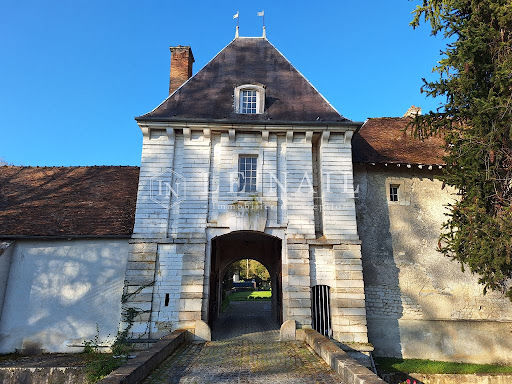
Ref.4598 : Listed château in 30 acres of parkland for sale near Troyes Troyes town center is 5 km away, and the factory outlets are a war away. The property is not far from the great Champagne lakes, the wine estates of the Cote des Bar and Les Riceys, a charming winegrowing village. Character towns such as Bar sur Aube and Bar sur Seine are also close by. Troyes, a city with a rich heritage, booming with tourism In recent years, François Baroin, the mayor of Troyes, has worked hard to restore this medieval and Renaissance town to its former glory, making it one of the most remarkable in France, both in terms of its size and the homogeneity and quality of its buildings. Downtown Troyes is home to a unique, tightly-packed ensemble of 16th-century timber-framed and chalk houses. Several museums have been restored to a very high standard, including the Cité du Vitrail and an interesting Museum of Modern Art, nestled in the former 16th-century episcopate. The town has been awarded the “Ville d'Art et d'Histoire” label. In a former French-style park of over 30 acres, criss-crossed by avenues and punctuated by a large canal, the property brings together 4 houses from different eras ranging from the Renaissance to the 19th century, all just 3 minutes as the crow flies from downtown Troyes. To acquire it is to benefit from a unique green setting 2 hours from Paris by car and 1 H 15 by train (by 2028). The buildings, built on a rectangular terreplein, are isolated by a moat. After crossing the châtelet, redesigned in the 17th century in place of the old drawbridge (1521), you will find : The Former outbuildings The former outbuildings have recently been renovated. They offer over 650 sqm on 2 levels, with 5 bedrooms and more than 9 rooms including kitchen, dining room, veranda, billiard room and living room. This 19th-century building, which is lived in year-round, boasts all the modern amenities for living and entertaining, including an 8.60 x 5.40-meter heated swimming pool, a carport for 3 cars, a sauna and an open-plan, neo-Gothic-style reception room for up to 80 guests. A wooden terrace extends the building to the rear, overlooking the moat, barely disturbed by the leaping of a carp. A small, lichen-strewn stone bench on the other side of the moat adds a romantic touch. One of the most beautiful views of the estate can be found here, with the perspective of this great canal, in the purest spirit of French gardens. Passing the former outbuildings, we return to the central area, which features a languid, teardrop-shaped lawn. It serves several dwellings, including : The Renaissance pavilion With its beautiful Polisy ashlar, it stands out from the crowd, with its octagonal dovecote overlooking a 9 x 4.50-meter swimming pool. Above the entrance door, a bust of Diana is framed in an oculus, flanked by two horns of plenty. The pavilion comprises 7 rooms, including 4 bedrooms. The kitchen, with its azure ceiling studded with stars on a blue background, has been installed in place of the estate's former chapel. A beautiful Louis XV fireplace forms the epicenter of the very large living room, whose nobility is underlined by the ceiling height (around 4.30 meters) and a beautiful herringbone parquet floor. This generously proportioned, light-filled space exudes a welcoming warmth, as does the adjoining dining room. Here, a beautiful Burgundy stone floor, with its irregular, smooth and shiny patina, adds a touch of minerality to the refined décor. Under the First Empire, the current dining room would have been decorated with stucco depicting antique processions. The corner house with its double pointed gable To reach the corner dwelling, characterized by its double pointed gable, we exit the Renaissance pavilion. From the outside, we can admire the large, late-Renaissance dormer windows, crowned with crescents reminiscent of the Henry II period. The overhanging gables are reminiscent of the half-timbered houses that make up the charm of old Troyes. A staircase leads to a vast hall with beautiful cabochon paving. It opens onto the bridge leading to the park. The house has 8 rooms, including 3 bedrooms and a bathroom. A small living room with wood panelling and Louis XV marble fireplace leads to the kitchen, slightly lower down. It provides access to a vast terrace overlooking the park. A two-storey attic tops the whole. The 18th-century wing with pediment A long, classical 18th-century wing with pediment is set back at right-angles, featuring 4 arcades and 3 ashlar doors, and 7 windows on the second floor. In the center of the facade, a portico with pilaster carries a triangular pediment decorated with two coats of arms joined together and surmounted by a Count's crown. This part of the building comprises 9 rooms, including 2 bedrooms with bathrooms, several lounges, a study, a kitchen, a conservatory and a machine room located at the end of the building in the tower, accessed from the outside. On this sunny spring day, the beautiful reception room on the first floor, bathed in through-light, exudes an impression of lightness that the beauty of white chalk cannot constrain. The overall decoration could do with a refresh. The châtelet The châtelet features a stone facade with a rusticated first floor. It housed the former drawbridge, the grooves of which can be seen on the façade of the entrance tower. The surrounding walls were demolished to clear the view. The first floor is accessed via a stone spiral staircase which leads to a room with a fireplace on the right, used as a storeroom, and 2 rooms on the side of the former guardhouse, probably occupied after the war. These rooms are in need of restoration. Part of the structure upstairs needs to be consolidated. The park This planted setting is reminiscent of French gardens, with its avenue trees, green carpet in the perspective of the château, traffic circle, perpendicular and star-shaped paths. The design of the Grand Canal, which runs for several hundred meters and is fed by the Triffoire, is reminiscent of the Grand Canal at Versailles. At the far end of the park, near the main gate, lies a well-kept secret, which the owners may (or may not) be able to tell you. It's a salon de verdure. It's customary to hang sandbags from the branches of trees to create a canopy of shade. In this case, the trees are lime, one of the most common species in the park. This space, shaped by the hand of man and by nature, has always been the setting for festivities and dances, when the innocence of youthful elks competed with the rising sap of trees .... In the past, the château's grounds stretched far and wide across the surrounding plain, covering more than 220 acres in 1862. Later, the château was gradually overtaken by the city. Today, the contrast between the serenity of the park and the (barely perceptible) hectic pace of the modern world on the other side of the châtelet, which acts as a space-time gateway, is striking. Cabinet LE NAIL – Aube - Mr Michel FLOIRAT : +33(0)2.43.98.20.20 Michel FLOIRAT, Individual company, registered in the Special Register of Commercial Agents, under the number 404 179 657. We invite you to visit our website Cabinet Le Nail to browse our latest listings or learn more about this property.
…By Cabinet Le Nail


Castle Reims (51)
A listed castle, once belonging to the Joyeuse counts, in 7 ha of parklands 2½ hours from Paris and Brussels in a region known as Argonne-Ardennaise. The geographic location of Grandpré castle, standing on a rocky spur, was already an advantage in medieval times. In a dominant position, looking out over the Argonne region towards the roads through the Champagne countryside, it was one of the border areas essential to the young kingdom of France. The county, divided since the Crusades, was gradually reunited until it fell into the hands of a powerful character, Louis-de-Joyeuse, chamberlain at the court of Louis XII. Supporter of the Catholic League, his heir, Claude-de-Joyeuse, amassed spoils and fortune in the 17th century, thus enabling him to embellish the estate and leave his mark on the surrounding buildings: the church and other buildings necessary to the inhabitants of the county. Distinguishing themselves from many of their contemporaries, the Joyeuse counts made their mark through military careers (Marshals of France and Lieutenant-Generals of the king’s armies) and followed Louis XIV. It was during 1685 that major works were carried out (large appartements, stables, etc.) and financed courtesy of the titles and offices acquired by members of the Joyeuses family following their military successes during the Wars of Spanish Succession around 1700. Marriages arranged with the large families in the Champagne region did the rest. However, despite a well-founded land heritage, lineage strategies proved too fragile and the estate gradually became divided in the 18th century. Furthermore, the estate was little occupied prior to the fall of the monarchy in 1792. It was requisitioned by General-Dumouriez, a famous republican hero following the Valmy victory against the Austrians. He settled his general quarters there prior to it becoming a hospital set up for the revolutionary armies. Despite a token show of renovation under the First Empire and during the Restoration era, a lack of constant upkeep led to a fire that started in the gatehouse and the destruction of the castle in 1834. Only one pavilion was restored, it now forms the current castle. An outstanding collection of outbuildings align the street going up the hill. A monumental pavilion, in a central recess, provides access to the outbuilding courtyard. The castle and its parklands are then reached by passing under the semi-circular arched porchway of the gatehouse.
…By Patrice Besse


Castle Méry-Prémecy (51)
Corinne Gomerieux and Patrice Willot present this charming 536 sq m (5,800 sq ft) château, fully renovated in 2023 and furnished, located in the heart of the Champagne region in a sought-after area of Méry-Prémecy, 15 km from Reims, 15 km from the Champagne-Ardenne Bezannes TGV station, and 5 minutes from the Gueux golf course. Its spacious layout will create a warm and welcoming atmosphere, while also offering potential for hotel-style accommodation or bed and breakfast. Set within 5.832 hectares (10.2 acres) of wooded grounds, you will be captivated by the verdant and tranquil charm of this property. This property offers on the ground floor an entrance hall, a first living room of 43 m² opening onto a vaulted cellar of 24 m², a dining room of 34 m², a second living room of 29 m², a small bar area opening onto a lovely terrace and its small ornamental garden, a fitted kitchen and its pantry, two small vaulted cellars, a pantry, a utility room, a small laundry room, and a WC. On the first floor, a long corridor leads to two suites of 40 and 57 m², each comprising a bedroom, a living room, a bathroom, and a WC, and two further bedrooms with en-suite bathrooms and WCs of 26 and 45 m². Also on this floor is a 40 m² wellness area including a sauna, a hammam, two treatment rooms, a utility room, a shower room, and a WC. On the second floor, there are three attic suites measuring 34, 48, and 49 square meters (floor area) and one smaller suite of 31 square meters. All suites have a bathroom, a toilet, and a sitting area. There is also a small utility room. The basement houses a boiler room. There is potential for expansion, the addition of an indoor or outdoor swimming pool, and parking. Les honoraires sont à la charge du vendeur. Les informations sur les risques auxquels ce bien est exposé sont disponibles sur le site Géorisques : www. georisques. gouv. fr. ** ENGLISH SPEAKERS: please note that Capifrance has an international department that can help with translations. To see our range of 20,000 properties for sale in France, please visit our Capifrance website directly. We look forward to finding your dream home!
…By Capifrance - Corinne Gomerieux


Listed castle Chaumont (52)
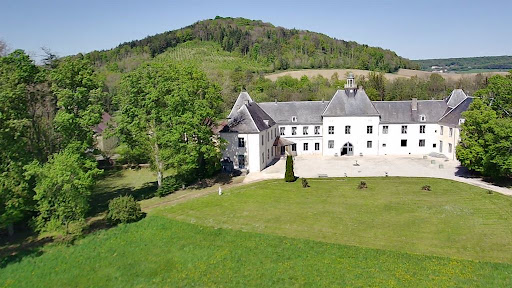
Ref.4464 : French listed château for sale in Haute-Marne department. This chateau, a major building in the region, is located in Haute-Marne (52), between Champagne and Lorraine, in a rural village in the heart of the Sueurre valley, dominated by two wooded hills. From the outside, a trained eye will notice the rusticated stone gateway, where the spires of the old drawbridge are embedded. This gateway is adorned with a sculpted stone facade characteristic of the second French Renaissance. Only the pedestrian entrance is used today, while the main entrance is via the main gate through the park. Just 500 metres outside the village, there is a supermarket for everyday needs, while the town of Chaumont, with its many shops and services, can be reached in 20 minutes (24 km). The A5 motorway is half an hour away, making it possible to reach Paris in 3 hours. The nearest airports are Strasbourg (230 km), Basel-Mulhouse (250 km) and Lyon (325 km). Ideally located on the route of the abbeys and châteaux of Haute-Marne, the château offers privileged access to renowned historic sites such as the Abbaye de la Crête and the Abbaye des Sept Fontaines. Nearby, you can enjoy a 9-hole golf course at Arc-en-Barrois (48 km) and several horse-riding centres, the nearest being 15 km away. There are also plenty of tourist attractions in the surrounding area, including the Domaine des Trois Forêts (Center Parcs), Colombey-les-Deux-Églises with La Boisserie, the family home of General de Gaulle, and the Charles de Gaulle Memorial. The village's main street passes in front of the gatehouse, without generating any noise pollution, as the ground floor rooms have double windows, as was customary under Louis XV, and the bedrooms overlook the courtyard of honour, on the parkland side. Its sober defensive facade is not eye-catching, but it supports a garden level that is entirely vaulted with 16th-century ribbed ceilings. The ornamentation is a moving testimony to the Louis XV period. Add to this the superimposition of different architectural styles, from the Middle Ages to the 19th century, the century of industry, and you have a plunge into the strata of history that is sure to whet your curiosity. The gatehouse overlooking the road is no longer used. Today, the entrance is via the gravelled main courtyard overlooking the park. The façade on the courtyard side has just been professionally refurbished, adding even more splendour to this vast château with its 1,400sqm of living space. The ground floor and 1st floor offer around 740sqm of living space each, with ceiling heights of around 4.5 metres. On the ground floor, you enter through the main door into the interior of the porter's house. You will notice a mosaic with gold tesserae on the ceiling and frescoes of sea anchors. To the left is a vestibule with the start of the 1st Empire wooden grand staircase leading to the 1st floor. Following on from the vestibule is the VIP dining room, a beautiful noble space (approx. 55 sqm) with natural wood panelling, an imposing Louis XV Rococo fireplace and fine china cabinets. The ceiling features a gypsum Maltese cross. Further on, a vaulted living room with ribbed ceilings highlights an architectural feature characteristic of the Middle Ages. The parquet floors are herringbone, as throughout the château. A double door gives access to the crockery room with its stone and zinc sink. This vaulted room, now used as a reception room, leads to the 18th-century entrance hall with its white Lorraine stone staircase and wrought-iron banister by Jean Lamour, then on to the large Louis XV drawing room in the left wing. Everything here is wood panelled and richly decorated, like the frescoes of horns of plenty. There is also a beautiful Louis XV Rococo-style fireplace and double windows. The Grand Salon is extended by another salon, known as the ‘Bird Salon’, entirely panelled in Louis XV style and adorned with a white marble Rocaille fireplace. It is decorated with Restoration period furniture and a French billiard table (Charles X). The firebacks all bear the coat of arms of Guillaume Tavernier de Boullonge, treasurer of Louis XV's extraordinary war department, who had the château rebuilt in 1766. The south tower houses a toilet and a linen room with a fireplace under its barrel vault (formerly the castle chapel). From the gateway, in the centre of the main courtyard, a corridor decorated with hunting trophies leads off to the right to a monumental kitchen topped by a ribbed vault. The kitchen is the size of the château. Everything is still as it was in the 16th and 17th centuries: vegetable garden, cast-iron oven, copper fountain, collection of copperware and porcelain and, more recently, the labels of the wines that were served. On the right, as you leave the kitchen, there is a notice board used to call the servants. Once you have passed the staff dining room (designed to seat 15 people), which adjoins the kitchen, you will come to a surprisingly bright white room. This dairy, all carved stone, had to be spotlessly clean. It is richly decorated with a collection of copper and pewter (*). Further on, you come to the square north tower housing a vaulted room (here, as in the kitchen, the main dining room and the adjoining drawing room, in the old medieval main building) that served as a guard room. From here, a stone spiral staircase leads to the 1st floor. The right wing features a series of lounges on the ground floor, a summer kitchen and a toilet, accessed via an exterior door leading to the courtyard of the outbuildings. In the left wing, after passing through the entrance protected by a beautiful marquise, you will discover Napoleon's bedroom upstairs. Legend has it that he spent a night here! This generously sized room has Louis XV panelling and an alcove that blend harmoniously with the furniture, fireplace and trumeau from the First Empire. This was the bedroom of Duke Decrès. A warm note emanates from the adjoining study, thanks to a pale yellow ‘bee’ wallpaper. The atmosphere here is almost ‘intimate’, despite the weight of the history it contains. It is conceivable that the maritime aspect of the Egyptian campaign was developed in this room.... Behind the alcove is a toilet and a hidden staircase leading to a servant's bedroom on the mezzanine floor. Still on the first floor, a bathroom opens onto a long corridor that leads to the Duke's bedroom, his study and a landing that opens onto a library. The Duke Decrès's sea charts add a touch of the exotic to this place dedicated to travel and exploration. You can continue your exploration by taking the corridor leading from the library to the bedroom and sitting room of the Duke of Albufera. The first floor of the south tower has two bedrooms, one with fine Louis XV panelling and an alcove, a bathroom and a toilet. Further on, on the landing of the grand staircase leading to the main entrance, you will come across an imposing studded door, sheathed in leather, which marks the passageway to the flats of Duchesse Decrès. A flat overlooking the park has been entirely dedicated to her, with a complete suite: bedroom with Louis XV panelling and white marble rocaille fireplace, back door to a dressing room (formerly a hidden passageway), study with fireplace, bathroom with wc, sitting room with Louis XV panelling and rocaille fireplace, then a panelled bedroom opening onto a small bathroom. In this intimate space, on the scale of the place, the Louis XV panelling and a back door lend themselves to the play of romantic intrigue. The same cannot be said of the flats of the Marquis de Bonnevilliers, located in the right wing. Comprising a large drawing room and a bedroom followed by a bathroom with toilet in the gallery, this suite has a more masculine feel. Other rooms, notably in the towers and on the ground floor to the north, including a summer kitchen, make up almost the entire residence. We'll stop here to leave a little more room for surprise when you discover all the rooms in this castle, of which there are more than 35. You'll need just a few minutes to find your way around this exceptional residence, which is steeped in history both large and small, with anecdotes sure to crop up and the invisible people, the servants, whose moving traces can be found in the attic.... * Furniture is not included in the sale. The outbuildings include: a bakery, a laundry room, a large barn, two stables, a tack room, an upstairs service flat, a coach house, a workshop, a cow shed, a laundry room, a hen house and a dovecote. The ceilings in the stable are recent, but the rest of the rooms are in original condition. The wood-fired boiler in the stables, overhauled in 2021, will need to be relaunched. The caretaker's cottage, built over vaulted cellars, comprises a living room with kitchen, three bedrooms, a bathroom and two bedrooms upstairs. It is heated by an oil-fired boiler and has a vegetable garden with a tool shed and a kennel. At the southern end of the estate is the imposing main gate, recently restored. Let the gentle tinkling of the River Sueurre, which runs through the estate, be your guide as you enter the grounds. Following a pleasant path through the undergrowth, known as the ‘3 springs’, you will cross three bridges spanning several branches of the river. On the right is a pond with still, dark waters, contrasting with the quivering of a small waterfall downstream. An ancient gazebo, witness to a past that was also glorious, stands next to an old fishpond that was once poisoned. As you walk up the bridle path towards the château, the coolness of the tall trees will make you forget the heatwave for a moment. Others won't mind, like the squealing children who can splash about and play on the beach set up for them on the banks of the Sueurre. Further on, an ancient semi-circular open-air theatre occupies the site of the Renaissance garden bordered by two turrets and a rose garden. A dovecote, as straight as an I, acts as a mineral punctuation mark in a planted environment. The English-style park features woods (around 1.5 hectares), meadows, rivers and springs. It is enclosed by a stone wall and a wire fence. Overlooking the park, with the façade of the château in the background, are the remains of an orangery built in 1830. A sundial sits in the middle of the main courtyard. Facing the park designed in 1855 for Princess Mathilde, the estate once stretched as far as the forest, which can be seen in the distance. Copses of trees line either side of a gently sloping lawn, extended by pastoral meadows. There is not a single modern-day scar to disturb this unchanging landscape, worthy of a posthumous William Turner painting. From all the rooms overlooking the south-east façade, you'll be swept away by the view and a delightfully romantic atmosphere, filled with reveries and autumnal dawns. The total surface area of the property is 11.70 acres (4ha 73a 60ca). Cabinet LE NAIL – Aube - Mr Michel FLOIRAT : +33(0)2.43.98.20.20 Michel FLOIRAT, Individual company, registered in the Special Register of Commercial Agents, under the number 404 179 657. We invite you to visit our website Cabinet Le Nail to browse our latest listings or learn more about this property.
…By Cabinet Le Nail


Listed castle Neufchâteau (88)
On the footsteps of Joan of Arc, a small village castle from the 16th century. The property is located in the center of the village, overlooking the plain, facing the church. It consists of the union of two buildings made of stone covered with lime plaster. The first building aligns with the street, probably an old agricultural outbuilding, on two levels with an ornate corner console, four openings, three bull's-eye windows, and a wooden garage door. It extends perpendicularly into a main part preceded by a gravel courtyard at the entrance, a terrace at the back with a garden, and a slope planted with conifers, shrubs, and fruit trees on the south gable. The whole also includes a dependency on a single level, covered with mechanical tiles, extending from the old agricultural outbuilding. The entire main building, the facades and roofs of the secondary structure, the footprint of the courtyard, and the enclosing wall with the old gate are classified as a Historical Monument.This description has been automatically translated from French.
…By Patrice Besse


Castle Poigny (77)
Property held in strict confidence — documentation available upon request. Sale price: €3,950,000 VAT included, of which 5% VAT included agency fees charged to the buyer, representing a net seller price of €3,750,000.
…By Junot Châteaux & Patrimoine


Castle Faverolles (52)
Nestled in the heart of 900 hectares of nature and forests in Champagne region, the Haute Marne countryside is home to a hidden, natural, and preserved heritage, including this beautiful Château in Faverolles. It is not an estate in the traditional sense but rather a former mill located in a vast, wild park alongside the Suize River. Just 20 minutes from the A31 and A5 exits, as well as the cities of Chaumont and Langres, 15 minutes from the village of Arc-en-Barrois, which offers all amenities, and 45 minutes from the vineyards and first tasting cellars of Champagne and Burgundy wines, the house enjoys a convenient and charming location full of discoveries. The Château de Faverolles offers a unique, magical setting for living, creating, and working. The property consists of a grand 375 m² manor house with 15 rooms, including 9 bedrooms, 3 toilets, and 2 bathrooms, providing spacious and welcoming living spaces. The large living room with an open fireplace, the family kitchen, and the expansive sleeping areas ensure optimal comfort. Spanning nearly 10 hectares of landincluding forest plots, meadows, and waterwaysthe estate also features a barn, formerly a mill, which has been converted into a reception and music recording space (the area is heated and usable for residential purposes). With a roof in excellent condition, geothermal heating, and no renovation needed, this gem in the heart of the Haute Marne countryside combines charm, comfort, and practicality, making it a high-quality investment for a lifestyle of harmony and serenity.
…By Safti
'%20stroke='%23DDAA3A'%20stroke-width='1.909'%20stroke-linecap='square'%20stroke-linejoin='bevel'/%3e%3c/svg%3e)
Receive by email any new listing that may match your search criteria
Your criteria :
- For sale
- Vitry-le-François, France, +30 km
- Castles
By validating this form, you accept the general conditions of use of Le Figaro Properties.