Get early access to listings that match your criteria
Never miss an opportunity again. Our personalized alerts notify you instantly.

 English$ USD · m²


Family castle and its dependencies for sale in Périgord, property set in 23,5ha Périgord, north-east of Bergerac, without any nuisance, close to a small village. 10 minutes from all amenities. Property with 23,5ha of woods and meadows (all enclosed), rolling wooded countryside. Pond with pumping station, 4 wells. All the land is maintained. Ideal for horses. No easements. This 18th-century château, built on 15th-century foundations and offering around 450 m2 of living space, has recently been completely renovated to a very high standard. It sits at the centre of its land, in a dominant position. Ground floor 2 entrances, period wooden staircase. Fitted kitchen opening onto the courtyard. Storeroom and boiler room. From the kitchen, access to the poolside veranda. Terrace. Sitting room with fireplace overlooking the garden. Dining room with fireplace, overlooking the garden. Study with fireplace, access to courtyard and garden. Utility room. WC. First floor Landing leading to the master bedroom, bathroom and dressing room. WC. 1 bedroom and shower room, WC. 1 bedroom and bathroom. 1 bedroom and shower room, WC. Attic converted into a large games room and gym. 12×6 swimming pool, covered, sand liner, chlorine. Dependencies Hangar, approx. 80m2, for car and camper van, with parking. 1 dependencie of approx. 400m2: garages, workshop. Caretaker’s flat of approx. 55m2 (living room, fitted kitchen, 1 bedroom and shower room). Stables: 4 boxes, including one for brood mares. Adjoining building for storage and tack room. 1 detached dependencie with loose boxes. Completely refurbished. Double glazed windows.
…By Anthouard Immobilier


Located just 20 minutes from Lectoure and 30 minutes from Condom, this magnificent 16th-century château offers approximately 600 m² of living space. It is complemented by a 75 m² guest house, numerous outbuildings, and stands within an exceptional estate of more than 7 hectares, including a beautifully landscaped 3-hectare park surrounding the château and its swimming pool, as well as 4 hectares of meadows. The château immediately impresses with its two remarkable entrances: one opening onto the garden and the other onto a courtyard featuring an elegant stone-paved floor. The ground floor comprises a refined drawing room with a fireplace and a dining room separated by a magnificent stone archway, a fully equipped kitchen opening onto a charming Tuscan-inspired terrace, a utility room, and a guest WC housed within one of the château's towers. A majestic stone staircase leads to the first floor, where there are seven spacious bedrooms, a children's bedroom, four bathrooms, and a magnificent library with a fireplace. Recently renovated with great care, the château has retained all the authenticity of its original architecture. Period fireplaces, terracotta floor tiles, original wooden floors, panelling, stone flooring, and traditional fabric wall coverings, including Toile de Jouy, all contribute to the exceptional charm and character of the property. The estate also includes a caretaker's apartment requiring renovation, together with a substantial unfinished wing offering rooms of similar proportions to the main reception rooms. This space provides outstanding potential for a wide range of projects, including extending the living accommodation, creating independent guest accommodation, a reception venue, or professional premises. Outside, the landscaped park elegantly surrounds the château, while a magnificent tree-lined driveway leads to the guest house. The guest house offers a spacious living area with an open-plan kitchen, two bedrooms, a bathroom, and separate WC. An outdoor spa completes this delightful retreat, providing a relaxing space for family and guests. The estate also features a superb dovecote that has retained its original nesting boxes, an outbuilding with a former horse stable, and an open barn. The swimming pool, whose entire filtration and mechanical system has recently been renewed, enjoys a large sun terrace ideal for relaxing. Nearby, a beautiful barn with its tower offers excellent potential for conversion into a pool house or reception area. A pond, a well, and magnificent ornamental trees complete this enchanting setting. Recent works carried out in 2022 included the replacement of part of the windows and doors, improved insulation, and the installation of a new boiler. These upgrades have enabled the château to achieve an excellent energy performance rating, particularly impressive for a property of this age (Energy Rating: C). The property also benefits from a comprehensive security system, including an electronic alarm and a video surveillance system, ensuring comfort and peace of mind on a daily basis. Rich in history and full of elegance, this exceptional property will appeal to lovers of historic homes seeking a truly unique residence. A viewing is highly recommended to fully appreciate its beauty, generous proportions, and outstanding potential. Fees to be paid by the seller. Energy class D, Climate class D Estimated average amount of annual energy expenditure for standard use, based on the year's energy prices 2021: between 5800.00 and 7920.00 €. Information on the risks to which this property is exposed is available on the Geohazards website: georisques.gouv.fr.
…By Belle Maison Gascony


Rf.4722 : French 18th C. chateau for sale in Haute-Vienne department. The Briance Valley is a protected site in the Haute-Vienne department of Limousin. The river winds its way through a rural landscape where deciduous woods on the slopes alternate with bocage meadows and low-lying pastures, poplar groves on the banks, and cultivated fields on the flatlands and hillsides. This is the home of the famous Limousine cattle breed: the Pôle de Lanaud, with its renowned restaurant, is just a few minutes from the property. This corner of the countryside is less than 20 km from Limoges, a city of art and history. Known for its long tradition of porcelain manufacturing, the capital of Limousin is a dynamic city with a large student population, a renowned university hospital, and one of the world's leading companies in the field of electrical equipment (Legrand). Limoges-Bénédictins train station, listed as a Historic Monument for its architecture combining Art Nouveau and Art Deco, allows you to reach Paris or Toulouse in three and a half hours. Limoges Bellegarde airport, half an hour from the château, has regular flights to Lyon, London, Bristol, Leeds, Manchester, and the Midlands. This proximity between town and country explains the abundance of castles and manor houses found in the Briance Valley. The oldest were built by the powerful Viscounts of Limoges or by the abbots of Solignac, an important abbey on the Via Lemovicensis route to Compostela. The more recent ones, such as the property on offer, were designed as pleasant residences for the upper middle class of Limoges, who loved, and still appreciate, this charming and peaceful setting just a stone's throw from the city. Set apart from a hamlet, the chateau is a building of classical proportions flanked by two round towers with conical roofs. In the center, a detached pavilion houses the entrance and stairwell. It is topped by a portico broken by a monumental pediment dormer with a domed roof. On the opposite side, the south facade features a perfect alignment of windows on a straight facade framed by slightly protruding wings. Chain molding and bossages reinforce the impression of symmetry, which extends up to the domed dormers lighting the attic. Covered in slate, the hipped roof of the main building, like that of the entrance pavilion, is topped with a metal ridge. To the north again, a three-step staircase leads to the front door, a side door with a wooden tympanum and a protruding doorframe. From there, the ground floor comprises an entrance hall, an office with a toilet and shower, a storage room/cellar, a kitchen, a dining room, a double living room, and a library. On the same level, the towers house a bar with neo-Gothic decor in one and a boiler room in the other. With high ceilings, these two rooms occupy two levels. On the first floor : 4 large bedrooms with their own bathrooms. On the second floor : a long hallway and five beautiful bedrooms with bathrooms, one of which has a shower room and sometimes a dressing room. Two of these bedrooms are located in the towers. Under the eaves: a large open space ready to be converted. The property has a total living area of approximately 700 sqm. The outbuildings include: The Orangery, probably built in the 19th century, is the main outbuilding. On the first floor, a fully equipped reception room can seat up to 60 people. A second floor, under the eaves, is in need of restoration. Separately, the modern garage with cellar can accommodate two to three cars and the equipment needed to maintain the property. Finally, the swimming pool (12.5 x 4.5 m) is at the center of a true wellness area with its terrace and pool house equipped with a sauna. The park, covering an area of approximately 5.55 acres (2.25 hectares), forms a sort of uneven diamond shape, with its corners roughly pointing to the cardinal points. At its center, with their facades facing south, the castle and its outbuildings stand on a vast, well-kept, flower-filled lawn. All around, tall trees shelter the castle and its guests from view and noise. The land slopes very gently, but without reaching it, towards the Roselle, a tributary of the Briance. A tennis court, shaded by trees, marks the southern tip, while the wooded western side borders an invisible railway line. Cabinet LE NAIL – Berry - Limousin - Mr Christian MAUVE : +33(0)2.43.98.20.20 Christian MAUVE, Individual company, registered in the Special Register of Commercial Agents, under the number 437 693 534. We invite you to visit our website Cabinet Le Nail to browse our latest listings or learn more about this property.
…By Cabinet Le Nail


In the heart of the Touraine region, nestled within a nearly 4-hectare wooded parkland boasting centuries-old trees, this majestic late 19th-century Napoleonic château offers approximately 2,000 sqm of living space and embodies a rare and timeless art of hospitality. Behind its historic façade, the estate is organized around multiple living and reception areas, offering exceptional accommodation capacity. The main château comprises approximately 800 sqm and houses 18 bedrooms. Several outbuildings complete the property: a large gîte, a smaller gîte, a charming house nestled in the park, as well as chalets and mobile homes. A campsite further enhances this offering, allowing for a wide range of uses, both private and professional. The reception areas, designed to accommodate various types of events, can be adapted to all configurations. A reception hall with a bar and professional kitchen, elegant lounges, adjoining rooms, a reception tent, spacious outdoor terraces, and landscaped gardens offer great flexibility in event organization and the possibility of hosting several groups simultaneously. The park, a true haven of greenery, invites relaxation and leisure. A heated swimming pool with a paddling pool, mini-golf, a recreation area, a playground, wellness areas, and sports facilities create an environment ideal for extended stays as well as large-scale events. The estate has recently undergone renovations to both the accommodations and the outdoor spaces and technical installations, guaranteeing comfort, functionality, and performance. The property boasts robust technical equipment, a reinforced electrical network, a revised independent sanitation system, and an organization designed for seamless operation. Ideally located, in close proximity to the A10 motorway and just minutes from amenities, this unique venue enjoys a peaceful, tranquil setting in the heart of a popular tourist region. Not subject to the Energy Performance Certificate (EPC). Contact (EI): Julie Rivière 33 6 31 35 22 95. Sales agent registered with the Tours Trade and Companies Register (RSAC) under number 2021AC00065. Fees are payable by the seller. Information on the risks to which this property is exposed is available on the Géorisques website for the areas concerned: www.georisques.gouv.fr
…By Espaces Atypiques Tours


At 90 minutes from Paris, at the gates of Fontainebleau, this château occupies a site that the Court of François I already prized for its tranquillity: a bend in the Seine, on the edge of the royal forest. At a time when the river connected Paris to Fontainebleau more reliably than the roads, one arrived here by boat. The vast meadows lining the banks, the natural terraces and the stone steps leading down to the water still bear witness to this today. Built in the early seventeenth century by a physician close to Henri IV, the château passed in 1710 to the Comte de Toulouse, the legitimised son of Louis XIV and Madame de Montespan. An avenue linking the estate to the Palace of Fontainebleau was paved in 1726 to facilitate the visits of Louis XV, who would come here to see his great-uncle the Comte de Toulouse and share his passion for hunting. The château then passed to Louis XIV's grandson, the Duc de Penthièvre, who owned several residences in the vicinity of Fontainebleau and was especially fond of entertaining and hunting here. The estate comprises thirty hectares of woodland and meadows, with outbuildings, a kitchen garden, an orchard, and stone walls once devoted to the cultivation of chasselas, the golden table grape born of royal vine trellises in 1730 and grown along miles of walls until the last century. The property also benefits from two kilometres of private riverbank, where swimming and mooring are possible, entirely sheltered from view. The Forest of Fontainebleau enclosing the estate — its 25,000 hectares designated a UNESCO Biosphere Reserve and a Natura 2000 site — naturally extends this parkland and its protected wildlife. Remodelled in the nineteenth century, the château has preserved its original volumes, with fine ceiling heights and an eighteenth-century enfilade layout. Its large, numerous windows flood every room with exceptional natural light. Versailles parquet, terracotta floor tiles, period fireplaces and window fittings lend it the authentic charm of a historic residence. Spanning 900 m² of living space across three levels, the château comprises seventeen bedrooms, twelve bathrooms, two drawing rooms, a library, a dining room and a large fitted kitchen. Having recently undergone a complete interior renovation, it now offers all the comforts of a contemporary home. The property also includes a large 200 m² house, a pavilion, a caretaker's cottage and an extensive range of outbuildings, offering strong potential for further development, forty-five minutes from Gare de Lyon. The estate's characteristics — its size, privileged setting, proximity to Fontainebleau and easy access to Paris — are assets that open up a range of possibilities. Whether as a primary or secondary residence, the estate lends itself equally well to an investment project: the restoration of the outbuildings and dependencies paves the way for a hotel, tourism or event-hosting venture.
…By Junot Châteaux & Patrimoine


A unique heritage of nearly 23 hectares near Bordeaux. Just 30 minutes from Bordeaux, in the heart of Entre-Deux-Mers and a few minutes from La Sauve-Majeure Abbey, a UNESCO World Heritage site, discover an estate of rare elegance where history, nature, and authenticity meet. Nestled in an untouched environment, this exceptional property offers nearly 23 hectares of complete tranquility. A true witness to past centuries, it will appeal to heritage lovers as well as ambitious project developers. Prestigious family residence, reception estate, event activity, holiday rentals or guest rooms, or heritage investment: the possibilities are as numerous as they are inspiring. An estate with remarkable amenities. The entire property develops over 900 m² of living space and includes: A castle from the 17th and 19th centuries of about 410 m² An elegant villa of about 310 m², converted from old stables Three independent apartments, two of which are currently rented and one to renovate An old wine cellar of about 150 m², offering strong development potential Nine garages A beautiful park with trees, complemented by a pond, a true haven of peace The Castle – Timeless elegance This charming castle has preserved the soul and refinement of its era. You will discover superb old elements carefully preserved: original parquet flooring, monumental fireplaces, high detailed ceilings, spacious reception rooms flooded with light, characterful lounges, a library, and a magnificent wooden staircase. It also features four large bedrooms, three bathrooms, a basement cellar, an elevator, and a modern heating system providing noticeable comfort on a daily basis. Renovation (insulation, ceilings, and network upgrades) will reveal the full potential of this exceptional residence and restore its original prestige. The Villa – The charm of stone combined with contemporary comfort Old stables tastefully rehabilitated, this home combines authenticity and modernity in an intimate setting with a swimming pool. It notably offers: A 55 m² living room with fireplace A 33 m² dining room with fireplace An independent kitchen A study of nearly 30 m² A library Three bedrooms, including two suites with private bathrooms A large shower room, a dressing room Upstairs, two additional bedrooms converted under the eaves, a bathroom, and a WC A warm living space, fully habitable, ideal for welcoming family, friends, or guests in a privileged setting. Exceptional potential. Thanks to the diversity of its buildings, its generous volumes, and its remarkable environment, this estate is suitable for both private residence and the development of a prestigious tourist or event activity. Its former wine cellar, independent apartments, large park, and lands offer many exploitation prospects, in a particularly sought-after sector of Gironde. A rare property where heritage, elegance, and nature create a unique way of life. An exceptional property intended for lovers of beautiful homes wishing to write the next chapter of its history.
…By John Taylor Bordeaux


Just fifteen kilometres from Vichy, in the heart of the Allier department, this exceptional luxury property enjoys a peaceful, unspoilt setting with no nuisances. The estate comprises a characterful château with approximately 1,250 m² of living space, consisting of two wings dating from the 15th and 19th centuries, fully renovated with high-end fixtures and fittings and contemporary décor. The 15th-century wing offers a one-bedroom apartment in the semi-basement, then three levels each comprising an independent apartment (two-bedroom, three-bedroom and two-bedroom), offering numerous possibilities for accommodation or furnished rentals. The 19th-century wing comprises a one-bedroom apartment in the semi-basement, a large reception room on the ground floor, a large four-bedroom apartment spread over the first and second floors, and a two-bedroom apartment on the third floor. The outbuildings complete this rare property with superb stables and a large building of nearly 2,000 m², including sheds, garages, workshops, a gym, a games room and an indoor swimming pool. The 8.3-hectare grounds are perfectly suited to equestrian activities with an arena, meadows and paddocks, making this estate a veritable château with equestrian facilities. This exceptional property offers great potential for tourism: charming holiday cottages, furnished seasonal rentals, hosting seminars and events, or a prestigious residence. Shops, schools and services within 6 to 15 kilometres. Contact Renaud VALENTIN: 06 07 47 27 13 Fees payable by the seller The owners do not accept financing contingency conditions. Energy rating: D Climate rating: B Estimated annual energy costs for standard use: between €18,980 and €25,740 per year. Prices indexed for 2021, 2022 and 2023 (including subscriptions). Information on the risks to which this property is exposed is available on the Géorisques website: www.georisques.gouv.fr
…By Agence Mercure Auvergne


This magnificent historic residence, dating from 1805 and located in the heart of one of Burgundy's most prestigious vineyards near Mâcon, was recently operated as a bed and breakfast. However, it offers exceptional potential for numerous other projects. Remaining true to its original character, it has been carefully adapted to the demands of modern comfort while preserving its authenticity. Spanning approximately 670 square meters, this exceptional property has benefited from a high-quality renovation that blends elegance with contemporary amenities. Its architecture evokes the finest Tuscan villas. Upon entering, a spacious hall leads to several generously sized living rooms and reception rooms, adorned with period fireplaces and magnificent parquet floors. A remarkable stone staircase leads to the first and second floors, where the private quarters and five guest rooms are located, each with its own bathroom. The château is nestled within approximately 3 hectares of wooded parkland, graced with several century-old trees, offering a peaceful and unspoiled setting. Those seeking relaxation will enjoy a 6 x 15 meter swimming pool, spacious terraces, and beautiful lawns perfect for unwinding. Several outbuildings complete the property: a house to renovate, a garage, and cellars, offering numerous possibilities for further development. Ideally located, the estate is a prime starting point for exploring the prestigious Grands Crus of Burgundy. It benefits from excellent accessibility: 45 minutes from Lyon, 1 hour from Beaune, 1 hour 30 minutes from Geneva by car, and 1 hour 35 minutes from Paris by TGV. The A6, A36, A39, and A40 motorways, as well as the RCEA highway, are easily accessible, as is the Mâcon-Loché TGV station. This exceptional property would be suitable for a bed and breakfast, boutique hotel, private residence, or a prestigious project. A rare property, steeped in history, in the heart of a remarkable setting. Full details available upon request. The fees are to be paid by the seller. Les informations sur les risques auxquels ce bien est exposé sont disponibles sur le site Géorisques : www. georisques. gouv. fr. ** ENGLISH SPEAKERS: please note that Capifrance has an international department that can help with translations. To see our range of 20,000 properties for sale in France, please visit our Capifrance website directly. We look forward to finding your dream home!
…By Capifrance - Karine Braillon


A former manor house with a 14th-15th century castle, hidden at the end of a private lane, with no neighbors, set on +3hectares of land surrounded by nature, offering 500m² of living space, outbuildings, and swimming pool – a true gem for history buffs. Ideally located for a family, couple, or hospitality project, discover the Gers region and walk in the footsteps of the lords of Pardailhan, Antras, Montesquiou, La Valette, Blaise de Montluc... and write your own story! The solid, human-scale main house features an 80m² living room, kitchen, seven bedrooms (two on the ground floor), sitting rooms, five bathrooms/shower rooms, laundry rooms, and anterooms in the former pepperpot huts. The original features are preserved and highlighted: hollowed-out half-timbering, terracotta tiles, French-style ceilings, stone and marble fireplaces, overmantel mirrors, watchtowers, latrines, Genoese-style eaves, interior wooden shutters, vegetable garden, sandstone, former moat... The imposing round tower underscores the site's original medieval past and conceals the stone spiral staircase that connects the floors. The French Revolution destroyed the coat of arms on the arch of the entrance door. The pursuit of authenticity does not preclude modern comforts: fiber optic sanitation, satellite internet, Lacanche range cooker... The approximately 3.5-hectare grounds are partially wooded, contributing to this sense of seclusion; the surrounding nature provides space, isolation, and complete privacy. The swimming pool is heated and secure, and its pool house is located in a former outbuilding. This historic site is discreet; finding it is a challenge. Living in Gascony means living in the Gers, where cultures and traditions naturally intertwine. A history marked by warfare, a vibrant present: Le Figaro has just featured the 'Jazz in Marciac' festival... the countryside coming to the rescue of culture... Shops, doctors, cinema, and community organizations are all just a stone's throw away. Unpack your bags! Tarbes-Lourdes airport and TGV station 40 minutes away, Toulouse 1 hour 30 minutes away. For information, details, and to arrange a viewing, please contact Valerie Trinel at Capifrance. The fees are to be paid by the seller. Les informations sur les risques auxquels ce bien est exposé sont disponibles sur le site Géorisques : www. georisques. gouv. fr. ** ENGLISH SPEAKERS: please note that Capifrance has an international department that can help with translations. To see our range of 20,000 properties for sale in France, please visit our Capifrance website directly. We look forward to finding your dream home!
…By Capifrance - Valérie Trinel


A remnant of a prestigious past, this 18th-19th century château was once a hunting lodge frequented by kings and aristocrats. Located just 15 minutes from Narbonne, in an authentic Minervois village, it exudes timeless elegance with its 655 m² of living space. Its 12 bedrooms and 11 bathrooms blend seamlessly into a refined setting where period materials—moldings, wood paneling, and sculpted fireplaces—have been preserved. Outside, a sunlit pool, and in the basement, a hammam and a gym complete this exceptional living space. A 150 m² barn adds further potential to this outstanding property. A rare residence to discover. Contact us for an exclusive viewing.
…By Terres D'oc Sotheby's International Realty


Rare Luxury Historic Chateau and Estate in the Heart of the Golden Triangle of the Dordogne, near Sarlat - A rare opportunity to acquire one of the Dordogne’s finest private chateaux and its estate in the heart of the prestigious Golden Triangle, just minutes from Sarlat-la-Canéda. Perched high above the breathtaking Dordogne Valley, this exceptional château is an extraordinarily private estate of rare beauty and combines centuries of history with refined contemporary luxury. Few properties in europe offer such a profound sense of place. Set within 19.46 hectares of landscaped grounds, woodland and meadows, the estate comprises a magnificent 678m² château with nine sumptuous en-suite bedrooms, elegant reception rooms and spectacular panoramic views. Additional accommodation includes a luxurious 157m² five-bedroom villa and a 95m² three-bedroom caretaker’s lodge. A heated swimming pool, gym, workshops and numerous outbuildings complete this remarkable estate. An exceptional residence offering unrivalled privacy, prestige and lifestyle in one of France’s most sought-after locations.
…By Leggett Immobilier


Accommodation: In close collaboration with the owner, we offer this estate of 3 ha 81 a 90 ca as a single entity. Benefiting from a privileged environment, calm and conducive to hospitality, the property develops a dual activity combining quality wine production and event tourism accommodation. The entire property is of contemporary design, has been carefully maintained, and offers high-quality features in a harmonious and authentic setting. Built in 2007 in a decidedly contemporary style, the main villa offers around 215 m² of living space and boasts generous volumes as well as remarkable panoramic views of the surrounding vineyard. It includes: A spacious living room of approximately 75 m² with an open kitchen; Three independent suites, each equipped with its own bathroom and private sanitary facilities, offering optimal comfort. They can be operated individually as part of a tourism accommodation or bed and breakfast activity; A dressing room; A laundry room; A cellar; A covered entrance porch. Outside, a magnificent terrace of about 200 m² accommodates an integrated swimming pool, creating a privileged relaxation area. On the garden level, a space dedicated to tourism activity includes three comfortable guest rooms, harmoniously complementing the estate's accommodation offer. The second building houses two large gîtes arranged in the same contemporary spirit as the main residence. They consist of: A type 4 apartment; A type 3 apartment; Thus a total of 219 m² of living space, five bedrooms and 85 m² of terraces, allowing accommodation for 4 to 6 people per lodging. The rooms can also be operated individually. The common areas dedicated to hospitality include: A bar area; A professional kitchen; A dining room; A massage room; A gym; A relaxation area with a jacuzzi and terrace. Operation: The operational buildings, integrated into the two built sets, develop approximately 500 m² of functional surfaces perfectly suited for a professional wine-growing activity. They include in particular: The wine-making spaces; The storage areas; The aging cellars; A cold room; The technical premises; A shed; A bottling area; An exceptionally well-appointed tasting and sales cellar. The entire equipment allows for quality production under optimal working conditions. Land: The estate operates 2.6895 hectares of vineyards located around the operational buildings. Managed under organic farming, the vineyard is in excellent vegetative and health condition. The majority of the plots have been recently replanted. Additional elements: A turnkey tool: This rare property brings together high-end residence, recognized wine activity, and developed oenotourism potential. It will suit both a winemaker wishing to operate a human-sized estate and a project holder seeking an immediately operational structure combining production, accommodation, and hospitality. Mission and challenges Safer on this property - Energizing agriculture and forestry This transmission is part of the goal of participating in the development of rural territories by the establishment of project holders and meets the sustainable development objectives by promoting the enhancement of rural heritage. Please note that some advertising sites do not display our service properly. For complete and accurate information, we invite you to consult our site or contact us directly. Information about the risks to which this property is exposed is available on the Géorisques website: georisques.gouv.fr Photos: © Copyright Safer - Use prohibited without the author's permission.This description has been automatically translated from French.
…By Safer Occitanie


Leave the main roads behind and follow a winding path… and the property immediately makes its presence felt. Perched atop a hill, this private hamlet spanning nearly 4 hectares offers a world of its own. An 18th-century château of around 530 m², bathed in natural light, blending historic character with modern comforts (roofing, electricity, heat pump). Surrounding it are a guest house (200 m²), a caretaker’s cottage (150 m²) and a 400 m² loft to be transformed according to your plans. A charming inner courtyard with its stone walls, a swimming pool, a chapel and, in the background, the Pyrenees. A rare, secluded place where everything begins.
…By Midi-pyrénées Sotheby’s International Realty


An authentic 17th-century château built in 1680 during the reign of Louis XIV, set within a private 3-hectare estate in the heart of the countryside. The property retains many original features: carved fireplaces, chestnut wood paneling, an antique staircase, a chapel, and various historical traces. It offers generous living spaces with four reception rooms and six bright, harmoniously proportioned bedrooms. An independent guest house in a former dovecote, a large barn, a covered terrace, and a saltwater swimming pool complete the property. The estate also features a natural spring, a small woodland, and preserved outdoor spaces. Ideally located in Chalosse, close to the Landes and the Pyrenees. Pau, Biarritz, and Bordeaux are reachable in 40 minutes, 1h10, and 1h45 respectively.
…By Barnes Biarritz


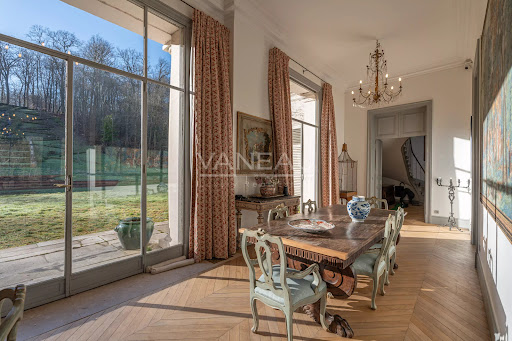


Set in an unspoiled natural environment along the banks of the Seine, Château de la Rivière offers a rare combination of privacy, architectural elegance and strong patrimonial value. Fully renovated in 2024, the estate comprises approximately 1,000 sqm of living space and enjoys landscaped grounds opening directly onto the river, with swimming pool, caretaker’s house and additional outbuildings. The ground floor is dedicated to grand entertaining. A sequence of reception rooms including a large salon, an intimate sitting room and a formal dining area ; offers remarkable volumes and exceptional ceiling heights. Fireplaces, large openings and architectural symmetry create an atmosphere that is both noble and warm. The kitchen and service areas have been carefully modernized, ensuring contemporary comfort while preserving the spirit of the property. The upper floors accommodate multiple suites and generously proportioned bedrooms, allowing for refined and comfortable hosting. The principal suite benefits from particularly spacious volumes and a dedicated dressing area. Additional bedrooms enjoy beautiful natural light and views over the park or the river. The fully converted attic level provides significant additional accommodation, ideal for extended family, guests or private events. Ideally located near Fontainebleau and less than one hour from Paris, the estate offers a rare balance between accessibility and seclusion. The presence of the Seine, the surrounding forest and the absence of any disturbance create a refined retreat atmosphere — peaceful yet perfectly connected.
…By Vaneau 9e


Chateau with high potential, isolated with outbuildings.In a preserved bucolic setting, this exceptional estate extends over nearly 8 hectares of landscaped park. It offers a dream backdrop for a family home, receptions, weddings, or professional projects, as well as high-end hospitality, combining historical charm, rare volumes, and significant development potential.At the heart of the property, a characterful chateau offers approximately 550 m² of living space to renovate, distributed over several levels around an impressive entrance hall with a majestic staircase, providing a succession of lounges, reception rooms, 8 bedrooms, spacious landings, and convertible attics.The interior architecture blends preserved historical elements (monumental fireplaces, stained glass, ceiling heights of 3.50 m, solid wood flooring).In the perspective of the park, the 90 m2 orangery is appealing with its style, featuring 6 large bay windows opening onto the park: a dream space for hosting private or professional events (cocktails, exhibitions, dinners...).A caretaker's house to be renovated, approximately 340 m2 attached to the former stables, completes the ensemble. A rehabilitation project could add hospitality potential to the estate.The park with its bicentennial trees could accommodate temporary or permanent installations as part of an event activity.WHAT WE LOVE:- The historical charm of the chateau and its generous volumes.- The ornaments.- The ancient materials.- The charm and potential of the orangery.ENVIRONMENT- Montauban 10 min- Highway 10 min- Montauban train station 15 min- Toulouse Blagnac International Airport 50 minThis description has been automatically translated from French.
…By Lougance


Close to Saint-Amour, at the edge of Revermont, this remarkable 18th-century castle elegantly embodies all the charm of great character homes. From the moment of arrival, the harmony of its architecture captivates the eye: its magnificent stone facades, delicately adorned with virgin vine, are topped with a roof punctuated by three slender towers that give the whole a noble and timeless silhouette. Overlooking a landscape of meadows and lush hills, the property enjoys a preserved, peaceful environment bathed in light, where each opening reveals magnificent views of the surrounding countryside.The spacious reception rooms, with generous volumes, have retained all the refinement of their era thanks to their old floorboards, woodwork, stone fireplaces, and beautiful ceiling heights. They open directly onto a superb tree-lined park and a vast terrace overlooking the valley, offering an exceptional panorama extending to the Beaujolais Mountains. A true green haven, the park is enhanced by majestic cedars, lime trees, and other remarkable tree species, inviting walks and contemplation.The fully renovated 12 x 5 meter swimming pool fits perfectly into this privileged environment. Protected by an electric solar cover, it allows for full enjoyment of beautiful days in an intimate and serene setting.Spread over several levels, the eight bedrooms offer spacious volumes and each has its own bathroom, ensuring optimal comfort for both family and guests. The recent double-glazed window frames provide excellent thermal and acoustic insulation, while the high-performance central heating allows for comfortable living in all seasons.A large outbuilding houses the boiler room as well as a garage that can accommodate two vehicles, while offering interesting additional development possibilities. The carefully arranged cellar constitutes a particularly warm reception or tasting space, further enhancing the character of this residence.Rare for its authenticity, the quality of its restoration, and the beauty of its environment, this property is an exceptional address. It is suitable both as an elegant family residence and for the development of a high-end hospitality project, in the heart of a region renowned for its art of living, gastronomy, and preserved landscapes.This description has been automatically translated from French.
…By Lyon - Sotheby's International Realty


Just 25 minutes east of Toulouse, this elegant 18th-century château is set within 1.4 hectares of private, south-facing parkland. Offering approximately 684 sqm of living space, the property includes 11 suites, reception rooms, a contemporary kitchen, and independent accommodation. All bedrooms and apartments have been carefully renovated and are currently used for an established hospitality business. The estate also features a 14 x 7 m swimming pool, spa, gym area, pool house, and landscaped grounds with mature trees, a well, and a natural spring. The property is immediately operational, with further potential for enhancement (windows and a small part of the roof), offering attractive value-add opportunities. Full details on request.
…By Junot Châteaux & Patrimoine


Located just 35 km from Toulouse, between Toulouse and Albi, this remarkable character estate of approximately 836 sqm enjoys a dominant position with beautiful views over the Agout gorges and the cathedral of Lavaur. Set within a landscaped park of over one hectare with swimming pool, the property forms a charming architectural ensemble organised around two château wings, complemented by an independent house and an additional outbuilding. One wing of the property already includes several apartments currently rented, generating stable rental income, while additional areas remain available for further development and optimisation of the investment potential. Among the existing spaces: a ground-floor apartment with terrace overlooking the Agout and a garage, currently rented a 128 sqm apartment with fireplace and cathedral views, also rented an approx. 130 sqm floor ready for conversion The estate also includes: a semi-detached house to renovate an outbuilding of approximately 117 sqm offering further development opportunities Local planning regulations also allow additional constructions, providing further possibilities for investors. Located in the dynamic town of Lavaur, where the rental market is particularly strong, the property offers both immediate rental income and significant long-term value creation potential. Combining character architecture, a park with swimming pool, and strong investment prospects, this estate represents a rare opportunity in the Toulouse region. Full documentation and investment potential details available upon request.
…By Junot Châteaux & Patrimoine


Ref.4707 : 18th and 19th C. chateau for sale in Morbihan department. In Morbihan, surrounded by unspoilt nature, Saint-Martin-sur-Oust charms visitors with its quality of life by the water. The Nantes-Brest canal and the green Oust valley offer a peaceful setting. Here, life slows down: landscapes are reflected in the water, birds accompany walks, and each season reveals a new atmosphere. It is an ideal place for lovers of nature and serenity, looking for a privileged natural environment that is nevertheless lively and animated in the summer months. It is a privileged starting point for bike rides, hikes and river cruises. The canal connects some of the most beautiful sites in inland Brittany, allowing you to discover the region along the water, combining heritage, culture and simple pleasures. Finally, Saint-Martin-sur-Oust is close to remarkable tourist villages such as Rochefort-en-Terre, Malestroit and Josselin. In addition to this exceptional neighbourhood, the town has a special charm of its own, sharing the spirit of the most picturesque Breton villages while preserving its calm and authenticity. It is in this unique region that you will find this château and its vast park on the banks of the river. The existence of a noble house on this site has been documented since 1427. A dwelling, part of which still stands today, was built in the 18th century. Then a new castle was built there in 1880. The outbuildings also date mainly from the second half of the 19th century. The château has a total surface area of over 820 sqm. It has a general U-shaped layout due to the different stages of its construction. The original main building faces east. Its lower façade is covered with a slate roof decorated with dormer windows with rounded pediments typical of the 18th century. It was extended to the north with a pavilion whose high roof echoes the style of the 19th-century castle, thus unifying the architectural ensemble. To the north-west, this dwelling was enlarged with a wing at right angles. The main part, the ‘new château’, faces south towards the river. It comprises a main building flanked by two tall pavilions, creating a beautiful classical symmetry. The windows are framed in tuffeau stone and the façade is decorated with corner chains and topped with a moulded cornice. The building is topped with steeply sloping slate roofs, accentuating the neoclassical majesty of the whole. It has classic-style triangular pediment dormers and two dormers in the style of the main building. Currently, the chateau is divided into three distinct parts: The current layout offers potential for renting out holiday cottages and guest rooms. I. THE 19th-C CHATEAU TO THE SOUTH, FACING THE RIVER: With a surface area of approximately 400 sqm, it has retained the original features that give it its charm: its monumental wooden staircase, old parquet floors, wood panelling, mouldings and rosettes, and fireplaces. Restoration work was carried out in stages. On the ground floor : a large entrance hall with wood panelling, cement tiles and the staircase. On the right, a bright living room with parquet flooring, a fireplace and wood panelling with large built-in mirrors. On the left, a large living room, a bedroom with a shower room and toilet, and a kitchen with a boiler room. On the first floor : corridors lead to four bedrooms, three of which have views of the canal, a bathroom, a shower room, a toilet, and a laundry room. Several cupboards. On the second floor (attic): five bedrooms with cupboards, two shower rooms and a toilet. II. THE DWEELING, CENTRAL SECTION : The surface area is approximately 200 sqm. Restoration work was carried out around twenty years ago. The house is cosy and well maintained. The central part of the château is accessed via a hallway with a staircase. On the ground floor : on the left is the living room, with its beautiful parquet flooring, wood panelling on the walls and fireplace with stove. On the right is the kitchen/dining room, withplenty of storage space, parquet flooring and light-coloured walls. On the first floor : The landing leads to three bedrooms, a bathroom with toilet, and a shower room with toilet. On the second floor (attic): three bedrooms, a shower room with toilet, and an old kitchen. III. THE NORTH PAVILION : The surface area is 230 sqm. The entrance is on the north side, through a door with a carved stone lintel in the shape of an ogee arch. The accommodation was restored about twenty years ago. Particular care was taken with the decoration of the interior. On the ground floor : an entrance hall with exposed stonework and a stone staircase, a large living room with a fireplace and imposing exposed beams, a small lounge with grey-blue wood panelling and trumeaux, a very bright kitchen, two bedrooms, a shower room, a toilet and a laundry room. First floor : a large bedroom with beautiful parquet flooring and a fireplace, with its own shower room, 2 other bedrooms, another shower room, and a toilet. A staircase leads to two attics convertible on the second floor. The outbuildings include: - 4 rental properties (currently rented) with monthly rents of: €572 + €455 + €498 + €415, totalling €1,940 per month. - Communal areas: barns, stables, old stalls, numerous small roofs, etc. The property covers approximately 29.65 acres (12 hectares), entirely enclosed, offering a preserved and peaceful setting. The park, adorned with centuries-old trees, features meadows and beautiful views of the surrounding nature. A peaceful riverbank runs along the river for nearly 800 metres, giving the place a refreshing atmosphere. A 9.88-acre (4-hectare) woodland criss-crossed by ancient paths is ideal for walks. The main tree species are oak, chestnut, Douglas fir and sequoia. Existing swimming pool (11 x 8 metres) but currently not in working order. Cabinet LE NAIL – Loire-Atlantique and Vendée - Mrs Nathalie TOULBOT : +33 (0)2.43.98.20.20 Nathalie TOULBOT, Individual company, registered in the Special Register of Commercial Agents, under the number 418 969 077. We invite you to visit our website Cabinet Le Nail to browse our latest listings or learn more about this property.
…By Cabinet Le Nail


In the heart of the Lot-et-Garonne region, between Penne-d'Agenais and Monflanquin, two of South-West France's most beautiful heritage villages, this 19th-century château offers approximately 700 m² (7,535 sq ft) of living space set within 4.8 hectares (11.86 acres) of gardens, woodland and meadows. Passed down through the same family for nearly 140 years, this character-filled estate has undergone a complete renovation between 2023 and 2024. Today, it combines the charm of its rich history with the comfort and quality of a recent restoration. Arranged around a central residence flanked by two wings, the château offers sixteen principal rooms, including ten bedrooms and nine bathrooms, distributed between the main house and two charming indépendant guests cottages. Generous volumes, abundant natural light, impressive ceiling heights and far-reaching views create an atmosphere that is both peaceful and refined. Equally suited as a private family residence, a hospitality venture or an events venue, the property features an elegant dining room, a dedicated breakfast area and a reception hall designed for private gatherings. Its exceptional tranquillity and complete privacy provide the ideal setting for weddings, celebrations and special events. A 10 x 10 metre swimming pool, an outbuilding of approximately 150 m² (1,615 sq ft), a charming secondary building of 861sq ft, in need of restoration — believed to have once served as the estate's chapel — together with an attic, laundry room and wine cellar complete this rare offering. A landmark property in the area, the château was notably owned by the family of General de Barescut, who was awarded the French Légion d'Honneur for his heroic service during the Second World War. This family history, closely intertwined with the estate for almost a century and a half, continues to contribute to its unique character and enduring appeal. Just minutes from motorway access and a TGV high-speed rail station, this exceptional property offers an inspiring lifestyle where contemporary comfort, heritage, nature and tranquillity come together in rare harmony.
…By Junot Châteaux & Patrimoine


iad France - Justine Beziat offers you: PRESTIGIOUS DOMAIN ON THE EDGE OF THE TARN - 438 M² OF LIVING SPACE ON MORE THAN 5 HECTARES - TWO HABITATIONS - SWIMMING POOL - OUTBUILDINGSSome properties impress. Others leave a mark. This one does both.Half an hour from Toulouse North, just a few minutes from Montauban, discover this magnificent estate built in 1886, nestled in a privileged environment along the Tarn.Set on over five fully fenced hectares, this rare property combines the timeless charm of a character home, the comfort of quality renovation, and exceptional development potential.Behind its automatic gate, a majestic tree-lined driveway leads to a true haven of peace where every building, every sightline, and every arrangement reflects the care given to this property over the years.It's hard to remain insensitive to a place where the elegance of a 19th-century residence blends with over five hectares of nature, with the Tarn as the only horizon.A character home of 319 m²As soon as you cross the front door, the charm of this home is immediately revealed.The beautiful high ceilings, period moldings, marble fireplaces, and generous volumes recall all the elegance of the grand bourgeois homes of the late 19th century.The ground floor is organized around generous reception spaces bathed in light.The double living room, the heart of the home, is enhanced by a magnificent fireplace that brings warmth, authenticity, and conviviality to this living space. It naturally opens onto a large veranda offering an unobstructed view of the park and allowing you to fully enjoy the outdoors throughout the year.On the other side of the spacious entrance hall, the independent kitchen is complemented by a back kitchen of approximately 20 m², ideal for daily use as well as for large receptions.This level also includes an office, a bedroom, a shower room, and a WC with a washbasin.On the first floor, charm operates once again.A superb corridor dressed in a magnificent herringbone parquet floor harmoniously leads to the sleeping areas and highlights all the elegance of this home.You will find a parental suite of more than 25 m², with its dressing room and private shower room, a second suite benefiting from a bathroom with shower and bathtub, as well as two additional bedrooms between which it is quite possible to easily create a shower room.A cellar completes this residence.An independent house of 119 m²Completely independent, this second dwelling is a real asset.It features a kitchen, a spacious double living room with a dining area dominated by a superb fireplace, a laundry room, and a WC.On the first floor, two bedrooms, a shower room with WC, and a mezzanine offer an ideal space to accommodate family and friends, develop a guest house activity, create independent offices, or have a comfortable guest house.An exceptional living environmentOutside, everything seems to have been thought of to fully enjoy the estate.The park, carefully maintained thanks to an automatic irrigation system, benefits from a well and extends to the banks of the Tarn, offering an environment that is both peaceful and privileged.The saltwater swimming pool, fully automated thanks to its filtration and product injection system, invites you to enjoy the nice days without constraint.Facing the river, a spectacular covered terrace of approximately 250 m² becomes a true reception area where it is easy to imagine large family tables, summer evenings, or private events in an exceptional setting.The estate also has an old barn of about 300 m², covered with a recent roof, offering remarkable potential to bring many projects to life. Reception room, wellness space, garages for collector vehicles, workshops, additional accommodation, or professional activity... the possibilities are numerous.The numerous covered parking spaces also allow for sheltering several vehicles from the elements.The entire estate benefits from particularly sought-after amenities: underfloor heating in both homes, a Viessmann boiler installed in 2020 for the main residence, reversible air conditioning in the independent house, facade renovated in 2023, motorized gate, video surveillance, two energy performance certificates rated C, and an exceptional level of maintenance that allows immediate enjoyment of the premises without major work.A domain with multiple possibilitiesExceptional family residence, multigenerational property, guest rooms, gîtes, reception venue, seminars, or event project... this estate offers a rare freedom.Its privileged geographical location, between Toulouse and Montauban, its natural environment, its two independent dwellings, its outbuildings, and the quality of its amenities make it a property both elegant and versatile.More than a home, it is a place of life, sharing, and transmission. A domain where one imagines both large family gatherings and the most beautiful projects for tomorrow.An immersive virtual tour is available to discover the entire property before your visit.Agency fees are paid by the seller. A valid identification document will be requested at the visit, in accordance with article L.561-5 of the monetary and financial code. Information about the risks to which this property is exposed, including the legal obligation for clearing, is available on the Géorisques website: http://www.georisques.gouv.fr. This real estate advertisement has been drafted under the editorial responsibility of Mrs. Justine Beziat, independent real estate agent (without holding funds), commercial agent of SAS I@D France registered at the RSAC of Montauban under number 981895501, holder of the real estate canvassing card on behalf of the company I@D France SAS.This description has been automatically translated from French.
…By Iad France


An 18th century castle and its park of nearly 4 hectares. The estate covers an area of approximately 4 hectares. The castle, built in 1758, is distinguished by its classical architecture, typical of French residences from the second half of the 18th century. It is arranged according to a symmetrical plan, consisting of a central body flanked by two wings, which structure the main façade oriented to the south. A staircase tower was added in the 19th century to one of the wings. The main building is elevated to three levels: ground floor, noble floor, and unconverted attic, under a Mansard roof, covered with slates. The latter is rhythmically adorned with three dormer windows with triangular pediments and several chimney stacks. The façade receives abundant natural light from tall French windows. The dressed stone frames, horizontal bands, and corner chains emphasize the quality of the arrangement of the construction. The slender tower adds a picturesque dimension and reflects the embellishments made in the 19th century, in respect of the original construction. The park, inspired by classical designs, is lined with structured paths and commands carefully drawn perspectives, in the tradition of French country estates, designed to combine representation, comfort, and harmony with the natural environment.This description has been automatically translated from French.
…By Patrice Besse


A 19th-century chateau with guest accommodations, swimming pool and grounds, perched along the banks of the Saône River, 35 minutes from Dijon in the Bourgogne-Franche-Comté region. A tall wall conceals the entire property from view, except for the tops of a few trees visible from the road. Accessible via an automatic entrance gate that opens onto a parking area, a landscaped drive – bordered on one side by the annexe with its three garages and, on the other, a verdant arbour with views of the Saône River – leads to the entrance of the L-shaped chateau, located in the middle of the property and adorned with a tower topped with glazed tiles and an exterior brick walkway. Separated from the property’s outbuilding by a gravel courtyard, the main dwelling includes ten guest accommodations, while the swimming pool and the entrance to the property’s vaulted cellars are located in front of the main façade, facing south. As for its landscaped terraced grounds, they slope down behind the chateau all the way to the Saône River, where a path provides gentle access to the landing stage and an immense space along the water’s edge.
…By Patrice Besse


Château Rieutort – An Exceptional Wine Estate, Luxury Hospitality Business & Historic Château in the Heart of Occitanie Steeped in history and surrounded by the vineyards of Southern France, Château Rieutort is a remarkable 18th-century estate offering an exceptional opportunity to acquire a thriving hospitality business together with a productive vineyard and an elegant private château. Meticulously restored with great respect for its heritage, the château extends over approximately 900 m² across three levels. The property combines authentic architectural character with refined contemporary comfort. The private owners' residence comprises four spacious bedrooms and three secluded terraces, while five beautifully appointed guest suites welcome visitors in an atmosphere of understated luxury. Four magnificent interconnecting reception rooms provide an elegant setting for private entertaining, weddings, seminars and exclusive events. The château could also be effortlessly returned to an entirely private residence if desired. Set within approximately 30 hectares of unspoilt countryside, the estate includes 23.4 hectares of productive vineyards under the IGP Pays d'Oc appellation, with a further 4 hectares available for planting. The vineyard has been thoughtfully established with grape varieties ideally suited to both the terroir and current market demand, comprising Merlot and Cabernet Sauvignon alongside Vermentino and Chardonnay. The estate benefits from comprehensive production facilities, including a semi-underground winery with a capacity of approximately 1,120 hectolitres, providing ideal conditions for vinification and ageing. A 90 m² agricultural building houses vineyard equipment, with further development potential. The winery buildings are currently leased, providing additional income. The business is well established and offers multiple revenue streams. The operating company manages an elegant hospitality operation comprising luxury bed and breakfast accommodation, seven fully renovated gîtes, weddings, private celebrations and corporate events. The estate accommodates up to 62 guests and is complemented by two swimming pools, a spa and beautifully landscaped grounds that create an exceptional destination for leisure and events. The vineyard operation is managed separately through the agricultural company (GFA), with the harvest currently delivered to the Saint-Pargoire cooperative winery, providing a straightforward and efficient operating model. Whether sought as a prestigious private family estate, a luxury hospitality destination, or an investment offering diversified income from wine production, accommodation and events, Château Rieutort represents an exceptionally rare acquisition. A distinguished historic château, a productive vineyard and a flourishing lifestyle business—offered as one remarkable estate in one of the most desirable regions of Southern France.
…By Montpellier Sotheby's International Realty
'%20stroke='%23DDAA3A'%20stroke-width='1.909'%20stroke-linecap='square'%20stroke-linejoin='bevel'/%3e%3c/svg%3e)
Receive by email any new listing that may match your search criteria
By validating this form, you accept the general conditions of use of Le Figaro Properties.
These agencies offer a selection of luxury properties vente . Feel free to contact them for personalized assistance.