Get early access to listings that match your criteria
Never miss an opportunity again. Our personalized alerts notify you instantly.

 English$ USD · m²


Located in the Calea Dorobanți–Polonă area, on a secondary street with restricted access, this boutique building completed in 2024 is available for purchase in its entirety. Set on a 240 sqm plot, the property offers a total area of 572.8 sqm and is arranged over a basement, raised ground floor, and four upper floors, comprising five apartments within a contemporary building with a limited number of residences. The opportunity to acquire the entire building is particularly rare in one of Bucharest’s most valuable residential areas. Its configuration allows the property to be managed as a whole while offering flexibility for the individual rental or resale of the apartments, their retention within a residential investment portfolio, or a combination of private and investment use. The 115 sqm basement includes storage and administrative spaces, together with three garages. The organisation of this level supports the efficient management of the building and provides valuable auxiliary areas for storage and day-to-day operations. The raised ground floor accommodates a three-room apartment with two bathrooms and 78 sqm of usable interior space. The first, second, and third floors each contain an identical apartment occupying the entire level. Each residence offers a total area of 95.2 sqm, including 83.2 sqm of interior space and two terraces with a combined area of 12 sqm, and comprises three rooms, three bathrooms, and a technical room. The top floor is reserved for the penthouse, which offers a total area of 94.2 sqm. The property includes 76.7 sqm of interior space, a 17.5 sqm terrace, two rooms, two bathrooms, and a technical room. Ownership of the penthouse also includes the building’s rooftop, designed as an accessible terrace with a parapet and available for arrangement according to the future owner’s vision. The penthouse can be accessed directly from the lift. The building is served by an OTIS lift, while the apartments benefit from underfloor heating and individual heating systems. Daikin air-conditioning units are installed in every room, allowing individual temperature control throughout the year. Premium Reynaers aluminium joinery with triple glazing contributes to the thermal and acoustic insulation of the residences. Electric exterior blinds are integrated into the façade, and all bathrooms are fully finished and equipped. The level of specifications allows the apartments to be used immediately and simplifies the management of the property as a whole. Calea Dorobanți–Polonă holds a distinctive place among Bucharest’s central addresses. The architecture of its historic buildings, contemporary residential developments, and proximity to Piața Romană, Dorobanți, Floreasca, and the city centre support the area’s enduring appeal. Restaurants, cafés, galleries, cultural venues, schools, and premium services are all within easy reach, while the position on a street with restricted access keeps the building away from the traffic of the main boulevards. The price of €1,650,000 + VAT is competitive for the acquisition of an entire newly completed building comprising five apartments in a central area where properties of this type rarely become available.
…By Romania Sotheby's International Realty


Transylvanian Masterpiece: 17th-Century Historic Estate, Fully Restored with Modern Elegance An extraordinary opportunity to own a timeless piece of history in the heart of Transylvania. This 17th-century estate has been masterfully restored to preserve its original architectural integrity while integrating cutting-edge technology, sustainable materials, and modern comfort. An exclusive ensemble of three impeccably restored heritage homes, unified within a private courtyard oasis. The property beautifully revives the spirit of a bygone era—while offering serene seclusion, timeless beauty, and uncompromised privacy. Located between Poiana Brașov, Romania’s most prestigious ski resort, and the world-famous Bran Castle (known as Dracula's Castle), this unique property is set in a landscape of myth, mountains, and unmatched beauty. Whether envisioned as a private residence, boutique hotel, or exclusive retreat, this estate offers exceptional versatility, privacy, and prestige. • Original stone walls, wooden beams, and artisan details from the 1600s • Smart-home systems, underfloor heating, and premium finishes • Breathtaking Carpathian views, lush surroundings, and excellent accessibility • Ideal for year-round living or seasonal luxury
…By Annonceur International


In Ferești, the place where Romanian traditions are still alive, where the folk costumes are proudly worn and the households hide stories behind the monumental wood gates, an unique ensemble of traditional houses is waiting to reveal itself in front of the lovers of beauty. The ensemble is made of almost 2400 sqm of land and includes 5 carefully restored houses, a pond with sturgeons, carps and trout, a storeroom made of stone, a wooden timber pavilion, sauna, a hot tub and a barbeque zone. Next to the other houses, benefiting from a zip line and a specially designed barbeque zone, the tree house is ready to be discovered in the wooded area (1500 sqm). The entire ensemble offers 22 beds, being the ideal places for families eager for nature and relaxation, or for those who want to disconnect from daily life.
…By Romania Sotheby's International Realty


Drahneilor Mansion is located in Ruscova, N-E of Maramureș County. Besides the special beauty of the relief, here is the most beautiful traditional mansion in Maramureș and unique in Romania. The name "Drahnei" comes from the valley where it is located, Dragmirov Valley, a valley of great beauty, guarded by high hills. From Ruscova, a cobbled road turns right and crosses the Ruscova River on the Dragmirov Valley. The road of about 4 km takes you to the entrance gate of the mansion, the end of the line of Dragmirov Valley. You will easily notice the place, thanks to a beautiful and massive Maramures gate, sculpted in oak wood with great talent by master Ion Feiciuc. Drahneilor Mansion rises proudly beyond the special gate. The mansion's construction began in 2010 and it was completed in 2015. The mansion is located on a generous land area of 2.8 hectares, it has 13 rooms and can accommodate up to 32 guests. The restaurant of the mansion, where Maramures specialties are served, has a capacity of 50 people and there are 30 more seats on the terrace. The beauty of the mansion, the picturesque character of the place, the traditional dishes served in the restaurant have made the Drahneilor Mansion an appreciated place, both nationally and internationally.
…By Romania Sotheby's International Realty


Located on a sunny street, with buildings sheltered by trees that promise tranquility, the property is currently used as a tourist unit; the small and charming 4-star boutique villa is highly appreciated by tourists, as evidenced by its ratings on renowned review platforms. However, the features valued by visitors also recommend it for conversion into a company headquarters, an embassy/consulate, or a private residence – the 10 rooms providing ample space for a large family with hobbies and many friends. Situated a short distance from the Bega River, the Roses Park, and the Cathedral Park, the building enjoys an excellent location, offering quick access to both the historic center of Timișoara and the airport, which is only 12 km away.
…By Romania Sotheby's International Realty


At the foot of the Făgăraș Mountains, in Porumbacu de Sus, Dealul Verde is a distinctive hospitality property set across 5,000 sqm of land. The estate comprises eight themed guest rooms, a lounge, sauna, heated outdoor tubs and dedicated relaxation areas. Its Hobbit-style houses, shaped by curved volumes and organic forms, blend naturally into the landscape and give the property a sense of magic that is especially appealing for nature escapes and families travelling with children. The architecture moves away from rigid lines and conventional geometry, a direction that continues throughout the interiors. Each of the eight rooms, the Artist’s Room, the Agriculturalist’s Room, the Farmer’s Room, the Blacksmith’s Room, Dorel’s Room, the Carpenter’s Room, the Weaver’s Room and the Traditional Room, has been individually designed with custom-made furniture, reinterpreted objects and numerous handcrafted details. Paintbrushes and canvases, timber, wrought iron, old tools, references to traditional crafts and authentic decorative pieces are incorporated into both the furniture and the interiors. The Traditional Room preserves some of the property’s most personal elements, including a woven shawl approximately 120 years old and a traditional rug inherited within the family, introducing genuine objects with a history of their own. The property also includes a lounge, indoor fireplace, outdoor fire pit, sauna and heated tubs, while the guest rooms are fully equipped for current hospitality use. Amenities include parking, Wi-Fi, televisions, refrigerators and a dedicated pillow menu with several comfort options. Dealul Verde is also pet-friendly. Location is one of the property’s strongest assets. Porumbacu de Sus lies directly beneath the Făgăraș Mountains, with access to hiking routes in the Negoiu area and towards Șerbota Waterfall. Castelul de Lut Valea Zânelor and Povestea Calendarului are nearby, while the Transfăgărășan, Bâlea Lake and Avrig further broaden the region’s tourism appeal. Sibiu is approximately 40 km away, placing Dealul Verde within easy reach of one of Romania’s most important cultural and tourism destinations. Beyond the city, Southern Transylvania opens onto Saxon villages, fortified churches, historic towns and Carpathian landscapes that attract both international visitors and a strong domestic tourism market. Transylvania enjoys a level of international recognition that is rare for an Eastern European destination, yet its appeal is equally strong within Romania. For domestic travellers, the region remains one of the country’s preferred choices for escapes into nature, rural tourism, local gastronomy and experiences connected to traditional life. Internationally, its visibility continues to grow through its heritage, Carpathian scenery and the distinctive character of its villages. Dealul Verde is particularly well positioned within this landscape. Its concept is already established and immediately recognizable, the eight guest rooms allow the existing hospitality operation to continue, while the 5,000 sqm of land offer scope for expanding the experience through retreats, wellness programs, outdoor activities, private events or exclusive-use stays. This exceptional hospitality opportunity is set within one of Eastern Europe’s most recognizable and attractive destinations, with the Făgăraș Mountains in the immediate vicinity and Sibiu less than an hour away. Dealul Verde has strong potential to further establish itself as a boutique destination and to continue benefiting from the growing international and domestic interest in Transylvania.
…By Romania Sotheby's International Realty


On the edge of the city of Arad, on the banks of the Mures, 5 minutes from the city center, the green is at home; thousands of trees spread billions of leaves towards the sun and spread shade and coolness around. In one of the highest areas, close to the new bridge over Mures, there are two houses and a series of plots where plants and flowers are produced for the community, all located on a private land of approximately 2 hectares. The domain for sale consists of two villas, a garage and a series of greenhouses with a capacity of approximately 70,000 flowers, the villas being modern constructions, fully equipped and equipped, they truly reveal their elegance once you arrive in the lush garden that surrounds the villas - the soft textiles in sand colors announce the color of the whole house, and the fireplace, the Viennese piano, the warm shades of wood and sand complete the atmosphere of a space designed to relax without getting tired. The interior of the ground floor exploits the level difference in an intelligent way, obtaining a decorative and functional step between the open kitchen and the living room. With a fireplace and soft colors, the living room is comfortable but with a certain alert feeling - here time does not flow, does not pass but is lived, enjoyed. The design project is made and implemented; the furniture and materials are premium, as are the electronic equipment. The house is perfectly functional, the heating is done through the floor throughout the house (gas central), it has air conditioning, a vacuum cleaner in the walls, an indoor pool and all the facilities to feel like you are in a lush oasis. In addition to the two villas located on an area of approximately 3,500 square meters, there are also 10 greenhouses where various plants and flowers are grown, located on a land of approximately 15,500 square meters. Upon purchase, this small family business can be continued or on the existing land there is the possibility of realizing a real estate development project, being already a PUZ that regulates the subdivision of the land to build houses.
…By Romania Sotheby's International Realty


The Casa Bata estate extends over the counties of Arad and Timis, with two owners who are passionate about nature and relaxation. The motivation for building Casa Bata arose from the fact that the large forest areas owned by the owners also generate exceptional opportunities for hunting and other recreational and relaxation activities in nature. Thus, the two owners decided in 2008 to build this building from scratch, from green grass, with the idea of satisfying the needs of recreation and hunting of the owners' potential guests and guests. The logo is an 8-cornered flower (8 petals) inspired by the Mayan civilization and represents optimism and confidence in the future. Casa Bata is the only luxury location with 4 daisies style in the Mures Valley, which offers rooms with luxurious decor and furniture. You will have coffee in a lobby bar with a fireplace, you can dine in a spacious restaurant and you will taste traditional dishes prepared from our own natural products or purchased from the area. Do you have an important business meeting and want to impress your business partners? Casa Bata offers you a modern conference room where you can hold your business meeting, presentation or training. On top of that, during breaks or after "business", you can have a "boyar" meal in our restaurant with traditional and international dishes. And to complete the scenario, if you have to stay overnight you will be able to spend the night, of your choice, in one of the rooms in the house.
…By Romania Sotheby's International Realty


Just 20–30 minutes from Cluj-Napoca, in the village of Sălicea, "La Mesteceni" introduces a hospitality concept centered around wellness, relaxation, and private experiences, set within a discreet natural environment while remaining closely connected to one of Romania’s most dynamic urban and economic centers. Conceived as a multifunctional retreat, the estate combines the infrastructure of a premium boutique resort with the flexibility required for a variety of hospitality and wellbeing concepts. Set on approximately 7,762 sqm of land arranged across three natural terraces, with a built area of approximately 1,218 sqm, the complex integrates 32 rooms and 23 bathrooms or sanitary facilities, organized in a way that supports both hospitality operations and private or corporate use. At the entrance of the property lies the dedicated SPA and wellness building, complemented by a landscaped parking area with 32 spaces, while the main building hosts the 10 en-suite guest rooms, restaurant, and summer terrace positioned beneath the shade of a mature beech tree, a defining element of the estate’s natural atmosphere and identity. Descending along the green pathways and terraced outdoor areas, the property opens toward the outdoor pool zone, mini sports court, and spaces dedicated to relaxation and outdoor activities. The entire estate has been designed to offer privacy, tranquility, and a direct connection with nature, within a setting equally suited for individual wellbeing experiences, private gatherings, or corporate events. The wellness component represents one of the central features of the property, bringing together an indoor swimming pool, dry sauna, steam sauna, and three dedicated massage and therapy rooms. The outdoor pool, relaxation areas, and direct connection to the surrounding natural landscape complete the atmosphere of a retreat designed for reconnection, balance, and personalized experiences. The restaurant, conference room, professional kitchen, laundry facilities, and technical spaces complete the infrastructure required for the efficient operation of the estate, while the versatility of the property allows for multiple directions of development: wellness retreat, corporate retreat and team building center, premium boutique resort, yoga and coaching retreat center, private events venue, or a concept focused on recovery and wellbeing. Its proximity to Cluj-Napoca adds a significant strategic advantage. In recent years, the region has become one of Romania’s most dynamic destinations, constantly attracting both domestic and international visitors drawn by the combination of nature, gastronomy, culture, and contemporary lifestyle. Cluj-Napoca has established itself as one of Eastern Europe’s leading creative, academic, and technology hubs, directly contributing to the growth of the premium hospitality and experiential tourism sectors throughout the region. Nearby, some of Transylvania’s most appreciated natural and leisure attractions further enhance the appeal of the location, including the forests and hiking routes of the Apuseni Mountains, Salina Turda, regarded as one of Europe’s most spectacular underground redevelopment projects, as well as the lakes and recreational areas surrounding Cluj. The natural setting surrounding the estate supports a wide range of outdoor activities, from hiking and nature trails to biking, e-biking, ATV, and dirt bike experiences, offering a balance between urban accessibility and the atmosphere of a destination dedicated to relaxation and outdoor living. Through its scale, infrastructure, and positioning, "La Mesteceni" stands out as a rare property in the proximity of Cluj-Napoca, capable of supporting both a mature hospitality operation and the development of a premium concept aligned with the evolving direction of experiential and wellness tourism.
…By Romania Sotheby's International Realty


Set in one of Romania’s best-known mountain destinations, Hotel Miraj occupies a 6,347 sqm property surrounded by forest and the landscape of the Postăvarul Massif. Classified as a 4-star hotel, the property combines the infrastructure of a fully operational hospitality business with the advantage of a generous land plot, in an area where properties of this scale are becoming increasingly rare. Poiana Brașov has been undergoing an important phase of development and repositioning for several years, moving beyond its traditional profile as a winter sports destination. Summer mountain activities, cycling, wellness, events, and corporate tourism are extending its appeal throughout the year, while new hotel investments and the arrival of international brands in the premium segment confirm the growing interest in this market, both nationally and internationally. The development of Brașov-Ghimbav International Airport further strengthens the accessibility of Brașov and the wider region. Completed in 2008, Hotel Miraj has a B+GF+2F+A height regime, a total built area of 2,030 sqm, and a building footprint of 810 sqm. Its architecture follows the mountain character of the area, combining stone, wood, and rustic plaster within a substantial building surrounded by mature vegetation. The reception area includes the front desk, a guest waiting lounge, an administrative office, and a luggage room. The restaurant has a capacity of 110 seats and is arranged across several interconnected open spaces. Adjacent to it is the professional food preparation and storage infrastructure, including dishware areas, cold rooms, a dishwasher area, and food storage rooms. The ground floor also includes a bar and retail space. The hotel features a conference room, allowing for business meetings, corporate events, and private groups, as well as a fitness room and sauna. Accommodation comprises 30 guest rooms ranging between 17 and 19 sqm, together with four apartments of more than 30 sqm each. All accommodation units have private bathrooms and are furnished and equipped in accordance with hotel standards. Access between floors is facilitated by a guest elevator, while all areas of the hotel are fitted with climate-control systems. The basement accommodates the laundry facilities, technical rooms, and boiler room. Outside, the property includes a rustic wooden gazebo designed for outdoor dining and leisure, within a setting characteristic of Poiana Brașov. The hotel’s location provides convenient access to the main attractions of the resort. Poiana Aviatorilor is approximately 770 metres away, while Lupului Chairlift and Alpin Bike Center are around 1.3 km from the property. The centre of Poiana Brașov is approximately 1.6 km away, as are St. John the Baptist Church and Poiana Brașov Monastery, while the Leisure and Entertainment Centre is located approximately 1.7 km away. The ski slopes and cable transport facilities of the Poiana Brașov ski area are generally within 1.5 to 3 km of the property, depending on the access point. From an investment perspective, one of Hotel Miraj’s most significant assets is its 6,347 sqm land plot. The relationship between the existing built area and the overall size of the property leaves considerable scope for further development, subject to applicable planning regulations, whether through an expansion of the accommodation capacity, the addition of wellness, leisure, or event facilities, or other complementary functions. As Poiana Brașov continues to evolve into a mountain destination with an increasingly strong presence on the international hospitality market, the property offers both the infrastructure of an established hotel and the land required for the development of a larger-scale hospitality operation.
…By Romania Sotheby's International Realty


Alexandrescu Manor from Guranda has a history of more than one century, being built at the order of the spouses Mihai and Mathilde Alexandrescu, Mihai being a Wallach boyar who settled down in Moldova at the end of the 19th century, around 1890. Situated at approximately 40 km from Botoșani, the property of the family Alexandrescu was about to become not only residence, but also a source of income, the domain being extended with hundreds of hectares. The main building was buttoned up in 1905, the project being signed by a Venetian architect. The estate borrows obviously from the typical architecture of those times, Neo-Romanian style, the Neo-Romanian style being the most dashing at the turn of the centuries. Notwithstanding, the estate is marked by different decorative effects that offer a special aspect, monumentally – the use of the brick in the decoration of the borders or of the wooden frames in the tracing of small balconies. The heiress of the manor was the only daughter of the Alexandrescu spouses, Yvonne (1890-1974), who had to enter in the big Cantacuzino family, getting married with Ion Cantacuzino (1888-1954), with whom she had a daughter, Claudina (born 1914). After the dispossessions from the year 1948, the manor enters in the property of the communist state, which, since 1949, has set up in the manor from Guranda a hospital unit. In the 2000s, the mansion is taken into family ownership, by his heirs.
…By Romania Sotheby's International Realty


With a green hill in the background as a theater setting, this mini-park of leisure promises and delivers well-being. On the property there are indoor and outdoor swimming pools with heated water, jacuzzi, wet & dry sauna, deckchairs that invite you to laze around in the afternoon, massage room, a synthetic football field that becomes an ice rink in winter, large and green courtyard, playground, generous terraces. A conference room equipped with video projector is ready to receive corporations for attractive team building sessions. The main building with its long sloping roof houses the spa, 10 guest rooms and the function room with a capacity of 60 people. The restaurant, with a similar capacity, occupies a separate building and the accommodation space is completed by the cabin, called Ursa perhaps in honor of the sky full of stars in this peaceful corner of the world. Built in 2016, close to the Bistrița river and the Colibița lake, the guesthouse is currently only rented in its entirety, in self-catering mode (7 double rooms with private bathroom, living & dining room, terrace, gazebo & grill). The beauty of the natural landscape inspires hiking, cycling through the woods, boating on the lake, carting or horse-drawn sleigh rides. Tourists can visit the nearby trout farm or sheepfold and, depending on the season, participate in agricultural activities in the guesthouse's garden. Extending the range of action throughout Bistrița-Năsăud county, natural reserves, lakes, churches and monasteries, caves and fortresses are popular points of attraction. photo Florin Pepene
…By Romania Sotheby's International Realty


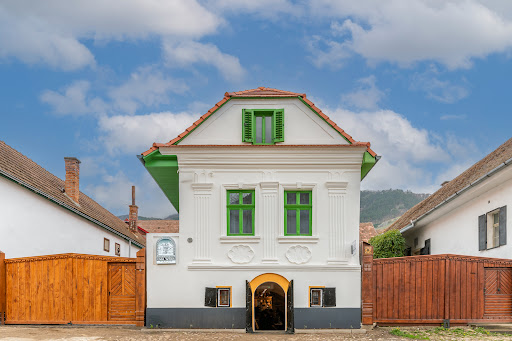

In the heart of Rimetea, one of the best-preserved rural settlements in Central Europe, Casa Weiss emerges as a heritage property where history and contemporary hospitality converge in a rare and cohesive expression. Positioned on the main street of the former Torocko, within an architectural setting of remarkable identity, the residence reflects the evolution of a community that transitioned from iron processing during the Austro-Hungarian Empire into a refined bourgeois culture, still evident today in the order and character of its built environment. Constructed in 1910, the property carries a recognized patrimonial value at a European level, having been awarded the prestigious Europa Nostra Award by the European Commission for heritage conservation. The designation of the entire street as a protected area by the National Office of Historical Monuments, along with Rimetea’s nomination for inclusion on the UNESCO World Heritage list, further underscores the exceptional cultural significance of this setting. A comprehensive restoration completed in 2023 has carefully redefined the property, balancing authenticity with modern comfort. Undertaken by specialized restoration teams and an architect experienced in historic buildings, the project revealed traditional construction techniques and highlighted the intelligent use of local materials. Key architectural elements, including doors and windows, were meticulously recreated by hand, preserving original proportions and details, such as the distinctive three-pane configuration, ensuring visual and historical continuity. Today, Casa Weiss operates as a boutique guesthouse with an integrated bistro, offering a living experience shaped around the concept of time. The four accommodation spaces are designed as distinct interpretations of different eras, from the authenticity of the early 20th century to the functional elegance of the post-war period, through the transitional aesthetic of the 1980s, and into a refined contemporary language. Each room becomes an individual experience, while maintaining premium standards of comfort through carefully selected materials, modern bathrooms, and high-quality furnishings. Set within the Trascău Mountains, the property benefits from a striking natural landscape defined by the dramatic presence of Piatra Secuiului and the harmonious architectural fabric of the village. Rimetea is increasingly recognized as a rising destination on the European tourism map, valued for its authenticity and the rare coherence of its built environment. Convenient access from Cluj-Napoca, approximately 75 kilometers away, ensures strong connectivity for international visitors. From an investment perspective, the property stands out through an already validated brand identity, a clear positioning within the boutique heritage hospitality segment, and its integration into a destination with accelerating growth potential. The concept allows for further development in directions such as fine dining, curated cultural experiences, or thematic retreats, enhancing the appeal of an already well-defined offering. Casa Weiss is not merely a successful restoration, but a coherent approach to heritage valorization through a contemporary hospitality concept. A property that transforms history into experience, while offering a solid foundation for a long-term investment, representing a strategic opportunity for investors seeking unique assets with profound cultural value and strong potential for growth within the European experiential tourism market.
…By Romania Sotheby's International Realty


In the long history of the Leordeni, a village which was first documented in 18th of May 1526 by the voievode (local prince) Radu de la Afumaţi, we can find extraordinary specificities from the evolution of the Romanian society along the great noble families which shaped it. Leordeni, cornerstone of important dynasties – Leurdenii, Băleanu, Golescu, Lahovary or Kretzulescu – was home to imposing residences and domains corresponding to the great power and reputation of their owners. One of the last great lords in Leordeni was Nicolae Kretzulescu (Crețulescu) (1812-1900) founding father of the Romanian Academy and a stated liberal appointed Prime Minister three times. Nicolae Kretzulescu, Constantin Brâncoveanu and Iordache Kretzulescu’s heir of Leordeni, built an impressive estate which later has been inherited by his daughter, Anna, who married Lahovary. At the same time Kretzulescu was managing his estates, Nicolae (Nae) Gussi (1830-1901), appeared on the scenery as administrator of the Golescu family’s fortune – another great family in Leordeni. After 1880, Gussi becomes the owner of the Golescu estates which were neighbouring those belonging to the Prime Minister. The hostility between Kretzulescu and Gussi was notorious, and the economic struggles between them both culminated in a series of lawsuits at the end of the nineteenth century. The variety of lands (arable, vineyards, forests) defining the estates of the Leordeni would evolve over time through various agrarian reforms, landing or expropriation laws, inheritances, or successions. And in the interwar period these testified the last two great families. The Gussi family (Alexandru, Traian, Paul and Elena) and the Lahovary family (through Anna) held together approximately 550 ha, plus another 100 ha of vineyards. They were in fact the descendants of Nicholas Kretzulescu and Nae Gussi. The Golescu-Gussi estate evolved notably through the two centuries of history. The first version of the manor was built by the Golescu family, probably during the life of Iordache Golescu, who also built the Golescu Church in the proximity of the estate. Subsequently, after Nicolae Gussi’s ownership, the property changed, so that after 1900, Alexandru Gussi (1864-1947) revolutionized the manor and the entire estate. In fact, Alexandru, a magistrate and a politician with an important activity in the Muscel Bar and Prefecture, would devote much of his career and life to the modernization of his native lands. Owning the old house of the Golesti, Alexander rebuilt it between 1938-1939, making it a truly monumental construction. After 1949, the entire domain was nationalized and had different functionalities serving the communist institutions (the office of "Sovrom Petrol", IAS and the City Hall).
…By Romania Sotheby's International Realty


Heading to Huedin from Cluj-Napoca, one steps into Călatei Land, a region with villages where there are still carved wooden gates, old houses, authentic customs; a region where the people cook old recipes, wear folk costumes and enjoy traditional dances. Mănăstireni is only 50 km away from Cluj-Napoca, in Călatei Land, a settlement probably dating back to antiquity according to the Roman vestiges embedded in the walls of the old reformed church: two carved funerary lions and a medusa (gorgon) head. Otherwise, the first documentary attestation of Mănăstireni dates from 1332. Walking along the country road, the real estate is located right on the edge of the forest: a glimpse of paradise in an undisturbed oasis of green and peace. On the fenced plot of 7,500 sqm, the buildings that make up the property respect the spirit of the place and invite to pastoral retreat. The first building is the guest house, with lime plastered walls and roses in front of the porch. The house has two living spaces with separate entrances. The interiors are furnished in a rustic style, with the roof wooden beams left uncovered and stone finishes in the kitchen area. Painted pieces of furniture and doors, pillows embroidered with traditional motifs or the iron stove are the details which preserve the specifics of the place while providing modern comfort. The old farmhouse was divided into two independent spaces, connected by an "alley" whose roof is being finished, but which projects the space directly into nature. The first building is structured on two levels: ground floor and attic. It is a railroad house, with windows on both sides. The exterior stone walls seem to prepare for an austere and minimalist interior. In reality, the interior design is sophisticated, ingeniously using the linear layout of the construction by creating spaces with precise destinations in complementary styles. The rustic style kitchen is complemented by the antiqued wooden frames and the wooden roof. Comfortable furniture and finishes with stone and wallpaper are the choice for the living room opposite the open kitchen . The bedroom is bright and the home's two bathrooms display an impressive design and quality. The attic occupies only a portion of the building and is set up as a bedroom. The second building in the old farmhouse is not finished, but used as an arts and crafts workshop and warehouse.The former shed, with a generous size, is used as a garage for 2 or 3 cars. The real estate is truly a glimpse of paradise, a perfect retreat into nature and access to fairy-tale lands, unspoiled by the passage of time. It can be kept in the current structure or expanded according to the vision of the future owner. photo Florin Pepene
…By Romania Sotheby's International Realty


The proud Maramuresan gate stands straight at the street and invites you inside. The fence in which it is trapped, made of woven canes and with narrow eaves, allows the visitor to see from the outside only the roof of the traditional shingled building. Between the stone foundation and the attic, the houses breathe through a verandah made of artistically cut wood; from here the view is wonderful, over trees, valleys and pastures undisturbed by man. The four houses that share their yard are each arranged on the ground floor and attic; the renovation of one of them has been completed, the others are still being worked on. To encourage socializing they are served by a gazebo where there is an oven and grill. The interior is chic, with the living area on the ground floor in the colors of the sky and the night area upstairs, in the shades of wood that outline the ceiling. Breb, the flagship village of Maramures, is an extremely sought-after destination and an experience highly desired by tourists is living in traditional houses. Many of the existing ones have been converted into guesthouses, with varying degrees of comfort depending on the attention to detail of the conversion project.
…By Romania Sotheby's International Realty


On a corner of plains, on a foot of heaven - this is how the Romanian fairytale land is described, but good things also happen at the foot of the mountain, especially when it is Retezat with its glacial lakes and rare flora. The small town of Râu de Mori is located near the Colț fortress that inspired Jules Verne’s "The Carpathian Fortress" and 42 km away from Prislop Monastery. Sibiu International Airport is located 159 km away, and Sarmizegetusa Regia, Colonia Ulpia Traiana Augusta Dacica Sarmizegetusa, Huniazilor Castle and Deva Citadel are also close by. In addition, it is the perfect destination for winter sports and summer hiking. The Alpina Retezat resort, located in Râu de mori, has 90 accommodation places and all the necessary facilities – restaurants, garden, terrace, bar and private parking. The rooms are spacious and bright and, if desired, the entire hotel allows for a reconceptualization that further exploits the advantages of the location, highly appreciated by children's camps for its close proximity to the ski slopes in Râușor equipped with ski lifts, as well as for the adventure park nearby - the fir trees of the small resort are welcoming hosts, among their branches passing suspended trails that offer many challenges to the daring.
…By Romania Sotheby's International Realty


The castle was built during the 17th century by Gyulay Ferencz, an Austrian general, the only child of Hungarian nobleman Gyulay Ignacz. Ferencz built the mansion on the site of a smaller building. The general’s family ruled the town called Mintia, that was renamed Marosnemeti, a term derived from the Hungarian word "nemet", that translates to "German". Several descendants of the Gyulay family lived at the castle. Historical documents from 1806 state that the Mintia mansion was owned at that time by Gyulay Istvan, followed by Albert and K.R Gyulay. Countess Gyulay of Mintia, who married Ladislau Kuun of Osdola, later inherited the domain together with her brother, Ludovic. In 1848, the Gyulay family took refuge at Cluj and, after the revolution, Ludovic, Ladislau Kuun, his wife Constance, and their children, Irene and Geza, returned to Mintia. Ludovic was the last heir of the Gyulay family. He wrote over 100 journals about the mansion and about Mintia. All of them are preserved at the Cluj-Napoca history museum. Ludovic Gyulay modified the building in 1834, giving it the shape it has today. Ludovic Gyulay never got married and, therefore, never had any heirs. His fortune was inherited by his brother-in-law, Ladislau Kuun, followed by his son, Geza Kuun. Geza studied Hungarian and German literature at the Universities of Budapest and Gottingen, and was a member and vice president of the Budapest Academy of Sciences. He was part of Vienna’s elite social circles, and became friends with the famous composer Franz Liszt – one of the most prominent pianists of all time. It was then that he also met writer Elena Ghica – daughter of Mihai Ghica, niece of Grigore Ghica the 4th, and the first woman to have climbed the Mont Blanc peak, on June 1st 1860. After 1870, Geza Kunn settled at Mintia and married Vilma Kemeny, the daughter of baron Kemeny of Magyar-Gyeno Monosto. His presence here transformed the town into a gathering place for eminent representatives of the cultural and scientific scenes, which included V. Zakrzewski – professor at the Cracovia University, Al. Szilagyi – secretary of the Historical Society, baron Balazs Orban, A. Szecsen –Imperial Court marchal. The beauty of the mansion located on the bank of Mureș River was also admired by the president of the Archeological Society – Solyon Fekete, the director of the Deva History Museum – Teglas Gabor, and by scientist Samuel Brassay – regarded as Transylvania’s last polymath. The immense library of the Mintia Castle and the salon, decorated with family portraits and precious objects, were visited by prefect George Pogany, subprefect Coloman Barcsay, count Coloman Esterhazy – director of the Transylvania Museum, by Otto von Keller – professor at the University of Prague, Zsolt Beothy – professor at the Budapest University, and by Norwegian scientist Conrad Nielsen. Baron Miklos Josika also traveled from Brănişca to Mintia, either on foot, by car, or on horseback. He also traveled by boat on Mureş River in order to admire the park that surrounded the castle. The rare species of plants and trees that embellished the park were mesmerizing. Count Kuun named the trees after the most important Hungarian writers, many of whom had been his friends. One of the trees, for example, bore the name of Attila, in the memory of Attila Gerando. Amid the rose bushes, the visitor could also discover numerous honorary or mortuary shrines. Geza Kuun died in 1905, on April 10th, and was entombed at Cluj. Legend has it that, although the body of count Geza was inhumed at Cluj, his heart was buried in the cemetery of the Mintia Reformed Church, alongside other members of his family and former owners of the castle. The Mintia domain, that comprises the castle and the park, is classed as a historical monument of national and universal importance, class A.
…By Romania Sotheby's International Realty


The town of Şomcuta Mare is located in the south-western part of Maramureș County, connected to the European road E58, Baia Mare - Cluj Napoca, at a distance of 25 km from Baia Mare. The popular tradition says that the name of Șomcuta Mare springs from the cornel shrubs that were found in abundance in these places, that once gave the name of the forest near Văleni village – "Corneasa". Regarding this forest, it is said that it stretched over the borders of Şomcuta Mare and that, in the middle of it, there used to be a fountain, around which the community developed. From the first history records, it is shown that Șomcuta Mare had a predominantly Romanian population. This is proven by all the evidence that has been preserved in this regard about the Chioar Domain – where Șomcuta Mare was a part of. One of the historical monuments in Șomcuta Mare, this imposing building was built by the Austro-Hungarian State, between 1880 and 1890, to function as the Chiorean Commercial Bank, the first bank in the area. Currently, the building is connected to all utilities and services: gas, electricity, water supply and drainage. A few years ago, more precisely in 2003, the building had its roof and windows replaced, thus carrying out an important renovation process. Arranged on the following floor system: lower ground + ground floor + first floor + attic, this building provides that investment that you have always been looking for: its positioning and layout represent potential for various developments. It can bring many further exciting opportunities, starting from the industrial production ones to commercial ones. The building can function efficiently as a hotel, restaurant, kindergarten, school or nursing home. It accommodates 37 rooms and 5 bathrooms, with a pragmatic planning. Photo: Florin Pepene
…By Romania Sotheby's International Realty


In Comarnic, green is at home; thousands of trees stretch billions of leaves towards the sun and spread shade and coolness around. In one of the high areas, on a tongue of land drowned in greenery, there are two identical houses; the "twin sister" is positioned at the back, not at all invasive in terms of privacy. The villa for sale, a modern and discreet construction at first impression, reveals its true elegance only from the glass-enclosed terrace – soft textiles in sand colors announce the chromatics of the entire house, and the exposed brick, the fireplace, the shades of cement gray and the dark metal joinery complete the atmosphere of a space designed to relax without being boring. In addition, being equipped with the necessary for an al fresco dinner, the panorama is guaranteed to be admired in the evening, when the forest darkens in the colors of twilight. The interior of the ground floor (kitchen, dining room, living room, one bedroom, bathroom and terrace) exploits the difference in level in an intelligent way, obtaining a decorative and functional step between the open kitchen and the living room. With a fireplace and soft colors, the living room is comfortable but with a certain alert feeling - here time does not flow, does not pass but is lived, enjoyed. The same goes for the first floor, where there are three bedrooms carefully decorated, with soothing shades; a luxury hotel atmosphere prevails with rounded asperities and discreet, stylish, chromatically articulated bathrooms. The master bedroom has a bathroom, sauna and a small terrace with a view. The design project is made and implemented by Simetrica Design; the furniture and materials are premium, as are the electronic equipment. The house is perfectly functional, the heating is done through the floor throughout the house (gas central heating). It has air conditioning and all the facilities, plus a person from the area who takes care of daily maintenance (cleaning, mowing the lawn, changing bedding, washing, etc.) which makes it very attractive as an investment for the purpose of tourist exploitation (AirBnB). Comarnic, for many just a town on the way to the mountains, has recently become extremely attractive for those looking for a clean place not far from Bucharest. It entices with hot bread and bagels on the main street, but the real treasures are hidden - the Lespezi hermitage, a hermitage of monks from 1661 and painted by Parvu Mutu the Painter; the Saint Nicholas church is newer, only from 1905, but it boasts a magnificent icon donated by Gheorghe Valentin Bibescu and Martha Bibescu. The Posada Hunting Museum with its exhibits - animals, weapons, hunting trophies. The spectacular Doftana Valley is also just a stone's throw away, and the more popular mountain resorts are not much further away either. Out of a complex with four plots, the property owns three plots, two are available for construction.
…By Romania Sotheby's International Realty


The historic streets in the center of the capital were also targeted in the modernization process of Bucharest in the interwar period, areas that, at that time, were opening up to the new economic and commercial domains. The urban block-villas would meet the required functionality needs- the building that can be found on 24-26 Polona Street, built in 1927-1928, is one of such type. The modern building, individually compartmentalized on each floor, has undergone a restoration, rehabilitation and reconversion process, becoming an ultramodern and multifunctional construction.
…By Romania Sotheby's International Realty


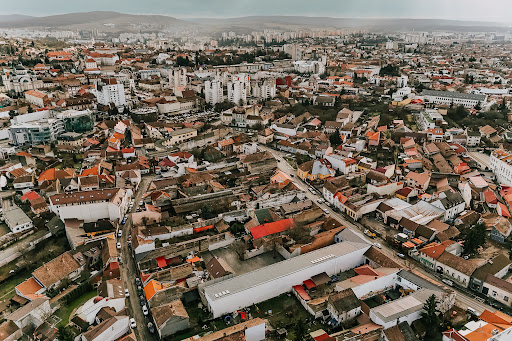


In the heart of Târgu Mureș, where the past whispers secrets among the shadows of bygone times, there stands a reborn historic property, ready to write new chapters in the eyes of those who know how to dream. Set on a generous 1,307 sqm of land, this imposing building, with its soul of brick and a crown of tiles, carries the charm of yesteryear, now enriched by the care of skilled hands and the light of modernity. With a total built area of 1,822 sqm, every corner holds a story waiting to unfold. The cool, deep basement shelters six mysterious cellars, two sanitary groups, and stairs that bridge past and present. On the ground floor, 15 rooms open like pages written by the sun, accompanied by 13 bathrooms, a discreet WC, two hallways as long as a song, a silent storage room, and a utility space. Four staircases carry footsteps upward, while six terraces stretch their arms toward the inner courtyard, where nature finds its place among stones and leaves. The attic, a kingdom of light and air, houses 16 rooms and 16 serene bathrooms. Two staircases lead your dreams to a terrace and an exterior gallery that wraps you in the whispers of the evening breeze. This is not just a property – it is an open stage for new beginnings. An aparthotel, a guesthouse with stories in every room, a sanctuary of hope as a clinic, or a retreat for the arts – the possibilities are endless. Here, every corner awaits its creator, every window searches for a gaze, and every wall yearns for a heart to listen to its silence. Târgu Mureș offers you the key to both past and future. Come discover the magic of this place and write the next chapter of history.
…By Romania Sotheby's International Realty


Built in the middle of the nineteenth century by baron Urban Petru of Monyoro, the mansion is located on the 79th National highway, on the road between Arad and Oradea, 28 km from Arad. In 1994, the mansion was completely renovated, and all the original architectural elements were preserved. The mansion provides the modern comfort, as it is connected to the water network, it has its own sewage and three gas central heating systems. There is an annex to the main building, equipped with all the standard utilities. As the yard is quite big, another house is being built, which will be used for residential purposes. In front of the mansion, there is a 50 sqm pool. There are thermal water springs at a depth of 700 m, which can be used to fill up the pool. Urban of Monyoro family was one of the important noble families of the Hungarian aristocracy. As mentioned in official records (1828), the first family member was Joseph Urban, and the family’s home was in Monyorod (today Manerau, Arad). The neoclassical mansion in Simand (only a few kilometers from Monyorod) was built in the second half of the 19th century. The mansion most likely belonged to Gyula Urban, the father of the most important member of the family, Peter Urban (1870-1935). Starting with the Eneolithic period up to the year 953 – when it is officially mentioned for the first time -, and on the modern times, Simand was one of the most important places in Transylvanian history. Moreover, in the 19th century, Simand was a strong economic hub, organizing fairs, having also present a strong Jewish community (in 1828 there were 400 Jewish people). For approximately 100 years, by the time when the mansion was built, the domain was owned by Urban of Monyoro family members. Most of them were high governors, politicians and even prefects in Arad county
…By Romania Sotheby's International Realty


This luxury real estate is located in a wooded valley, near the Voroneț River and only 4 km from the famous UNESCO heritage monastery. The two holiday homes complement each other in a bold architectural project, which uses and integrates every detail of Bucovina’s scenery. The first house is a very special and premium property, award-winning project at the National Architecture Biennale - 2023 edition as well as the Romanian Design Week 2024 edition. The materials, textures and shades - concrete, tree bark, steel are different from the classic residential options, based on brick and wood, bringing in a balanced industrial air, which contrasts but also complements the natural environment. The architects were not afraid of unevenness, slopes - the peculiarities of the location dictated the form following the function - they embedded diaphragms in the slope, supporting the house on pillars and thus giving it suppleness. The concept is focused on the idea of a "floating mystery box", anchored in the slope that also follows the slope of the land and is bonded with the landscape through discreet chromatics. The concrete infrastructure, with diaphragms placed perpendicular to the slope as a plinth, is left exposed. The integration into the landscape is ensured by the finishes of treated wooden battensimitating tree bark and corten steel with the typical rust shades of autumn leaves. The entrance is marked by two blue "V" shaped pillars - a disc reet tribute to Voronet Monastery symbolic colour - and invites you into a sequential space, built on half levels, with wide windows framing the outdoor landscape. With a 230 sqm carpet area, the house is organised on 2 levels and has also a garden terrace. The bright open atrium area connects all the spaces of the house. On the ground floor, the common spaces are placed at different heights. The refined living area starts with the refurbished and perfectly functional Laugerger & Gloss Mascagni grand piano accompanied by English sofas and armchairs and a minimalist fireplace - a reminder of the hearth in traditional homes. The 3-meters high window, central glass panel, frames both the Voronet river as well as the winding pathway in a fairytale frame, the Yin and Yang intersects in the heart of the home. The kitchen is placed at a higher level than the living area. The pièce de résistance, in addition to the top-of-the-range appliances, is the volcanic ash lava table, produced in a limited edition of 28 pieces by Swoonseditions. The second house Villa Trésor, is already a successfully branded business in Bucovina’s area with a large clients portfolio. Built in a "clean" style, the exterior design stands out for its minimalism and attention to detail spotted in window decoration or the repetition of the high ridge roof, on a smaller scale, at the entrance or its contemporary reinterpretation in the case of the gazebo. The gazebo is equipped with sink, grill and fireclay-clad pizza oven. Also outside, there is a 6 person wood-burning sauna and a luxury swimspa that can be used throughout the year. The built-up area of 200 sqm is organised on two levels. The interior design has strong English accents, from the handmade antique copper radiators to the vintage Victorian brass doorknobs. The doors and stairs are made of solid ash wood. The downstairs living and dining rooms are spacious and airy, showcasing limited edition handcrafted pieces of furniture, a fireplace and the living room wallpaper by Dutch designer Piet Hein Eek.Each of the four bedrooms has its own specific theme featured in the interior design elements of both the rooms and the related bathrooms. Rooms have double beds, thermal curtains, and the bathrooms have stucco wall finishes. The attic is multifunctional: either the perfect space to relax and socialise in the sitting area or the proper environment for an office in the workspace.
…By Romania Sotheby's International Realty


Seen from above, the landscape unfolds in a vast expanse of green, traced only by three parallel roads intersected by two others, all set far apart from each other. Between them, nothing but vegetation — and upon closer inspection, one area stands out through the symmetry of vineyard rows, neatly aligned in perfect order. A small orchard separates the vineyard from the winery. At ground level, access to the property is through a gate framed by red brick pillars; to the right, the eye is drawn to a house with the personality of the old and unconquered, while straight ahead lies the vineyard in all its splendor — 3.13 hectares in the heart of the D.O.C. Miniș / Crișana wine region. Here, Cabernet Sauvignon is cultivated using sustainable viticulture methods (the organic certification process for both the vineyard and the wine began in 2022). The grapes are vinified as a single varietal, and the winery holds vintages over ten years old, made from vines aged between 35 and 50 years. An additional feature that gives the estate a unique potential is the land subdivision – there are nine intravilan (buildable) plots, each with easy access (asphalt or gravel roads), utilities on site, and the possibility to build holiday cottages or bungalows. This configuration allows for the development of a tourist and leisure area, offering guests the opportunity to enjoy the complete vineyard and wine experience. The property includes vineyard maintenance services, as well as the full infrastructure necessary for premium wine production – from grape to bottle, under the Protected Designation of Origin (D.O.P. Miniș). There is also the possibility to store the wine produced in the estate’s cellars, while the central area of the property can host private events or wine tastings in an authentic, rustic, and elegant setting. Wine has been produced in Birăuaș since 1801, at that time under the name Josef Domany Estates, official supplier to the Imperial Court of Vienna, which obtained the title of K.U.K. Hoflieferant in 1899. Active again since 2002, the property now owns the most valuable part of these former estates — three wine cellars and part of the old vineyard. The vines embrace not only the land but also the corners of the house, climbing gently around old wooden shutters and up to the eaves. Alongside the low stone fences separating the areas and the wooden pillars supporting heavy red-tiled roofs, the breeze whispering through the ripe grape clusters tells the story of a life fulfilled through passion and dedication to nature. The Miniș wines were awarded in London (1862, 1876) and Budapest (1875, 1884) and have not lost their value today, continuing to receive awards and maintaining an average rating of 3.8/5 on Vivino. These wines have excellent aging potential, being barrel-aged in French oak, and the sale package includes approximately 20,000 bottles of premium bottled wine.In addition to the winery and winemaking equipment, the property also includes a mini-distillery (a Christian Carl column still with trays) where high-quality distillates are produced from wine and pomace (“Grappa”), as well as a special fortified wine (“vin de noix”). The property is sold as a fully functional business, including all equipment and machinery for wine production, distillation, and vineyard processing (complete list available upon request), along with a comprehensive branding and e-commerce package (new website, integrated online shop, logo rebranding, labels, business cards, wine list, etc.), domestic retail contracts (resellers/distributors and specialized venues). Next to the vineyard are two traditional houses (colne, built in the mid-19th century) totaling 380 sqm, arranged as tasting and relaxation spaces, a 210 sqm production building, 200 sqm of vaulted cellars, covered terraces, and an attic of approximately 200 sqm suitable for conversion. D.O.C. Miniș Vineyard - Cabernet Sauvignon – 12 years old, approx. 4,800 vines/ha on 3.13 ha and fruit orchard
…By Romania Sotheby's International Realty

Receive by email any new listing that may match your search criteria
Your criteria :
By validating this form, you accept the general conditions of use of Le Figaro Properties.
These agencies offer a selection of luxury properties vente in Romania. Feel free to contact them for personalized assistance.


