Get early access to listings that match your criteria
Never miss an opportunity again. Our personalized alerts notify you instantly.

 English$ USD · m²


Saint Cézaire sur Siagne / Recent villa on a flat plot with a swimming pool, livable on one level. The villa consists on the garden level of an entrance opening onto a vast living/dining room with a fireplace, bathed in light by two large windows leading to a covered terrace, the garden, and the pool, a fully equipped American kitchen, also with access to the garden through a large window, a laundry room, a separate toilet, and a master bedroom with a shower room and toilet. Upstairs, the landing leads to two bedrooms, each with a French door opening onto a terrace, a shower room, and a separate toilet; Outside, the south-facing villa is enhanced by a swimming pool with a waterfall and its terrace level with the living/dining room, a fully fenced flat garden with automatic watering, a fish pond, a pétanque court, and an outdoor parking area with a carport. The villa offers high-quality services, including a fully equipped American kitchen, ducted heat pump providing heating and air conditioning, electric shutters, an insert fireplace, and automatic watering. Located in a quiet area, Information about the risks to which this property is exposed is available on the Géorisques website. For any information, contact: ludovic 06 03 10 63 26 [email protected] description has been automatically translated from French.
…By Agence De Provence


Located in the sought-after area of Vinaigrier, discover this superb individual villa of approximately 170 m², fully renovated with quality materials and features, built on a magnificent landscaped plot of 1,000 m². Benefiting from a magnificent southern exposure, the property enjoys exceptional brightness throughout the day. Absolute tranquility with no overlooking. The villa revolves around a remarkable living space of about 75 m², including a large warm living room enhanced by a wood stove, as well as a fully renovated kitchen perfectly integrated into the reception area. The night area comprises four bedrooms, a dressing room, and two bathrooms. A laundry area completes the interior layout of the house. Outside, the charm is immediately effective: a superb garden with trees and flowers, notably featuring olive trees, surrounds a magnificent pool and its pool house, offering a true relaxation space sheltered from prying eyes. The plot, pleasant and easily exploitable, allows full enjoyment of the different outdoor areas. The property also includes a space for parking two to three vehicles directly inside. Fully renovated, the villa benefits from careful amenities, quality materials, and is also equipped with solar panels on the roof. A turnkey property combining generous volumes, a pool, a garden, brightness, absence of overlooking, and absolute calm. A rare property on the market, to be discovered without delay. Agency reference: 707This description has been automatically translated from French.
…By Orpi Lior


Situated in the gated Castellet estate, in a quiet location with sunshine from morning to night, this beautiful neo-Provençal villa with over 200 m2 of living space has been completely renovated and is set on a lovely 1500 m2 flat, wooded plot with a large swimming pool. It offers 8 main rooms including a large living room, 5 bedrooms and 4 bathrooms or shower rooms, an office, a laundry room and plenty of storage space, not forgetting the large garage and huge basement.
…By Gubernatis Immobilier


EXPERTIMO est le leader français des réseaux dédiés aux mandataires expérimentés
…By Expertimo


In the heart of Provence, this 190 sq m single-story house faces south, allowing sunlight to flood in from morning till night. The spacious, light-filled living area extends beneath a cozy mezzanine where the fireplace becomes the focal point for winter evenings. Four bedrooms complete the layout, offering everyone their own peaceful space. The house is air-conditioned. The separate, fully equipped kitchen provides direct access to the covered terrace, ideal for summer meals. The living room also opens onto the outdoors, seamlessly blending the house with nature. The over 4,500 sq m grounds, entirely enclosed, offer two distinct atmospheres: a wilder section inhabited by oak trees, and a landscaped area designed for everyday enjoyment of the garden. The free-form saltwater swimming pool blends in perfectly, as if it had always been there. A detached garage and a pétanque court complete this authentically Provençal lifestyle. Here, no one is looking at you. Only the unobstructed view, the absolute calm, and that rare feeling of truly being at home.
…By Briel Immobilier Lorgues


GIGARO La Croix Valmer - Nestled just steps from the famous Gigaro beach is a beautiful new high-end property with a heated pool and pétanque court, offering 142m2 of living space built on a plot of over 1000m2, with a southern exposure. It invites you with a fully equipped kitchen with a large living room and lounge. Upstairs: 4 beautiful bedrooms and its outbuildings with shower rooms. Parking with 3 parking spaces. EVERYTHING ON FOOT!
…By Agence Agnès Malecki Cavalaire


M-OI Aix-en-Provence is pleased to offer this exclusive property situated in Puyricard, in a quiet and unspoilt setting. The property's address, virtual tour video and all financial details are available online on the Mon Office Immobilier website under reference 6758-NFI. (Direct link to the photos) A rare setting Tucked away from prying eyes, this fully renovated country house lies at the heart of a 3.5-hectare park, bordered by century-old trees and opening out onto the fields. A peaceful and secluded setting, offering a genuine countryside feel on the outskirts of Aix. A property designed for entertaining: The main house features spacious, light-filled rooms, including a bespoke kitchen-diner, a sitting room, a dining room and a second ground-floor sitting room that could be converted into a bedroom. Upstairs: 4 bedrooms, 3 bathrooms and a bespoke dressing room, complemented by a study on the top floor. A single-storey guest house features 3 bedrooms, a living room and a kitchen, with its own terrace and no direct line of sight to the main house. A separate workshop completes the property and could be used for a business, a workshop or a space dedicated to artistic pursuits. The Provençal way of life Several shaded terraces, a wooden swimming pool, an orchard and a pétanque court make up the outdoor spaces, designed to allow you to fully enjoy the gentle Provençal way of life. The property also benefits from a large carport, water from the Canal de Provence, numerous bespoke fittings and excellent energy efficiency, thanks in particular to external insulation, double glazing and ducted air conditioning. A rare and exclusive property, combining nature, elegance and contemporary comfort, just a few minutes from Aix-en-Provence. -- -- À votre service : Nicolas FILLAUD - +33757593929 Agent commercial Mon Office Immobilier immatriculé au RSAC de Aix en provence - N°754031334 Référence annonce : 6758-NFI. Le DPE est visible dans l'onglet informations énergétiques. Le prix indiqué comprend les honoraires à la charge de l'acheteur d'un montant de 3.21% inclus dans le prix affiché. Les informations sur les risques auxquels ce bien est exposé sont disponibles sur le site Géorisques : www.georisques.gouv.fr
…By Mon Office Immobilier


House for sale in Maussane-les-Alpilles. Discover this house for sale in Maussane-les-Alpilles, an elegant residence dating from 1870, ideally located in the heart of the village and at the foot of the Alpilles. Carefully renovated, the property offers nearly 400 sqm and retains all the character of a period residence. The ground floor features a beautiful entrance hall, a dining room, a kitchen extended by a pleasant winter garden, as well as a spacious living room enhanced by impressive high ceilings. Upstairs, a generous master suite provides a truly private space, while two further bedrooms share a bathroom. The second floor features an apartment with an independent feel, comprising two bedrooms, a living room, a boudoir area and a bathroom, ideal for welcoming family and friends. Outside, the south-facing landscaped garden beautifully showcases the property's historic façade. An elegant stone fountain further enhances the charm of the setting. Beyond the winter garden, a second, more intimate outdoor area features an L-shaped 8 x 5 m swimming pool and a summer kitchen, creating a secluded space designed for outdoor living. In the heart of Maussane-les-Alpilles, the property is within walking distance of the village's shops, restaurants and lively atmosphere. A character-filled residence with remarkable proportions, ideal as a family home or holiday residence in the heart of the Alpilles. Property for sale through our Saint-Rémy-de-Provence agency. Thanks to our exclusive partnership with Knight Frank, the world leader in luxury real estate, Janssens Immobilier provides every property with exceptional international exposure. This partnership strengthens our local expertise through the power of a network present in more than 50 countries. Information regarding the risks to which this property is exposed is available on the website www.georisques.gouv.fr. In accordance with current regulations, the EPC floor area of this property has been established on the basis of a standardised measurement of the habitable living space. This measurement may differ from the total floor area precisely measured by our sales team.
…By Janssens Immobilier Knight Frank Saint-rémy-de-provence


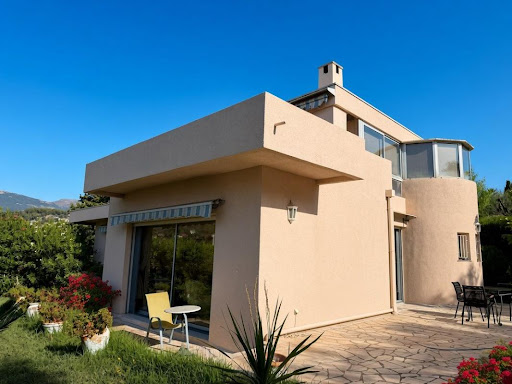


LA COLLE SUR LOUP Contemporary villa 150 m² with pool – 4 bedrooms For sale, in a quiet and sought-after residential area, just 800 meters from shops and close to schools. This contemporary villa of 150 m² living space + 60 m² basement (perfectly healthy and dry) opens its doors to you in an ultra sunny environment and absolute tranquility. It offers 4 bedrooms, a magnificent 47 m² living room with a fireplace, and a beautiful ground-level pool to immediately enjoy the summer. Practical and bright distribution: Ground floor: 3 bedrooms, living room/kitchen, bathroom + independent WC Upstairs: 1 bedroom with bathroom/WC + office opening onto a large terrace Built in 1985, the house stands out for its resolutely modern design and its many bay windows. Double garage with automated doors, possibility of parking several vehicles and parking right in front of the entrance. A rare asset: a residual COS of 71 m² allowing for easy expansion of the house according to your projects, without major constraints. A unique villa, full of character, ready to live in, in one of the most beautiful areas of the Côte d'Azur. Energy class D. A must-see. Exclusivity ORPI Agency reference: 6751This description has been automatically translated from French.
…By Orpi - Helios Transactions


LA CROIX VALMER PLAGES, in a quiet residential area, just 900m from the beaches... Beautiful RENOVATED SOUTH-FACING PROPERTY of 154m2 built on a 1593m2 PLOT... It offers two levels with an entrance hall leading to a very bright living/dining room, a fitted and equipped kitchen opening onto a lovely outdoor terrace with a pantry... Adjoining are 3 beautiful bedrooms with en-suite bathrooms and toilets. Upstairs: Master bedroom opening onto a solarium, ample closet space, shower room and separate toilet. An outbuilding converted into a fifth bedroom with shower and toilet completes the property. Swimming pool with pool house and terraces. Garage on the garden level. BEAUTIFUL RENOVATION!
…By Agence Agnès Malecki Cavalaire


Just a 15-minute walk from the town centre and the beach , discover this lovely contemporary villa built in July 2020 , offering beautiful amenities in a quiet and sought-after environment. Built on a landscaped plot of 420 m2 , this property offers 129 m2 of living space and has been designed down to the smallest detail to offer a very pleasant living environment. Upon entering, you'll be charmed by the pétanque court , a true invitation to conviviality, before discovering a superb, light-filled living space with a fully equipped open-plan kitchen that extends seamlessly to the outdoors. Tinted windows ensure privacy and comfort while preserving natural light. The ground floor also includes a laundry room with a shower room , a guest toilet , and a large 35 m2 garage . In the basement, a 35 m2 cellar and a wine cellar built over a crawl space provide additional storage space. Upstairs, the sleeping area consists of: A first bedroom with a closet opening onto a terrace. A second bedroom with built-in wardrobe. A bathroom. A separate toilet. A superb master suite with its own private terrace, bathroom and dressing room. The villa benefits from underfloor heating via heat pump with cooling function , guaranteeing optimal comfort in all seasons. The carefully landscaped outdoor areas are a true invitation to relaxation with: A high-quality jacuzzi equipped with a counter-current swimming system . A fully equipped summer kitchen , ideal for entertaining family and friends. A separate cabin with toilet and hand basin . This property perfectly combines modernity, quality amenities and a privileged location, close to the beaches, port and shops of Sanary-sur-Mer. A discreet address for a clientele seeking a Mediterranean lifestyle combining elegance, comfort and serenity. Discover it now.
…By Canat & Warton Bandol


EXPERTIMO est le leader français des réseaux dédiés aux mandataires expérimentés
…By Expertimo


Eygalières 3D virtual tour available on our website. Investing in a luxury second home in Eygalières is to offer yourself an exceptional living environment and an immersion in authentic Provence. This Mas of over 244 sqm with elegant lines, is set in 1404 sqm of landscaped grounds with a swimming pool. Nestled in a sought-after village, it offers an authentic, discreet escape from the hustle and bustle of everyday life. The architecture of this Mas reflects the love of work well done, a passion shared by the builder and architect responsible for this unique project in the heart of the Alpilles. Just a few minutes' walk from the village center, this property guarantees modern, luxurious comfort, while respecting the architecture and timeless charm of the traditional stone Mas. With its four en suite bedrooms, including 1 on the ground floor, this Mas offers exceptional living spaces. A spacious living room of almost 60 sqm and a dining kitchen of over 35 sqm are designed to welcome and share convivial moments. Each room is elegant and functional, creating a welcoming and refined atmosphere. This rare project is currently under construction. An on-site visit is possible to discover this unique opportunity and let yourself be charmed by the discreet, refined elegance of this exceptional residence. This Property is for sale at Boschi Immobilier Prestige agency in Saint-Rémy de Provence - 13210 It consists of: --Ground floor-- Entrance hall: 16.5 sqm Kitchen opening onto dining room: 36 sqm Living room: 57 sqm Guest toilet: 7 sqm Suite 1: 28 sqm Storeroom: 5.5 sqm Utility room: 8 sqm Utility room: 9 sqm --Floor-- Storage room: 3 sqm Suite 2: 23 sqm Suite 3: 18 sqm Suite 4 : 33 sqm Terrace: 80 sqm Swimming pool 5 x 10 m with heat pump Fees to be paid by the seller. Energy class A, Climate class A Estimated amount of annual energy expenditure for standard use: between 596.00 € and 807.00 € for the years 2021, 2022, and 2023 (including subscriptions). Information on the risks to which this property is exposed is available on the Geohazards website: georisques.gouv.fr.
…By Boschi Immobilier Prestige Saint-remy-de-provence



EXPERTIMO est le leader français des réseaux dédiés aux mandataires expérimentés
…By Expertimo


In an exceptionally peaceful residential environment in Mougins, this fully renovated property enjoys a convenient location just 1.6 km from the centre and its shops. Offering approximately 528 sqm including annexes, it is surrounded by 3,133 sqm of landscaped grounds. The villa is characterised by generous proportions and a strong connection between its interiors and gardens. Large glazed openings extend the reception rooms towards the terraces, bringing abundant natural light into the property while creating continuous views over the surrounding greenery. A living room with fireplace, dining room and fully equipped kitchen with central island form the main reception areas, providing generous spaces for both everyday family life and entertaining. A glass enclosed wine cellar adds a distinctive feature to this part of the house. Upstairs, the sleeping accommodation comprises four bedrooms and an office. The principal suite benefits from its own dressing room, while some of the bedrooms open directly onto terraces overlooking the garden. The second floor provides two further large rooms, offering considerable flexibility according to the future owners’ lifestyle. These spaces can accommodate leisure or fitness activities or provide additional areas for family use. A dedicated wellness area with sauna and whirlpool bath creates a private space for relaxation throughout the year. Outside, the 3,133 sqm landscaped grounds are planted notably with olive trees. A swimming pool and spa are integrated into the garden, while several terraces and a pergola create a choice of settings for dining, entertaining and enjoying the Côte d’Azur climate. An independent studio with its own kitchenette and shower room provides additional autonomous accommodation for family or guests. A laundry room, garage and several parking areas complete the property. Mougins is one of the established residential destinations of the Cannes hinterland, particularly sought after for its villas, green surroundings and quality of life. The location of this property, only 1.6 km from the centre and its shops, combines an exceptionally peaceful setting with convenient access to everyday amenities. With its generous proportions, four bedrooms, independent studio, swimming pool, spa, wellness area and more than 3,100 sqm of landscaped grounds, the property offers a particularly versatile configuration for a substantial family residence on the French Riviera. Presented by Côte d’Azur Sotheby’s International Realty, your specialist in luxury real estate in Mougins. Contact our team to arrange a private viewing.
…By Côte D'azur Sotheby's International Realty Mougins


Nestled in the hills above the charming village of Beaumes-de-Venise, this magnificent contemporary house enjoys an exceptional location. Beaumes-de-Venise, renowned for its vineyards and rich historical heritage, offers a peaceful living environment while being close to amenities. The village is famous for the ruins of its medieval castle, built in the 12th century, which overlooks the surrounding countryside and offers breathtaking views of the Monts de Vaucluse, the Luberon and Mont Ventoux. It is in this enchanting setting that this property is located, offering a privileged living environment. In a commanding position in Beaumes-de-Venise, sheltered from noise pollution and close to all amenities, this contemporary house has a living area of 180 m². Elegant and functional, this modern house is spread over two levels, with a layout designed to maximise comfort and circulation. The entrance is on the ground floor through a hall with a dressing room and guest toilet. The house opens onto a large, fully open-plan living area comprising a lounge, living room and kitchen. The whole space is bathed in light thanks to large south- and east-facing windows, offering exceptional views of the ruins of the Château de Beaumes-de-Venise, as well as the Monts de Vaucluse and Mont Ventoux. On the ground floor, you will also find a master bedroom with a terrace and views of Mont Ventoux. Upstairs, two large bedrooms, a bathroom and a spacious hallway with a dressing room complete the space. The house is built on a plot of over 1,000 m², planted with around twenty olive trees producing approximately 30 litres of oil per year. High-quality fixtures and fittings include joinery with electric shutters with adjustable slats for the south-facing windows, underfloor heating and cooling on the ground floor, an alarm system and an electric gate. Each bedroom upstairs has air conditioning. The property also has a storeroom, a laundry room and a garage, accessible from the kitchen and the entrance hall. The land is suitable for a swimming pool and the house could be extended. Located just 35 minutes from the Avignon TGV station, 15 minutes from Carpentras and 20 minutes from the main motorways, this house represents a rare opportunity to live in an idyllic setting. Beaumes-de-Venise, renowned for its wines, particularly Muscat de Beaumes-de-Venise, is an ideal location for those seeking harmony between nature, culture and gastronomy. Whether you want to explore enchanting landscapes, taste local wines or delve into history, this village and its surroundings offer a multitude of activities and discoveries.
…By Agence Rosier - Gordes Immobilier Depuis 1970


Sainte-Maxime: We are delighted to present one of the most beautiful luxury properties in Sainte-Maxime, ideally located just steps from the town center in the heart of the prestigious Sémaphore district. Built on a landscaped plot of 1,580 sqm with a swimming pool, this exceptional property offers 560 sqm of floor space (320 sqm of living space), sea views, and unparalleled amenities. An exceptional villa with impeccable finishes, one of the most technically accomplished properties in the Gulf of Saint-Tropez: the villa, built around a tree-lined patio (a true oasis of peace and tranquility within the house), houses five elegant suites, each with its own bathroom, spacious custom-made oak dressing rooms, and a private terrace. Spacious and bright, they are distinguished by the quality of their materials and their refined atmosphere. The generous and perfectly designed living spaces open onto a large, sun-drenched terrace offering panoramic views of the sea and the town of Saint-Tropez. The living room and dining room form a harmonious whole, ideal for entertaining around a state-of-the-art fireplace. The fully equipped kitchen, featuring high-end appliances, is complemented by a second professional kitchen with a cold room, perfect for catering services or receptions. Among the house's remarkable features is a 180sqm tiled garage, ready to be used as a golf driving range or home cinema. High-end amenities and rare features include: Egyptian stone flooring throughout, both inside and out; a wine cellar with a capacity of over 150 bottles; a spacious laundry room; an exceptional 180sqm garage; three covered parking spaces; and two outdoor parking spaces. State-of-the-art home automation elevator, security and video surveillance system. Dedicated rooms: technical, plumbing, pool, garbage room. Centralized heating and air conditioning. Outside, a sumptuous landscaped garden with automatic watering system showcases a magnificent heated Balinese stone pool, inviting relaxation in an idyllic setting. 5000L water tank. A prime location in the heart of the Gulf of Saint-Tropez. Located just a few minutes' walk from beaches, gourmet restaurants, boutiques, and water sports, this villa enjoys an exceptional location in Sainte-Maxime, one of the most sought-after seaside resorts on the French Riviera. The villa faces south. Distances: Sainte-Maxime town center: 450 m; Saint-Tropez: 15 km (25 min); Nice Airport: 92 km (1 hr 10 min); Marseille Airport: 145 km (1 hr 20 min). More information, photos, and floor plans available upon request. Energy performance certificate: Villa built in accordance with the 2020 thermal regulations. Information on the risks to which this property is exposed is available on Géorisques: georisques.gouv.fr. Sale price EUR6,300,000 including agency fees, of which EUR300,000 are payable by the buyer. Price excluding fees: EUR6,000,000 (5.13 % fees incl. VAT at the buyer's expense.)
…By Rousselle Immo Prestige


Set on a sunny plateau above Eygliers and Guilestre this property enjoys a remarkable setting with sweeping mountain views and a full south-facing aspect. It offers a rare combination of space, natural surroundings, and strong potential for those looking for a home with a more self-sufficient, environmentally conscious way of life. The entire property includes a rustic stone house which has been used a rental chalet with provable income. There is also an unfinished wooden chalet right beside, and a further stone house which can potentially be renovated to add to the existing buildings. A major advantage of the property is its generous land (parcels totalling 1800 m2), part of which is already used by the current owner for fruit and vegetable growing. The grounds offer excellent conditions for gardening, cultivation, and making the most of the outdoor space in a productive and sustainable way. The main building has 3 bedrooms, lounge and dining room, and a spacious kitchen that opens on to the sheltered veranda that has epic views of the surrounding mountains and the town and villages below. Another key feature is the quality of the water. The property benefits from pure spring water drawn from a local source, the same supply that serves Guillestre, which is only about 20 minutes away. This adds both practical value and a reassuring sense of independence. The main house offers comfortable living spaces, while the additional buildings create exciting opportunities for future development. Once completed, the bioclimatic building is designed to provide energy independence, including the installation of photovoltaic panels. This makes the property particularly attractive for anyone seeking a lower-impact lifestyle and long-term autonomy. The combination of south exposure, fertile land, natural water resources, and planned energy self-sufficiency gives this property a strong bioclimatic identity. It is an ideal setting for a primary residence, a second home, or a project centered on sustainability and nature.
…By Leggett Immobilier


Anthéor luxury sea view villa with infinity pool in a private secure estate Located within a prestigious gated estate in Anthéor, between Cannes and Saint-Tropez, this elegant neo-Provençal villa enjoys a prime coastal position just moments from the Mediterranean Sea. Set within approximately 2,521 sqm of landscaped grounds, the property benefits from a desirable south-facing orientation and exceptional panoramic sea views. The reception areas feature large openings onto multiple terraces and enjoy uninterrupted views across the Mediterranean Sea and the iconic red rock formations of the Estérel coastline. The villa offers three bedrooms, including two suites, together with two independent rooms suitable for guest accommodation, family use or staff quarters. Outdoor amenities include landscaped gardens, several terraces and a spectacular infinity swimming pool overlooking the sea. A garage completes the property. Ideally located close to beaches, Théoule-sur-Mer, Saint-Raphaël, Cannes and Saint-Tropez, this villa represents an excellent opportunity for a luxury primary residence, prestigious holiday home or investment property on the French Riviera. Côte d’Azur Sotheby’s International Realty For further information or to arrange a confidential private viewing, please contact Côte d’Azur Sotheby’s International Realty, your trusted expert in luxury real estate on the French Riviera.
…By Côte D'azur Sotheby's International Realty


EXCLUSIVITY - Set within 2.2 hectares of Provençal countryside, this characterful stone house enjoys beautiful open views towards the hilltop village of Fayence and across the valley. Offering approximately 200 sqm of total floor space, including 180 sqm of living accommodation, the property features four bedrooms, a 50 sqm covered terrace, a heated swimming pool and around 100 olive trees. An ideal family home or elegant second residence in the heart of the Pays de Fayence. Located near the Fayence village, this attractive stone-built property combines authentic Provençal character, generous outdoor space and a peaceful natural setting. The ground floor opens into an entrance hall leading to a welcoming living room with fireplace. The dining area and fully equipped open-plan kitchen create a convivial living space, with direct access to a superb 50 sqm covered terrace. Overlooking the surrounding countryside, the terrace provides the perfect setting for outdoor dining, entertaining and relaxing throughout much of the year. The ground floor also includes a useful storage area and a comfortable bedroom with its own bathroom, allowing convenient single-level living for owners or guests. Upstairs, the sleeping accommodation comprises three further bedrooms, and three shower rooms. Outside, the property is surrounded by approximately 2.2 hectares of land, planted with around 100 mature olive trees, creating a wonderfully Mediterranean atmosphere. The heated swimming pool is set within the grounds and offers an inviting place to enjoy the Provençal climate while taking in the views over the valley and towards Fayence. A garage completes the property. Combining natural stone, open views, a large olive-planted estate and an authentic South of France lifestyle, this rare property is perfectly suited as a permanent residence, a family holiday home or a prestigious second home in Provence. A distinctive property in an exceptional setting. Contact us to arrange a private viewing.
…By Agence Immoweb


Less than a 5-minute walk from the town center and shops of Sainte-Maxime, Jager Real Estate presents this newly built single-story villa. From the entrance, you are welcomed by a spacious hallway with a cloakroom and guest toilet. The living room, featuring a high ceiling, opens through large glass doors onto the garden, pool, and surrounding hills. The fully equipped open-plan kitchen blends seamlessly with the living area. The sleeping area consists of three suites: The master suite includes a custom walk-in closet and a bathroom with a walk-in shower and toilet. Two other en-suite bedrooms each have a shower room and built-in closets with integrated lighting. Every bedroom has direct access to the garden; two of them open directly onto the pool. The garden, landscaped with Mediterranean plants, is fitted with an automatic irrigation and lighting system. The pool (5 × 10 m), is equipped with an underwater rolling shutter. A fully insulated and tiled garage, finished to the same high standards as the rest of the villa, along with a laundry room, complete the amenities. This space allows for the creation of a fourth bedroom or even an independent studio. For optimal comfort, the villa is equipped with a ducted reversible air conditioning system and motorized roller shutters. Stone claddings emphasize the property's authentic character. The parking area can accommodate several vehicles, and the surrounding pine trees ensure plenty of privacy. Finally, the quiet cul-de-sac location is a real advantage in terms of peace and security.
…By Jager Immobilier


Located in a quiet area at the end of a cul-de-sac and close to schools and the town center within walking distance, this beautiful family villa offers a pleasant sea view and a privileged residential environment.Built on a landscaped plot of approximately 1200 m², the property features around 220 m² of living space and offers beautiful living areas spread across several levels. The main floor hosts a bright living room with a fireplace and open kitchen, all opening onto a beautiful terrace with a sea view. A bedroom with shower room and a master suite with bathroom complete this level.The ground floor provides an ideal space for entertaining family and friends, with two bedrooms, a large adjoining room that can be adapted as needed, a shower room, an independent kitchen particularly practical for summer living, as well as a large laundry room.The outdoors fully invite you to enjoy the Mediterranean way of life: two closable pergolas allowing enjoyment of the outdoor spaces while being sheltered from the wind, a beautifully renovated pool with tiled lining, generous recently redone terraces, and a petanque court.An independent studio with shower room, a double closed garage, as well as a mostly flat plot complete this property with many advantages.An ideal villa for a primary or secondary residence, allowing you to enjoy tranquility while remaining close to amenities and the center of Cavalaire-sur-Mer.Energy Performance Diagnosis: C - 111Greenhouse Gas Emission: A - 4Estimated annual energy costs of the accommodation: €2240 - €3090Transaction fees inclusive of tax to be borne by the sellerInformation regarding the risks to which this property is exposed is available on the Géorisques site: www.georisques.gouv.frThe luxury real estate market on the Côte d'Azur is one of the most attractive in the Mediterranean region.Holiday homes and secondary residences on the Côte d'Azur not only offer an unmatched lifestyle and quality of life but also represent, considering the international economic situation, a safe investment and an intelligent retirement project, particularly at premium addresses.Cavalaire-sur-Mer is a French commune located in the Var department, in the Provence-Alpes-Côte d'Azur region, between Saint-Tropez and Le Lavandou. The bay of Cavalaire is surrounded by two capes, Cap Cavalaire to the west and Cap Lardier to the east. Known as a seaside resort, Cavalaire is situated on the southernmost bay of the Var coast. Its beautiful beach, which is 3 km long, is renowned for this summer resort, as well as its coves.This description has been automatically translated from French.
…By Engel & Völkers Côte D'azur


Within a secured residence, nestled in the renowned sector of Renoir, superb 5-room villa built in 2002. In excellent condition, it offers 4 bedrooms (including one on the ground floor), a bright living room, refined amenities, and a very clear view. Well-maintained garden with pool and pétanque court, terrace, double garage, and outdoor parking. Close to schools and public transport. Contact us for a visit.This description has been automatically translated from French.
…By Orpi - Declety Immobilier


By delegation of mandate. AGNES MALECKI AGENCY - CAVALAIRE. Close to the beaches, in a very quiet location, a beautiful and charming property with 220m2 of living space and approximately 1400m2 of landscaped grounds. It boasts very spacious rooms, including a generous living and dining room with high ceilings and a beautiful sea view from its shaded terrace. The sleeping area comprises 5 bedrooms, as well as a bathroom or shower room. Outside, the property offers a true relaxation area with its magnificent swimming pool and landscaped grounds. A MUST-SEE!
…By Agence Agnès Malecki Cavalaire


Located in the charming town of Saint-Raphaël, this 140 sq m villa, built in 2003 on a 755 sq m plot, is for sale at EUR860,000. It comprises five rooms, including four bedrooms, with one bedroom on the ground floor, ideal for optimal comfort. The 40 sq m living room, facing south, enjoys unobstructed views and features a fireplace insert. The kitchen is separate, fitted, and equipped. The villa has a bathroom, a shower room, and three toilets. Heating is provided by a forced-air system with reversible electric air conditioning, supplemented by an electric water heater. The exterior is in good condition, with concrete block construction, double-glazed windows, and electric roller shutters. You will enjoy two terraces totaling 30 sqm, a swimming pool, a 50 sqm double garage, and two parking spaces. A basement is also available. Security is enhanced by a digital entry code, an electric gate, and an alarm system. The villa is connected to fiber optic internet and has mains drainage. The location is ideal, close to several schools such as the Institut Stanislas, École maternelle Valescure, École maternelle l'Aspé, École primaire l'Aspé, and École élémentaire l'Aspé, as well as the Crèche des Pandas daycare center. You will also find amenities such as supermarkets, pharmacies, restaurants, and bakeries nearby. This villa represents a rare opportunity to acquire a quality property in a quiet, private setting with all amenities within easy reach. Contact Agence du Cap - Immogolf to arrange a viewing. Condominiums of 1 units.
…By Agence Du Cap Immogolf
'%20stroke='%23DDAA3A'%20stroke-width='1.909'%20stroke-linecap='square'%20stroke-linejoin='bevel'/%3e%3c/svg%3e)
Receive by email any new listing that may match your search criteria
Your criteria :
By validating this form, you accept the general conditions of use of Le Figaro Properties.
These agencies offer a selection of luxury properties vente in Provence-Alpes-Côte d'Azur. Feel free to contact them for personalized assistance.
For your search for an exceptional property, select from our luxury houses with panoramic views in Provence-Alpes-Côte d'Azur, starting at $263,858. Offering exceptional panoramas, these 2,179 residences overlook the city and its surroundings. As the seasons pass, the spectacle is renewed without ever becoming tiresome. Depending on the area you are looking for, such as Cannes, Mougins and Sainte-Maxime, the living areas may vary and start at a minimum of 50 m². The largest properties rise to 3,800 m².
Set down your suitcases without waiting: our catalog brings together 785 furnished luxury houses in Provence-Alpes-Côte d'Azur, with a starting price of $229,574. From the living room to the bedrooms, each residence is tastefully furnished and ready to live in. Property listings are particularly numerous in the following areas: Mougins, Cannes and Sainte-Maxime. The average price of this furnished stock stands at $14,241 per square meter. Living areas reach 2,500 m² for our largest properties.
As part of your search for properties of excellence, browse our privileged selection of 8,913 luxury houses with a pool in Provence-Alpes-Côte d'Azur available from $229,442. These exceptional residences enjoy prime locations, particularly in Aix-en-Provence, Mougins or Sainte-Maxime. Whether the architecture of these houses incorporates a covered indoor aquatic space or a vast outdoor pool, each property flourishes amid remarkably landscaped grounds measuring between 1 ha and 300 ha.
Your receptions deserve a setting to match: discover 104 luxury houses with a reception room in Provence-Alpes-Côte d'Azur, starting at $618,346. These residences combine family privacy with spaces dedicated to major events. Family gatherings, business dinners or parties with friends naturally find their place there. The fashionable addresses are located in Ménerbes, Aix-en-Provence and Arles. Depending on the property, the property area extends up to 230 ha.
The beach as an extension of the garden: this is the spirit of 2,223 luxury houses by the sea in Provence-Alpes-Côte d'Azur, for sale from $447,669. Your life there will be organized to the rhythm of the coastline, between sea bathing and walks. Cannes, Sainte-Maxime and Grimaud enliven the local market. In these residences, the minimum recorded living area is 39 m².
The sea horizon as a guiding thread: explore the 2,571 luxury houses with sea views in Provence-Alpes-Côte d'Azur, with prices starting at $447,669. The sea accompanies your days, from sunrise to the last light. A daily privilege that few addresses can claim. Browse the listings in Cannes, Sainte-Maxime or Grimaud first. In terms of dimensions, the living areas start at a minimum of 39 m² and the grounds at 1 ha.
Anchor your daily life at the water's very edge: this is what the 55 luxury houses right on the water in Provence-Alpes-Côte d'Azur allow, for sale from $608,021. These rare residences provide direct access to the shore, with no obstacle to cross. In the geographical area, Nice, Saint-Tropez and Les issambres account for a significant share of our listing catalog. The average price per square meter stands at $28,549. Expect living areas measuring between 42 m² and 2,500 m². In our selection of listings, a property can have up to 32 rooms.
Within our catalog, 75 luxury houses listed as historic monuments in Provence-Alpes-Côte d'Azur are for sale, starting at $395,787. These residences perpetuate exceptional architectural expertise. Acquiring one means continuing a story that began long before you. Your search can focus on Mougins, Cannes and Villefranche-sur-Mer. The properties recorded in our listings have between 1 and 13 bedrooms. The grounds in our collection measure 8 ha. This can rise to 11.7 ha depending on the property.