Get early access to listings that match your criteria
Never miss an opportunity again. Our personalized alerts notify you instantly.

 English$ USD · m²


19th-century castle of la fontaine accompanied by its elegant outbuildings, nestled in the heart of a landscaped park of 1.8 hectares, fully wooded and meticulously maintained. The property offers an exceptional setting with a pond, heated infinity swimming pool, remarkable French garden, as well as a large hangar capable of accommodating a helicopter or several collector vehicles.Built on a beautiful floor, this charming castle has undergone a recent high-quality renovation, combining the charm of the old with contemporary comfort. The reception areas are particularly refined: a spacious living room featuring superb woodwork and a wood-burning fireplace, an elegant dining room under a glass roof directly opening onto a terrace overlooking the pool and gardens.The independent kitchen, designed by Bulthaup, was custom-made, offering an ideal space for hosting numerous guests.The upper floors house an elegantly furnished office, a laundry room, a magnificent master suite secured as a panic room with a dressing area and private bathroom, as well as three other bedrooms, each decorated in a distinct style. Two additional bathrooms and a shower room complete the property. The period elements — floorboards, moldings, stained glass windows, and architectural details — highlight the authenticity and unique character of this prestigious residence.The ground floor unveils a spectacular reception space entirely dedicated to private parties, including a bar, a cigar lounge, and a fully equipped nightclub area with a mixing table.The property also features renovated outbuildings of approximately 60 m², including two bedrooms and a bathroom. At the back of the lot, a spacious hangar can house several vehicles; part of it has been converted into a gym.Located in a calm and green environment, in immediate proximity to the Golf de Mérignies, with quick access to the A1 motorway and Lesquin Airport, this exceptional property will appeal to lovers of luxury, tranquility, and refinement in the countryside.This description has been automatically translated from French.
…By Barnes Lille


For Sale: Unique 11th-Century Château Set in a Spectacular Location in the South Ardèche Approx. 450 m² living space | 4,000 m² plot | Private pool | Excellent business/rental potential A rare opportunity to acquire a breathtaking, fully restored historical estate. Perched on a dramatic rocky outcrop in one of the most sought-after villages of the South Ardèche (near Aubenas), Château d’Ucel blends 11th-century grandeur with modern comfort. Offering approximately 450 m² of living space, a generous 4,000 m² plot, and a separate house ready for renovation, this property provides outstanding potential to combine luxury living with a high-end hospitality business. Investment Opportunity & Guest Accommodation Layout The château has been thoughtfully designed to ensure complete privacy for both owners and guests. It currently features four fully self-contained rental units: ● Self-Contained Gîte (Garden Level): Sleeps 2, featuring a private terrace and independent entrance. ● Family Suite (1st Floor): Spacious accommodation for up to 6 guests, offering three bedrooms and private bathroom facilities. ● Guest Suite (Ground Floor): Complete with private bathroom facilities, direct access from the inner courtyard, and a lockable connecting door to the room above. ● Tower / Panorama Room: Accessed via a characterful stone exterior staircase. Offers a generous private area, dedicated bathroom, panoramic valley views, and an internal staircase leading to the lower room. ● Owner's Private Quarters: A charming master bedroom with en-suite bathroom and space to install a private kitchen and lounge area, allowing you to retreat in complete peace during the guest season. Spacious Living Areas & Outdoor Living The ground floor serves as the heart of the château, exuding a unique atmosphere with its exposed stone walls and authentic period features: ● Large Country Kitchen (30 m²): Character-filled with an attractive split-level layout. ● Living & Dining Rooms: A cozy living room (23 m²) and a spacious dining room (31 m²). ● Additional Living Space: Offering direct access to a terrace with sweeping views. ● Outdoor Spaces & Pool: Multiple sun terraces, intimate courtyards, and a sleek private swimming pool built directly into the rocks, featuring panoramic views over the Ardèche landscape. ● Utility Spaces: Various cellars (including wine cellars), technical room, laundry room, and a large bicycle storage area. ● Dual Access: Accessible from the village side (via a short walk into the inner courtyard) or via a private road at the lower boundary, leading directly to the garage and pool area. Additional Potential: Separate House to Renovate Just outside the château gates sits a separate house featuring a lovely private garden. This property can be renovated entirely to your taste, offering the chance to significantly expand the current ~450 m² living space—ideal for a luxury caretaker's house, an extra gîte, or a private residence. Key Features: ● Living Area: Approx. 450 m² (expandable) ● Plot Size: Approx. 4,000 m² ● Condition: Château fully restored; separate house/outbuilding to renovate ● Amenities: Private pool, garage, multiple terraces, authentic wine cellars ● Location: South Ardèche (Ucel / Aubenas area) Interested in this unique proposition? Contact us today for the full photo portfolio, floor plans, or to arrange a (discrete) viewing.
…By Leggett Immobilier


18th-century château on 3.9 hectares of parkland, possibility of 107 hectares of additional free land Near Cérilly, this château of approximately 550 m² (5,800 sq ft) comprises spacious and bright reception rooms, 9 bedrooms, and 6 bathrooms; numerous period features (parquet floors, fireplaces). The house is used as a gîte, an artist's studio, garages, a small independent tower, and a well. All in very good condition. The 3.9 hectares of wooded parkland includes meadows, woods, ponds, a vegetable garden, and an orchard, and a secure swimming pool. Possibility of purchasing the adjoining farm with 107 hectares of land. Information on the risks to which this property is exposed is available on the Géorisques website: www.georisques.gouv.fr
…By Chateaux Et Patrimoine


Exceptional Directoire-style château and stud farm on 39.8 hectares with a pond Set in a sumptuous setting overlooking meadows and a pond, this exceptional property includes a fully renovated 968-square-meter Directoire-style château (a 4-star hotel with 16 rooms and a restaurant), a large guest house, an annex (three hotel rooms), enclosed garden, swimming pool, and vegetable garden, a stud farm with two staff houses, a riding arena, a lunging ring, paddocks, a large indoor riding arena, a small outdoor arena, and a large show jumping arena. Information on the risks associated with this property is available on the Géorisques website: www.georisques.gouv.f
…By Chateaux Et Patrimoine


In Finistère-South, in an appreciated sector. Cross the railing of this property and the charm operates. Having followed the hedges of camellias and rhododendrons, you will be tank by it majestic castle about 800M2 built in the second half of the XIXth century in the heart of more of 20Ha of park and forest. It consists of a big entranceopening on two magnificent lounges About 80 m2 each bathed by light, its beautiful central staircase in volute leading you to eight roomsand three suites of the castle, each with bathroom. Overhanging one of the most attractive marine rivers of the region, it benefits from a situation ideal and adapted to needs and desires of all. After the beach, you can relax at the edge of the piscineimplantée in an exotic garden, in rare essences. This intimate space of 3000m2 closed by granite walls will protect you from small marine breezes specific of Brittany. A rare property intended for the passionate persons of the authentic properties
…By Bretagne Sud Sotheby's International Realty Quimper


Situated between Montpellier and Pézenas, in a completely peaceful setting with no overlooking neighbours, this exceptional, fully restored property is perfect for lovers of history, beautiful stone architecture and wine. Built in the 18th century for a French officer, the château – covering approximately 900m² and set within 2.5 hectares of landscaped grounds and 25 hectares of vineyards – is the centrepiece of the estate. It comprises spacious reception rooms, two kitchens (one of which is semi-professional), as well as seven luxurious suites, some of which feature a terrace and a jacuzzi. Five of these suites are currently operated as luxury guest rooms. The 700m² of outbuildings house seven high-end holiday cottages, accommodating between two and 11 people, and a spa area with a jacuzzi, sauna and two massage rooms. The total accommodation capacity is 65 people. The restoration of all the buildings was carried out over several years to the highest standards, with the aim of providing the utmost in luxury and comfort whilst preserving the period features and the spirit of the place. The immaculately maintained grounds are planted with Mediterranean flora and adorned with antique statues and fountains. They feature two swimming pools (one of which is heated), as well as a large pool house. As well as running holiday cottages and guest rooms, the business also organises events (weddings, seminars, team-building activities, private parties, etc.) The wine from the 25 hectares of IGP-classified vineyards is produced in the estate’s winery, which has a capacity of 1,200 hectolitres and features an 800m² cellar. Production is currently entrusted to a renowned winery, ensuring high-quality output. These wine-making facilities are leased out, generating additional income. The layout of this property makes it suitable both for continuing the existing activities and for converting it into a family home for an epicurean connoisseur. 10 minutes from Pézenas, 30 minutes from the beaches and 40 minutes from Montpellier and its airport. Brochure available on request.
…By Kretz & Partners


In the south of Sologne, set within a verdant landscape, this superb château lies at the heart of a historic estate whose origins date back to the 13th century. Extending over 40 hectares, the property features a swimming pool, tennis court and numerous outbuildings, including a chapel, stables, reception house, caretaker’s house, orangery, farm with poultry yard, kennel, vegetable garden, dovecote, orchard, woodland, meadows and river. THE CHÂTEAU Behind its historic façade, adorned with refined details and 19th-century towers, the château has been fully renovated. It offers a warm and welcoming atmosphere across approximately 936 m², where original proportions and architectural features blend seamlessly with a lifestyle perfectly suited to hosting family and friends. The period features — wood panelling, parquet floors, mouldings and marble fireplaces — have been carefully preserved and are of outstanding quality. Ground Floor The original oak doors open into a beautiful entrance hall dominated by the main staircase, located within one of the towers. The former hunting room is now an elegant reception area, ideally positioned between the dining room and kitchen. Filled with natural light, the dining room, decorated in the First Empire style, enjoys direct access to the terrace as well as convenient communication with the kitchen. With its wood panelling, glazed bookcases and fireplace, the library is one of the château’s most charming rooms. An intimate and welcoming space, particularly appreciated by guests. The 40 m² drawing room opens naturally onto the garden and swimming pool, with access to a guest cloakroom. First Floor The monumental staircase leads to three beautiful reception areas: the former billiard room, now devoted to leisure activities; a spacious TV room; and the grand salon, enhanced by its grand piano. This floor also comprises five large bedrooms, each with its own en-suite bathroom and boudoir. Two of them enjoy direct access to the swimming pool. One of the bathrooms could still be redesigned to better harmonise its fittings with the classic character of the adjoining bedroom. Close to the 62 m² grand salon, a second guest cloakroom and a private corridor serve the two principal bedrooms. A staircase also leads to the second floor and onwards to the upper terrace. Fireplaces are found throughout the château, some of which are still regularly used in the reception rooms. Second Floor Formerly reserved for children’s bedrooms and staff accommodation, this level now offers four light-filled bedrooms, all enjoying exceptional views over the park. Three bedrooms have already been redecorated, two of them with their own shower rooms. The fourth has a bathroom with a bathtub installed within the tower. This bedroom also benefits from direct access to the terrace. A bright corridor serves the bedrooms and leads to the former service staircase, now used as a secondary access and as access to the swimming pool. This level also includes a former bathroom converted into a laundry room, as well as a room dedicated to linen and storage. The service staircase still requires some restoration work, but there is potential to create an additional WC in this area. Attic Spaces and Potential for Further Development Above the principal bedroom annexe, two additional bedrooms provide a more independent area. Currently unheated, they share a shower room. They could function as two bedrooms or as a bedroom with a small private sitting room. They enjoy privileged access to the terrace as well as to the private staircase leading down towards the kitchen. The glazed gallery leading to the terrace remains to be restored. With appropriate insulation and beautiful wood panelling, it could once again become a particularly elegant and light-filled passageway. Above the main body of the château, the extensive attic spaces offer tremendous potential for further development. Their generous volume could accommodate additional living areas, a games room, an office or several more bedrooms. Cellars and Technical Areas Beneath the château annexe are two large cellars, together with a beautiful wine cellar. The first houses the boiler room and wood storage. The second contains the estate’s new heating system: a water-to-water heat pump installed in 2023. A water softener was also installed in 2023, completing the property’s technical facilities. These areas are entirely dedicated to the technical infrastructure of the property, while remaining easily accessible and completely separate from the living spaces. A Home Designed for Living With its reception rooms, numerous bedrooms, independent spaces, wine cellar, terraces and uninterrupted connection with the park and swimming pool, the château possesses that rare quality found in great family estates: the ability to accommodate many people without ever compromising privacy. A place where one can entertain, share, live as a family and, in turn, write the next chapter in the history of the estate. THE OUTBUILDINGS From the moment one passes through the grand entrance gate, the estate reveals a genuine stone hamlet arranged around its historic courtyard. Former stables, a carriage house, caretaker’s houses, chapel, kennel, orangery, wash house and agricultural buildings form a remarkable ensemble, rich in heritage and full of potential. The Gate Lodge At the entrance, near the smaller gate, this former house — probably once a bakery and later accommodation for the dog keeper — is currently used for storage. It could easily be converted into a caretaker’s house, an office or even a small shop. The Kennel At the centre of the courtyard, the remarkable stone kennel retains its rounded enclosure and wrought-iron gate. Above the door, a tufa-stone bas-relief depicts two hunting dogs, a reminder of the estate’s historic sporting and hunting vocation. The recently cleared paved courtyard is now surrounded by roses, lavender and perennial plants. The Caretaker’s House On the other side of the kennel, this independent house comprises a kitchen, living room with an original wood-burning stove, bathroom and, upstairs, two bedrooms, a shower room and a large additional space. An exterior covered area provides parking for several vehicles or storage for firewood. The Coach House The former carriage house contains three garages on the ground floor, one of which could be converted into a reception room, yoga studio or event space. Upstairs, four bedrooms with en-suite bathrooms surround a large living area with an open-plan kitchen and fireplace. The building enjoys views over the park and dovecote, as well as a private garden with a barbecue area and pétanque court. The Seigniorial Chapel Probably built in the 15th century, or possibly earlier, the chapel retains numerous reminders of its long history. An inscription dated 1546 above the door bears witness to the exceptional age of the site. The Stables and Agricultural Buildings The stables have retained their four original stalls and four loose boxes. The initials of the de Lestang family can still be seen on the tiles above the feeding troughs. Beyond them are a hay barn, former dairy, laundry room with bread oven, potato store and former cowshed. Part of the roofing has already been restored; the roof of the former cowshed still requires work. The entire complex offers remarkable equestrian potential, with the possibility of additional boxes, an arena within the courtyard and paddocks in the surrounding meadows. The Orangery Located beside the vegetable garden, the former orangery has been converted into a charming independent residence comprising two bedrooms, a kitchen, bathroom and living area. Its large windows overlook the river and the octagonal dovecote. Upstairs, a generous space remains to be converted and could accommodate additional living areas and a terrace. The Wash House Beside the river, the former wash house retains its two fireplaces and traditional architecture. With its central water channel, it could become a unique little retreat in the heart of the estate. The Garden House Finally, in the middle of the vegetable garden, the small 19th-century garden house adds a final touch of charm to this remarkable ensemble. More than simply a collection of outbuildings, this is a genuine historic hamlet, offering its future owner a multitude of possibilities: accommodating guests, working, entertaining, developing an equestrian activity or simply bringing each building back to life at its own pace.
…By Kretz & Partners


Exclusively, 19th century castle, incorporating the architectural codes of the Loire castles and developing nearly 1,300m² on a park of more than 3 hectares with 800m² of outbuildings. Completely restored recently, this castle presents many remarkable architectural elements and ornamentations. More than 400m² of reception rooms, 3 kitchens, pantry, 9 suites and an office. The last level of 300m² remains to be fitted out. The perfectly maintained park houses a swimming pool with pool house and summer kitchen, a former hunting lodge of approximately 150m² with terrace, a guest house of 70m², an apartment of 80m² with living room, kitchen, 2 bedrooms and 1 bathroom, a mazet, 60m² garage, old stables and several barns and shelters. In the immediate vicinity of the Canal du Midi, TGV station 10 minutes away, beaches 15 minutes away, airport 20 minutes away and 45 minutes from Montpellier
…By Kretz & Partners


CHÂTEAU DE DOURLERS - AN EXCEPTIONAL ESTATE OF NEARLY 19 HECTARES IN THE HEART OF AVESNOIS Historic castle - Approximately 2,000 m² of living space - 2,500 m² of usable area - 18 ha 84 a 51 ca - Stables - Outbuildings - Private pond and stream - Forest - Functional helicopter landing pad DOURLERS - NORTH (59) 4,100,000 € HAI - Seller's fees included A RARE PROPERTY, BETWEEN HERITAGE, NATURE, AND A LIFESTYLE In the heart of the Avesnois regional natural park, in a preserved and green environment, Château de Dourlers represents a property of rare scope. Set on a private domain of 188,451 m², or 18 hectares 84 ares 51 centiares, this historic ensemble offers an exceptional combination of heritage, volumes, nature and amenities. Close to Belgium and the major metropolitan areas of northern France, the estate benefits from a particularly interesting location for a principal or secondary residence, but also for a heritage, equestrian, or high-end hospitality project. The castle spans approximately 2,000 m² of living space, with around 2,500 m² of usable area, to which several outbuildings and dependencies are added. The property also has a functional helicopter landing pad, a particularly rare feature for a private residence of this importance, offering direct and privileged accessibility to the estate. A CASTLE BURSTING WITH HISTORY The site of Dourlers has an ancient history. A first castle is documented as early as the Middle Ages. The current building has its origins in constructions undertaken in the early 18th century, before undergoing various transformations and restorations over the centuries. The domain was notably adorned with an English-style park in the 19th century, contributing to the exceptional landscape identity of the place. Today, Château de Dourlers retains the special atmosphere of great historic residences while providing spaces designed for contemporary and comfortable living. EXCEPTIONAL RECEPTION VOLUMES Upon entering, the castle reveals particularly generous proportions. The ground floor is organized around a majestic entrance hall serving the various reception areas, including a snooker room, bar and tasting room, office, dining room of 56 m² that can accommodate 24 guests, a lounge with library of 37 m², a warm living room of 42 m², a music room of 22 m², a reading room set in a former deconsecrated chapel, several restrooms, including two confessionals transformed and reimagined, and a bright veranda with views of the garden. These spaces offer a framework particularly suited for large private receptions, family gatherings, or intimate events in a historically rich environment. FOUR SUITES AND A CHILDREN'S SUITE The first floor is dedicated to private spaces, housing four suites, each benefiting from its own layout with a bedroom, private lounge, bathroom, and office space. A suite for children, with shower, office, and private dressing room, completes this level. The configuration thus allows for accommodating family and guests in particularly comfortable conditions while preserving everyone's privacy. An ornamental wrought-iron staircase, as well as a service staircase and an elevator provide access to the various spaces. A PRIVATE LOFT DEDICATED TO WELL-BEING The second floor offers a completely different universe, accessible by elevator or staircase, featuring a vast loft of approximately 130 m² that provides an open, particularly bright, and modular space. It includes a lounge, dining room, library, equipped kitchen, pantry, guest room, bathroom, toilet, gym, office, jacuzzi, and sauna. Above this space is a large lord's chamber with its own private bathroom, accompanied by an exceptionally spacious dressing room. A true private space dedicated to comfort, sports, and relaxation. COMPLETE TECHNICAL AND RECEPTION INFRASTRUCTURE The basement houses the infrastructure necessary for the functioning of this significant residence, including: a large professional kitchen and a spacious pantry, a tasting room, two wine cellars, a breakfast area, storage spaces, a large laundry room, a shower and restrooms, technical rooms, and equipment related to the two elevators. The presence of a true wine cellar and a tasting room ideally complements the reception spaces of the castle. The professional kitchen has its elevator that directly connects to the dining room. A DOMAIN OF NEARLY 19 HECTARES The castle is situated on a private domain of 188,451 m², a landscaped ensemble composed of various spaces allowing for full enjoyment of nature and the tranquility of the location: forest, meadows, English-style gardens, fountain, gazebo, equestrian facilities, storage space, private pond, functional helicopter pad... This considerable area grants the domain exceptional intimacy and offers numerous possibilities for use. OUTBUILDINGS WITH MULTIPLE POSSIBILITIES The domain also includes a significant number of outbuildings. An U-shaped dependency accommodates 9 horse boxes, a stable, several ground-floor workshops, and many convertible rooms on the upper floor (guest rooms, BnB...). Several other buildings complete the ensemble: caretaker's apartment, two additional apartments to renovate, garage for tractor with double doors also allowing parking of vehicles, boiler room, several storage areas... A house currently under renovation offers around 240 m² of potential living space after completion, subject to technical characteristics and necessary permissions, ideal for making a guesthouse, a gîte, or for accommodating family or friends. These outbuildings allow for various projects around the castle and constitute true complementary potential. A FUNCTIONAL HELICOPTER PAD: EXCEPTIONAL ACCESSIBILITY Among the particularly remarkable features of this property is a functional helicopter pad located within the domain, right in front of the castle. An extremely rare facility in private residential areas, which significantly enhances the accessibility of the property for clientele seeking discretion, efficiency, and mobility. Coupled with the proximity to Lille, Brussels, and major European highways, this feature gives Château de Dourlers a truly international dimension. A PRIVILEGED LOCATION BETWEEN FRANCE AND BELGIUM The domain enjoys a location in the heart of Avesnois while remaining easily accessible from several major French and Belgian cities. - Avesnes sur Helpe is 8 km away, about 10 min - Hautmont is 11 km away, about 15 min - Maubeuge is 14 km away, about 15 min - Valenciennes is 50 km away, about 45 min - Charleroi is 55 km away, about 55 min - Lille is 95 km away, about 1h10 - Brussels, Belgium is 100 km away, about 1h30 to 1h40 - Reims is 125 km away, about 1h40 - Paris is 250 km away, about 3 h Lille-Lesquin Airport: about 1 h Brussels-Zaventem Airport: about 1h10 / 1h20 Brussels-Charleroi Airport: about 1 h Paris-Charles-de-Gaulle Airport: about 2h30 / 3h The travel times are indicative and may vary depending on routes and traffic conditions. A PROPERTY FOR A CLIENTELE IN SEARCH OF EXCEPTION Château de Dourlers is aimed at those seeking much more than just a residence. Its history, volumes, amenities, dependencies, and especially the extent of its domain allow for various projects: - exceptional family residence - secondary property - equestrian domain - high-end hospitality project, - private reception venue or a heritage property with international vocation. The presence of the helicopter pad, stables, independent apartments, the pond, the forest, and vast outdoor spaces offers a combination that is particularly difficult to find in the market. PRICE: 4,100,000 € HAI Seller's fees included Château de Dourlers is a rare property, offering a unique combination of heritage, nature, space, and infrastructure. Private visits by appointment, for your visit, we will ask for your identification as well as a financial certificate proving the availability of funds. This property is sold without furniture, it can be sold furnished under the option of a reevaluated price to be negotiated with the owners. Thierry PENICOT (EI) of the 3G IMMO network - 06 73 57 86 18This description has been automatically translated from French.
…By 3g Immo Prestige


Discover this grand estate: a 17th-century castle set on a walled park of over 50 hectares, accompanied by its buildings covering more than 3,000 m². This vast property offers a rare bucolic setting, where pond, meadows, and forest stretch over hectares in absolute tranquility.Located 1 hour south of Lyon, overlooking the Rhône valley, this estate benefits from ideal accessibility: 15 minutes from the A7, 30 minutes from the TGV station in Valence, with Paris door-to-door in 2 hours and 10 minutes, and 1 hour from Lyon-Saint-Exupéry international airport.The origins of the castle date back to the late Middle Ages. Reconstructed around the 17th century, it perpetuates the memory of a stronghold. In the 19th century, it became the residence of a noble family. Modernized several times, it retains the presence of a great country residence.Its 3,000 m² of buildings are spread across the entire land: the castle (1200m2), the former farmhouse (800 m² built in close proximity), the beautiful brick forge, two caretaker houses marking the entrances to the estate, a water tower, and a poolhouse that completes the ensemble facing the park.The castle, built in a U shape, rises over two levels under the eaves and is articulated around a stately yet intimate inner courtyard, closed by wrought-iron gates. Renovated in 2008, it has preserved period elements: fireplaces, flooring, stone staircases. Heating is provided by an individual wood chip boiler, and 70% of the windows have been replaced.On the ground floor, there are living rooms, a billiard room, dining rooms, and a large reception room adorned with woodwork and a French ceiling. 2 bedrooms, including one accessible for people with reduced mobility, as well as a chapel with a painted ceiling complete this level.On the first floor, there are 13 bedrooms with en-suite bathrooms, a gallery, library, office, and a meeting room dedicated to seminars. The U-shaped farmhouse spans 800m2 over 2 levels. It includes stables, a barn, a hayloft, and a shed, as well as two studios with balconies to renovate and a cellar. The red brick forge is built nearby.A small hamlet complements the estate: a house, remarkable building, and a shed of approximately 600m2.The swimming pool and its poolhouse facing the park complete the ensemble of buildings on the site.Key figures: 50 ha of land, 25 ha of woods, 20 ha of agricultural plains (leased out), and 5 ha of parkland. Property tax for 2025: €10,395.Information regarding the risks to which this property is exposed is available on the Géorisques website.This description has been automatically translated from French.
…By Adhoq


iad France - Alain Barbe offers you: There are properties that one visits, and others that provoke an emotion as soon as one crosses their doors. The Château de Beauregard undoubtedly belongs to the latter category. Located in Pagney, in the heart of Bourgogne-Franche-Comté and ideally positioned between Besançon and Dijon, this remarkable estate built in the early 19th century reveals itself behind its stone walls, within a landscaped park enclosed and wooded over two hectares. Perfectly maintained as a whole, the château develops 677 m² of living space spread over three levels and impresses as much with its volumes as with the atmosphere it exudes. Its 21 rooms include 15 bedrooms, three reception lounges, ten bathrooms, nine toilets, as well as a fully equipped semi-professional kitchen. An independent private accommodation completes the ensemble and allows for various living or activity arrangements without sacrificing each person's privacy. Here, the large proportions do not detract from the warm character of the places: the views of the park accompany the living areas and offer, through the seasons, a particularly privileged decor. While the property is currently fully functional, some refreshing work will allow its future owners to bring it up to date and reveal its full potential according to their desires, without altering the soul and character of the places. A true asset for those considering a tourist, event, or more broadly a project oriented towards welcoming the public: several significant improvements have already been made in this regard. The château notably features an elegant external emergency staircase serving the different levels, existing emergency exits, smoke detectors installed in each room, as well as two fire doors in the interior parts. These are facilities that provide a particularly interesting basis for considering the evolution of the estate towards a welcoming activity, subject to the necessary permits and any adjustments specific to the future buyer's project. Outside, a covered terrace invites you to fully enjoy this green interlude, while an outbuilding fitted with sanitary facilities, currently used as a gym, a garage, a workshop, two wells, and a water reserve for irrigation complete the property. The estate also benefits from equipment designed to ensure comfort and serenity on a daily basis: central heating by two oil boilers associated with four air/air modules, a backup generator that takes over in case of a power cut, two independent fiber connections, and a video surveillance system. A cellar, a boiler room, and several storage spaces are also present in the basement. But the true uniqueness of Beauregard lies neither in its 677 m² nor in its 21 rooms: it resides in the feeling of space, calm, and possibilities that the property provides once on site. A large family home, a guest house, a charming hotel, a gastronomic project, a reception venue, or a space intended to host seminars and events: its configuration, volumes, and the improvements already made for hosting the public give it particularly interesting potential to bring ambitious projects to life. Therefore, the Château de Beauregard is aimed at those who are not simply looking for a property with character, but a place capable of carrying a true project of life or activity. Some homes can be understood on paper, this one deserves to be discovered behind its walls.This description has been automatically translated from French.
…By Iad France


Located just 2 minutes from shops, this elegant family château, built around 1800 and in excellent condition, offers approximately 700 m² of living space set in 1.5 hectares of parkland. On the ground floor: a large entrance hall, 3 reception rooms including one of 56 m² with fireplace, a dining room, 2 fully equipped kitchens, and an independent apartment of about 38 m² with a bedroom, living room, and shower room. Stone or terracotta floors. On the first floor: 6 bedrooms and 5 bathrooms/shower rooms, a dressing room, a living room, and an office. Parquet floors. On the second floor: a vast 120 m² library and a dormitory of about 110 m². The property is very well maintained with refined decoration. Original moldings, doors, and staircase. Central oil heating, tiled and slate roof. Largely renovated in 2012. Option to purchase furnished. The park of about 1.5 hectares (with the possibility of acquiring an additional hectare) features century-old trees, cedars, oaks, beeches, and crape myrtles, as well as a labyrinth, hydrangeas, oleanders, and an orchard. Swimming pool 14x6m. 4-car garage, carport, and 2 garden sheds. Beaches of Les Landes are 45 minutes away, Hossegor 40 minutes, and Dax with its TGV station just 20 minutes.
…By Barnes Biarritz


EXCLUSIVE A fully renovated 17th-century Provençal château with incredible charm, currently operating as a bed-and-breakfast in a highly sought-after region. When rented out as a private rental, the château can accommodate up to 18 guests; otherwise, it operates as a bed-and-breakfast for up to 8 couples. It is spread over three levels: The ground floor is fully air-conditioned and features a series of beautiful living spaces: • 1 entry hall, 20 m² • 2 living rooms, 30 and 25 m² each • 1 fully equipped kitchen, 10 m² • 1 restroom • 1 dining room, 22 m². The swimming pool is octagonal and surrounded by a large larch terrace. With a capacity of 110 m³, it is heated by a heat pump; featuring a unique octagonal shape, it has a liner and is treated with salt. On the ground floor of the north wing is a separate apartment (currently occupied by the owners), comprising: • 1 kitchen • 1 living/dining room • 1 utility room • 1 half-bath • 1 en suite bedroom (20 m²) with a bathroom and half-bath; its private terrace provides direct access to the large terrace surrounding the pool The 1st FLOOR, where all the bedrooms are air-conditioned: • 2 bedrooms, each 20m² • 1 bedroom, 22m² • 1 bedroom, 26m² Each has its own en-suite bathroom of approximately 5m² and a separate toilet • 1 suite of 24m² with a large bathroom of 19m² and a separate toilet The 2nd FLOOR • Two large flats, each with two bedrooms (one of which is on a mezzanine), with a bathroom, each with its own electricity meter, water heater and radiators. All bedrooms are fitted with air conditioning units. A shed and a garden shelter THE PROPERTY Covering an area of 1.6 ha, it features a park, a field and a small woodland ACCOMMODATION SERVICES The guesthouse operates all year round, with peak seasons between June and October. The property is listed on international booking platforms such as Booking, Expedia and Airbnb. It can accommodate up to 18 guests, making it ideal for families or groups of friends. The website and customer database are included in this sale. OUR VIEW This Provençal-style château exudes the irresistible charm of the South of France. It would be ideal for a large family, either as a main or second home, whilst also offering the potential for a thriving bed and breakfast business, should the owners wish to run one. CONTACT: Hélène DESSORT: +33 06 14 60 32 32
…By Poncet & Poncet Christie's International Real Estate Occitanie


Situated in the heart of a village with a well-preserved setting, this château—built in the 18th century by Count François de Sarcus—stands in the middle of a park spanning over two hectares. This former hunting lodge is distinguished by its history, evidenced by the wolf-shaped weather vane on the roof, which recalls the site's past association with the "Captain of the Wolf Hunt" (an official responsible for wolf control). With a living area of 343 m², the main building is arranged over three levels: Ground floor: The entrance hall leads to two reception rooms featuring marble fireplaces, a dining room, and a separate kitchen. First floor: A spacious central corridor provides access to four bedrooms and two bathrooms. Second floor: A large attic area offers additional space that can be adapted to suit specific needs. Regarding the building's condition, some renovations have already been carried out: all windows have been replaced with PVC double-glazed units, and the roof is well-maintained. The rest of the building requires renovation. The estate also includes a range of outbuildings, comprising a caretaker's house, former stables, a barn, and a dovecote. These annexes require complete restoration but offer significant development potential—whether for creating additional guest accommodation, holiday rentals, or spaces dedicated to hosting events and functions. The park, covering over 20,000 m², provides a preserved natural setting right in the center of the village. This location combines the benefit of a large private green space with immediate proximity to local amenities. Located two hours from Paris, 40 minutes from Amiens, and 20 minutes from Forges-les-Eaux, the property's layout and scale make it equally suitable for use as a spacious family home or for a tourism-based or professional venture. Price including agency fees: €599,000 Price excluding agency fees: €570,000 Agency fees of 5% (incl. tax) payable by the buyer. Property presented by: Laurie de Bagneux Commercial Agent (EI). Information on the risks to which this property is exposed is available on the Géorisques website: www.georisques.gouv.fr Property with excessive energy consumption.
…By Barnes Proprietes & Chateaux


Elegant 18th century property ideally located less than 10km from the Atlantic Coast beaches, Charente-Maritime, close to shops and Royan’s famous golf course. This magnificent chateau consists of a main residence of almost 755m² of living space, a functional flat with approximately 95m2 of living space, a splendid enclosed park of 2.8 hectares with two independent entrances and four building zones. Benefiting from a top-of-the-range renovation using quality materials, the architectural features of the château have been carefully preserved : period woodwork, 18th and 19th century fireplaces, remarkable Aubusson tapestries, magnificent wrought iron railings, and more. Spacious and warm at the same time, the rooms of this prestigious property have been meticulously decorated so that the past and the present are perfectly combined. The property gate opens onto a spacious courtyard with multiple parking spaces. The ground floor of the house benefits from two entrance halls, a majestic and warm 95 m² living room, a second living room with Aubusson tapestries, three dining rooms of different sizes, a professionally equipped kitchen with pantry, laundry & storage space and a boiler room. To complete this first level, the house benefits from a spacious master suite with en-suite bathroom and shower offering the possibility of single storey living. In the heart of the entrance hall, there is an original staircase leading to the first floor of the property. The landing leads to light-filled corridors on either side leading to nine comfortable, sound-proofed bedrooms, including a family suite and two inter-connecting rooms. All rooms have en-suite facilities. The property also has a staff flat with its own entrance and connecting door to the house. The first level has a lounge, a study with a beautiful Louis XVI library, and a fully equipped kitchen. The staircase leads to a spacious bedroom and a shower room. The magnificent wooded and landscaped gardens feature one of the oldest Virginia tulip trees in France as well as cedars from Lebanon and the Himalayas. The gardens provide a perfect opportunity for relaxation amongst the surrounding nature. Ideally located near Royan, this charming property is a real haven of peace, suitable for both family life and/or a business. Currently used as a high-end boutique hotel, the property is ideal for family receptions. This meticulously restored chateau is sold furnished (with the exception of a few pieces of furniture). File on request. CONTACT Jennifer DUMAS +33 (0)6 62 49 61 23 Maxwell-Baynes Christie's International Real Estate 27 Quai Valin 17000 La Rochelle France International Real Estate - Immobilier International La Rochelle - Ile de Ré - Royan - Ile d'Oléron
…By Maxwell-baynes Christie's International Real Estate - La Rochelle - Île De Ré


EXCLUSIVE TO MAXWELL BAYNES CHRISTIE’S INTERNATIONAL REAL ESTATE Spectacular THREE property Estate : Napoleonic Chateau, Renovated Tobacco Barn and Stone Farmhouse - all with their own Swimming Pool. Discover the romance and opulence of the Napoleon III era in this breathtaking eight bedroom chateau, a rare architectural gem nestled in the heart of South-West France. Once the private estate of local 19th-century aristocracy, this property is a masterful testament to the Second Empire style—a period defined by its dramatic symmetry, theatrical presence, and exquisite attention to detail. In addition, two meticulously renovated properties: a sleek, contemporary barn conversion and a charming stone farmhouse, each has its own private swimming pool. Designed and renovated by an architect these two residences blend rustic character with sustainable modern luxury. Napoleonic Chateau (655.2m²): Eight bedrooms, six bathrooms. Renovated Tobacco Barn (146.9 m²): Three bedrooms, three bathrooms. Stone Farmhouse (273.9 m²): Four bedrooms, three bathrooms. An Architectural Icon The Chateau commands attention with its imposing silhouette, characterized by the hallmark Mansard roof and ornate stonework that define the grandeur of the 1850s. The interior is equally impressive, offering an authentic "jewel-box" aesthetic. With deep, moody color palettes that evoke the mystery of the era, the residence is designed to be as palatial as it is intimate. Ground Floor: Where History Meets Modern Living The ground floor serves as the stage for grand entertaining. Expansive, light-filled reception rooms flow effortlessly into a bespoke kitchen, cleverly integrated into the tower structure—a unique design feature that marries historical charm with premium, professional-grade appliances. Beyond the kitchen, the ground floor offers: The Tower Study: A dedicated sanctuary featuring floor-to-ceiling bookshelves and quietude. A seamless layout: Includes a spacious laundry, mudroom, and a private, accessible ground-floor bedroom with an en-suite bathroom. The Grand Escalier: The home’s architectural centerpiece. This sculptural staircase is designed to be the focal point of the arrival experience, offering a dramatic, artistic transition between levels. First & Second Floors: Private Sanctuaries The first floor hosts five meticulously appointed bedrooms and three luxury bathrooms, each offering privacy and classic charm. The second floor—situated within the elegant Mansard roof—is a highlight of the property. Once used by the household staff, these expansive attic rooms have been reimagined into two charming, light-filled guest bedrooms, along with a spacious bathroom, and a versatile workroom. The Grounds: A Private Oasis Spanning 7.39 hectares (approx. 18 acres) of beautifully manicured gardens, the estate is a tranquil retreat. Outdoor living is maximized with a magnificent 4 x 15 saltwater swimming pool, a sports gym and stabling for horses; Amenities: Double garaging, standalone potager (kitchen garden) boxes, and ample private parking; Extensive site improvements, including underground electrical lines to preserve uninterrupted views Geothermal Heating in all properties; Energy Performance: An exceptional "B" rating with an estimated emission profile of just 3 kg CO2/m² per year. Superior double insulation, and energy-efficient double glazing throughout. Connectivity: High-speed internet Utilities: Conforming Fosse Septiques Location & Lifestyle: Located perfectly between the vibrant towns of Marmande and Bergerac, with easy access to hypermarkets, boutique shops, and traditional weekly markets. The property serves as an ideal base for travel, positioned strategically east of Bordeaux and north of Toulouse. For aviation enthusiasts, the private airfields of Marmande, La Réole, and Libourne are also within convenient reach, and for water enthusiasts the scenic canal towpaths of the Canal de Garonne, surrounded by a beautifully preserved natural environment and a marina with private moorings. This Estate embodies the sophistication and serenity of French countryside living. For more information, including a brochure and floor plans, please contact Jane Vernon at +33 6 43 50 01 21 WhatsApp. If you're unable to visit France soon, a live virtual tour can be arranged.
…By Maxwell-baynes Residential And Vineyards - Christie's International Real Estate

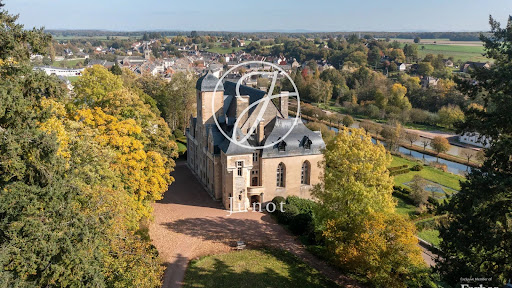


Listed as a Historic Monument, this exceptional château is located at the gateway to the Morvan, within a site inscribed on the UNESCO World Heritage List. Set within nearly 6 hectares of remarkable parkland and gardens, it was originally built in the 13th century on the remains of a medieval fortress, and later remodelled and expanded in the 15th and 17th centuries. The estate comprises the main château, restored 17th-century outbuildings known as the “Petit Château,” a circular tower converted into a prestigious private apartment, and extensive reception areas. The property offers numerous en-suite bedrooms, elegant lounges, libraries, historic and professional kitchens, as well as wellness facilities including a heated swimming pool and a hammam. The landscaped grounds, featuring a formal French garden, ornamental ponds, a kitchen garden, and direct access to the Nivernais Canal, enhance this outstanding architectural heritage, which has been meticulously restored and is protected under Historic Monument status.
…By Junot Châteaux & Patrimoine


Restored Château Set in 93 Hectares of Unspoilt Nature 15th-century château listed as a Historic Monument · 1,494 sqm of living space · 2,535 sqm of total built area · 8 bedrooms · 93 hectares Approximately 30 minutes from the Atlantic beaches, one hour from La Rochelle, 45–50 minutes from a TGV high-speed train station and 1 hour 20 minutes from Bordeaux-Mérignac International Airport, this remarkable 15th-century château offers a rare combination of heritage, nature and an exceptional French way of life. Listed on the Supplementary Inventory of Historic Monuments (ISMH), the property is distinguished by its exceptional setting: 93 hectares of contiguous, entirely preserved land surrounding the château. Restored with great care to preserve its historic character while providing contemporary comfort, the estate offers 2,535 sqm of total built area, comprising the château and its numerous outbuildings, including an elegant orangery. A 15th-Century Château, Where Authenticity Meets Contemporary Comfort The château has retained the architectural features that define its character and identity: stone façades, parquet floors, fireplaces, wood panelling, turrets, generous proportions and numerous details reflecting its medieval origins. Carefully restored with respect for its architecture, it now offers a comfortable lifestyle while preserving the authenticity and elegance of an exceptional historic residence. The reception rooms and private quarters offer 8 bedrooms, together with numerous spaces designed for entertaining family and friends. The property is offered fully furnished, allowing its new owners to settle in immediately and enjoy this exceptional setting. 93 Hectares of Contiguous Private Land Surrounding the château is a private estate of more than 93 hectares, comprising a remarkable variety of landscapes: - approximately 23 hectares of woodland; - meadows and natural areas; - ponds covering approximately 4,000 sqm; - a river; - a natural spring, fountain and well; - gardens and landscaped grounds; - orchards with more than 1,000 fruit trees; - private hunting rights already secured. This remarkable setting offers an exceptional level of privacy and the rare feeling of living within an entirely private territory. The diversity of the landscape, the presence of water and the quality of the natural surroundings create a particularly peaceful atmosphere, where architecture and nature exist in perfect harmony. A Distinctive French Art of Living The estate also features a swimming pool, hammam and gym, together with gardens and several outbuildings. The orangery, ancillary buildings and outbuildings provide an ideal setting for entertaining family and friends and offer scope for a variety of projects, including private events, high-end hospitality, guest accommodation, an equestrian project or a dedicated space for a collection. A caretaker's house is also currently under construction, with the major works already completed, providing an independent residence within the estate once finished. A Rare Property Combining a historic residence, a family estate and an extensive natural domain, this property brings together qualities rarely found in a single place. The quality of its restoration, its architectural heritage, its 93 contiguous hectares, the richness of its natural surroundings and its proximity to the ocean, airports and a TGV high-speed train station make this an exceptionally rare opportunity for those seeking a private, peaceful and enduring way of life. A place to enjoy not only the beauty of the château, but also the exceptional quality of life, privacy and sense of space offered by its 93 hectares of unspoilt nature. Private viewings by appointment. CONTACT : Jennifer DUMAS +33 (0)6 62 49 61 23 Maxwell-Baynes Christie's International Real Estate 27 Quai Valin 17000 La Rochelle France International Real Estate - Immobilier International La Rochelle - Ile de Ré - Royan - Ile d'Oléron
…By Maxwell-baynes Christie's International Real Estate - La Rochelle - Île De Ré


BARNES presents this 14th century château, situated in the Aveyron department, just one hour from Montpellier and two hours from Toulouse, surrounded by more than 5 hectares of parkland and grounds. The château features four adjoining lounges, a billiards room, a dining room and a vast family kitchen. The lounges feature perfectly preserved wood panelling and parquet flooring. On the first floor, there are four large bedrooms, each with its own en suite bathroom. The second floor also houses four further bedrooms with private bathrooms. The upper floors are accessed by a majestic stone staircase and wide corridors. The parkland at the entrance to the chateau is adorned with century-old trees, while the rear of the chateau has a swimming pool. The property also includes a large vaulted hall with a fireplace, accommodation for a caretaker, a dovecote, a wine cellar and a consecrated chapel. Information on the risks to which this property is exposed is available on the Géorisques website: www.georisques.gouv.fr
…By Barnes Proprietes & Chateaux


Located on the edge of a village near Courpière, in the Livradois-Forez Regional Natural Park, the estate includes a Renaissance castle, outbuildings, a pond and land for a total area of 4 ha 67 a 20 ca. The castle, built in the 16th century according to Renaissance principles and remodeled in the 17th century, is laid out as a quadrilateral surrounding an inner courtyard and flanked at its four corners by two round towers and two pavilions. Between the two towers, a vast terrace with a balustrade supported by three semicircular arches runs along the first floor. The old ditches, although dried up, are still clearly visible. A large body of water faces the terrace, fed by the Sauvagnon stream. In 1974 the current owners acquired the castle and saved it from ruin by carrying out major works from 1976 to 2000 on the main structure, the ground floor and the first floor. Access to the castle is through a beautiful pointed arch doorway leading to a covered passage with a barrel vault and then to the inner courtyard. On the ground floor: an old kitchen of 41.49 m² with ribbed vaulting and a monumental fireplace; a scullery of 5.64 m²; a square room of 13.15 m² in the round tower; a toilet of 6.58 m² with a washbasin; a 19.37 m² vaulted laundry room: sink, washing machine and fuel tank; a service spiral staircase leading to the first floor; three cellars, a workshop and the boiler room. A superb three-flight staircase with 17th-century Volvic stone arches serves the floors. On the first floor: a gallery (or armory) of 61.43 m². Three French doors open directly onto the 24 m² south-east facing terrace; a room known as the “Coat of Arms” measuring 12.38 m² with its exceptional painted decoration representing the coats of arms of the owning and allied families: Lodant, Uffan and La Fayette among others. Painted French-style ceiling. The cornice is brown and decorated with motifs and bordered by two green lines. The coats of arms are surrounded on the right by a cord and on the left by palm fronds. The lower part of the room is covered with a trompe-l'œil balustrade and the upper part is decorated with a frieze and masks in red and silver; a large, so-called “colonnaded” living room of 72.08 m². Nine massive columns with Corinthian capitals decorate the room. 18th-century wood paneling. Two French doors open directly onto the terrace; a 15.75 m² fitted kitchen in the round tower; a bathroom of 11.71 m²: two sinks, bathtub; a toilet of 0.96 m²; a blue room of 33.42 m². Superb marquetry rosette. In a niche, a faience stove. 18th-century woodwork. French-style ceiling; a corner bedroom of 31.09 m². Herringbone parquet flooring. Grey marble fireplace; an adjoining toilet of 0.65 m²: washbasin and bidet. A separate apartment has been created on the same level, accessible either from the colonnaded living room or via the service spiral staircase. It comprises: an entrance hall of 4.90 m²; a fully equipped kitchen of 4.03 m²; a dining room of 18.21 m²; a salon known as the “Muses Room” of 21.79 m². Remarkable painted coffered ceiling dating from the Louis-Philippe period. Herringbone parquet flooring; in the wall of the northeast tower, a charming oratory features a stucco decoration imitating Renaissance lambrequins and a cloudy sky with a dove dating from the late 18th century; a 4.29 m² interstitial space opening onto a balcony; a bedroom of 28.36 m². Grey marble fireplace. Herringbone parquet flooring; It is of course possible to combine the two apartments. The whole property offers approximately 388 m² of living space. On the second floor: approximately 400 m² of attic space suitable for conversion. Poplar timber frame. The roofs of the round towers were redone in 1976 and the rest has been regularly maintained. Central heating provided by two boilers. One Okofen pellet boiler dating from 2017 and an oil boiler used as a backup, dating from 2000. No energy performance certificate (DPE) as it is a listed building (ISMH). Connection to mains drainage and fibre optics. Its simple yet well-proportioned exterior, typical of the Renaissance, and the rich original features of its interior decoration justified its listing on the Supplementary Inventory of Historic Monuments in 1991: the entire château, including the bedroom with its marquetry parquet floor, the colonnaded drawing room, the coat of arms room, the salon of the muses, and the oratory. This listing allows, under certain conditions, for obtaining subsidies and tax relief for restoration work. A large common building was erected to the west, one wing of which is adorned with 6 semicircular bays and includes: a 48 m² garage; a garage with horse stalls of 71 m². Upstairs a hayloft of 172 m²; a sheepfold of 177 m² under a barrel vault which has retained a decoration of false rib vaults which may date back to the end of the 16th century; a stable of 27 m²; a stable of 190 m². Above it, a hayloft of 190 m². A dovecote. Of the 4 ha 67 a 20 ca of the property, approximately 3 ha are free meadows. The Sauvagnon stream crosses the property, splits into two branches to form an island and feeds the pond of approximately 2,500 m². The castle is built on the edge of a peaceful village located 10 km from Courpière, which offers all shops and amenities. The A89 motorway is 25 km away. The architectural qualities make this charming castle a rare witness to the Renaissance in Auvergne and with its vast volumes, its common and its park it will be the precious residence of true lovers of heritage or the ideal place for a tourist, cultural and event activity.
…By Pierre Changarnier Immobilier


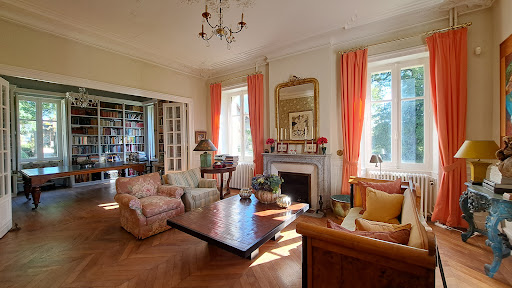
Castle built in 1879 in the Renaissance style of 328 m². Beautiful reception rooms opening onto a south-facing terrace with panoramic views. Two outbuildings. Pleasure park with hundred-year-old trees, orchard, vegetable garden and pond, for a total of 5.22 ha. No nuisance. On the edge of the village, 11 km from Saint Pourçain sur Sioule and 20 km from the A71. Ref 1023.
…By Pierre Changarnier Immobilier


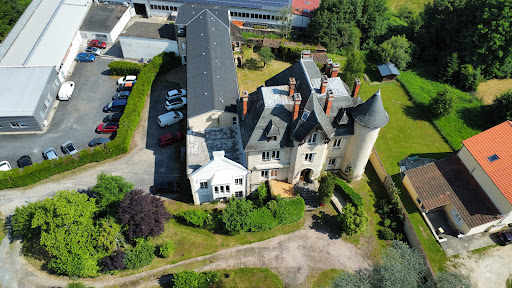


Character property complex comprising an elegant neo-Gothic style manor house of 564 m² with a rich interior décor, an office wing or commercial premises, two parking lots and a park with hundred-year-old trees. Ideal for the headquarters of a company, a rental investment, a tourist, commercial or event activity. Energy class : F and D. Amenities and shops nearby. Ref 985.
…By Pierre Changarnier Immobilier


Fully listed 15th century château, remodelled in 18th century, with numerous interesting architecturals feautures : gothic fireplace, spiral staircase, chapel with frescos, private sitting room with Louis XV ornamental plasterwork, panelles bedrooms...Several outbuildings including orangery, barns, workshop, cellars, caretaker's accomodation, poll and poll-house. Set in 2,6 ha of superb listed gardens. Energy class : not required. Ref 845
…By Pierre Changarnier Immobilier


At the end of a majestic avenue lined with triple rows of lime trees, you come upon this very elegant 18th-century chateau surrounded by 60 hectares of land. It is possible to acquire around 150 ha in addition to the adjoining leased land. This prestigious residence (approximately 1,200 sqm) is surrounded by its romantic English-style parklands enclosed by a pond in the middle of its grasslands, an orchard with swimming pool and tennis court, two corner pavilions, several outbuildings and fourteen loose boxes. It has all the hallmarks of an 18th-century aristocratic estate. Superb reception rooms with transparent lighting reveal the unostentatious elegance of its classical architecture around a through vestibule. Twelve bedrooms, plus nine smaller bedrooms on the second floor, benefit from superb, undisturbed views over the parklands. Bayeux and Caen in 15 minutes, 25 km from the Normandy landing beaches, 2h30 from Paris, close to the airport and SNCF train station. Full file available on request. Sale price including fees: 2,730,000 euros Fees payable by the purchaser Fees: 5% inc. VAT of the price excluding fees Sale price excluding fees: 2,600,000 euros Energy class: N/A Climate class: N/A Estimated annual energy consumption for standard use: not applicable Information on the risks to which this property is exposed is available on the Géorisques website: www.georisques.gouv.fr
…By Agence Mercure Normandie


Crossing the gates of this estate is not just about acquiring property; it is about taking a true journey through time. Rare and precious, the authenticity of the places has been jealously preserved: every stone, every woodwork, and every architectural detail whispers history and instantly immerses you in the enchanting atmosphere of a bygone era. A total immersion, where the charm of the past meets the present. Designed for hosting and celebrating, this exceptional estate stands out with its grand volumes, reception rooms leading to the terrace, more intimate spaces, and its accommodation capacity. Whether for intimate family gatherings, large-scale receptions, or a high-end guest welcoming project, the living spaces and the 13 bedrooms and 6 bathrooms offer modern comfort, allowing for hosting many guests in the purest tradition of hospitality. Nestled in the heart of a landscaped park, the estate is a true haven of peace, sheltered from view. The centennial trees and green perspectives create a setting of rare refinement, ensuring total privacy. Here, luxury is experienced discreetly, in tune with nature and the whisper of the wind. What makes it unique: An intact soul, spaces designed for sharing, and a secret estate where time seems to have stopped. A unique place for collectors of exceptional moments. Exceptional location between Lyon and Geneva, and 1h45 from Paris, departing from the Bourg station, which is a 30-minute drive away.This description has been automatically translated from French.
…By Parthena Conseil
'%20stroke='%23DDAA3A'%20stroke-width='1.909'%20stroke-linecap='square'%20stroke-linejoin='bevel'/%3e%3c/svg%3e)
Receive by email any new listing that may match your search criteria
By validating this form, you accept the general conditions of use of Le Figaro Properties.
These agencies offer a selection of luxury properties vente . Feel free to contact them for personalized assistance.