Get early access to listings that match your criteria
Never miss an opportunity again. Our personalized alerts notify you instantly.

 English$ USD · m²


Magnificent reception rooms arranged around a grand ceremonial staircase. Numerous suites, guest apartments, and a caretaker’s house. Extensive reception lounges in the outbuildings, library, and orangery. Formal courtyard, Spanish-inspired courtyard, and former stables. Remarkable architectural features – listed Historic Monument property. Central heating throughout all main buildings and air conditioning in the outbuildings.
…By Catherine La Bruyère Immobilier


A rare opportunity combining historic heritage with approved real estate development potential, with no further planning procedures required. In the heart of the charming village of Grilly, just minutes from Geneva and its international airport, this remarkable listed château, protected as a Historic Monument, has benefited from a high-quality restoration and enjoys an exceptional heritage setting. The property currently offers approximately 518 sq.m of living space arranged over two levels, complemented by more than 200 sq.m of additional convertible space on the top floor and in the attic, as well as an independent caretaker’s house. A key asset of this unique estate in the Pays de Gex is the granted building permit for the construction of an elegant residential building designed to recreate the estate’s former historic farmhouse, which disappeared several years ago. Designed by a French architect in close collaboration with the French Heritage Authorities (*Architectes des Bâtiments de France*), the project fully respects the site's architectural and historical identity. The approved development provides for the creation of four exceptional apartments, each occupying an entire floor and benefiting from generous living areas: * Garden level: 4-room apartment of 139.86 sq.m with private garden * First floor: 5-room apartment of 204.60 sq.m with terrace * Second floor: 5-room apartment of 196.33 sq.m with terrace * Attic level: 3-room apartment of 118.55 sq.m with terrace Each residence will benefit from private cellars, storage facilities, dedicated parking spaces, and a shared bicycle storage room. The completed architectural ensemble will create a harmonious estate where heritage and contemporary living meet with elegance. The Roman tower, remarkable roofs, chimneys, staircases, and listed historical features give the property a rare and authentic character. This unique property offers several possibilities: a prestigious private residence, a heritage enhancement project, or a high-end residential development in one of the most sought-after locations in the Pays de Gex. An exceptional opportunity for lovers of historic properties, discerning investors, and heritage enthusiasts wishing to bring an ambitious real estate project to life in a setting steeped in history. The granted building permit and the extensive studies already completed provide developers and investors with an immediately actionable project, offering significant time savings on both administrative and heritage approval processes. Information regarding potential risks affecting this property is available on the Géorisques website: [https://www.georisques.gouv.fr/](https://www.georisques.gouv.fr/). Agency fees payable by vendor
…By Barnes Pays De Gex & Genevois


Magnificent early 17th-century château, listed as a Historic Monument, built on an H-shaped plan. A fine example of french Mannerist architecture. Featuring an elegant enfilade of reception rooms. The 41-hectare estate includes a 12th and 15th-century keep, late Renaissance formal parterres, a grand tree-lined walk, a 500-meter canal, an orangery, kitchen garden, dovecote, menagerie, orchard. Sold partially furnished. Energy class: NA/NA.
…By Leyrit & Turpeau


In central France, in the Bourbonnais bocage, A listed 14th- and 17th-century farmhouse château with a riding arena, lake, and meadows, on 28 ha. The farmhouse château, a listed building (Monument Historique), is laid out around a large square courtyard bordered by four ranges of buildings. Two wings of service buildings extend the south side and form an open forecourt, reached over a bridge spanning a moat. A square porch pavilion of exposed rubble stone pointed in lime, with a carriage entrance and a wooden pedestrian door, marks the access to the property. The imperial roof has slopes covered alternately in fishscale tiles and flat tiles, with a slate bell-turret above. This entrance evokes the history of the site. Through the pavilion, a keep of exposed rubble stone under Bourbonnais flat tiles comes into view along its axis. The wings of the house repeat the same architectural style, with towers and wooden galleries, open or closed. Stone dormers in the roofs and Burgundy stone surrounds to the doors and openings add to the overall architectural coherence. The house has turrets and bartizans, and a large round tower at its south end houses the chapel. A small bell-turret and a cross top the tower's roof. Around the main house, several outbuildings remain from the former agricultural use of the site: a mill, a sheep shed, a henhouse, a barn, and a kennel. Some of these buildings are now used as a stable and a garage. There is also a riding arena. The courtyard and the areas around the buildings are landscaped with gravel drives, low dry-stone walls, and lawns with potted olive trees and shrubs.
…By Patrice Besse


A medieval and Renaissance castle, listed as a historic monument. On the edge of the village, facing the fields, the castle occupies a central position within the property, at the site of a 11th-century fort that has since disappeared. The southwest part consists of a tower and an entrance porch, where traces of the former drawbridge from the 15th century are still visible. The courtyard facade was built in 1570 for Antoine d’Oiselay, by the architect Hugues Sambin, both local figures. An important transformation campaign carried out in the early 19th century by the architect Marnotte for the family of Magnoncourt has given the whole its current configuration, notably with an elevation and new interior arrangements. The wall paintings in the honor salon date from the 1980s and were created by students from an art school. The building has an L-shaped plan, with a medieval round tower in the southwest and a square tower in the northeast. An outbuilding is located to the north and communicates with it through a passage at the lower level. Raised to six levels, the building includes a semi-buried level occupied by cellars and old kitchens, as well as a final level of attics. Built in the 1970s, the outbuilding, raised to three levels, was intended for a school. Its converted attics house a former cinema hall.This description has been automatically translated from French.
…By Patrice Besse


Ref. 4397 : 14th C. Listed medieval Castle for sale, in Charente-Maritime Department The property is located in the heart of Saintonge Romane in the Charente-Maritime department. This 14th century medieval château (listed ISMH) is a former stronghold steeped in history and authenticity. Close to the A10 motorway and Saintes train station, this property is easily accessible from the capital. Jeanne de Parthenay inherited the land of Nieul in 1370, and her husband, Jean Chaudrier, an ancestor of Ronsard, built this fortified castle. Mayor of La Rochelle, he is famous for having delivered the town from the English thanks to a ruse. In the 1550s, the lords of Nieul followed the ideas of Calvin. In 1573 and 1574, Protestant worship took place here. From 1630 onwards, there were many co-lords until 1720, when the castle reverted to Gabriel Limousin. The château was sold as national property in 1793, and divided between three farmers. Since 1972, it has undergone extensive restoration. The castle features irregular polygonal walls with projecting buttresses at the corners of the curtain walls, reminiscent of the military architecture of the 13th and 14th centuries. The curtain walls, which are more than 12 metres high, were crowned by a parapet walk, which can still be seen on the facades of the two square towers. In the inner courtyard, the dwellings and outbuildings are set against the wall. Two of the three stair towers remain, the third only leading to the vaulted basement rooms. The property is accessed via two drawbridges over the moat, which has now been drained, one leading to the ogival gate and the other to the postern. And there you discover this magnificent ensemble that cannot leave you indifferent. The charm of the place is immediately apparent. Many events have been organised in this unique jewel, including concerts, heritage classes for children, exhibitions, night shows, films and short films. The château complex, covering around 700 sqm, comprises two main buildings. An habitable dwelling, fully furnished with period and stylish furniture, built over two levels. The ground floor comprises an entrance hall, a vestibule, a large lounge with its monumental fireplace, a second lounge, dining room and kitchen. The 1st floor has parquet flooring throughout and comprises a landing, a library, 6 bedrooms and 3 shower and toilet rooms. The outbuildings have been converted into living quarters, ideal for a tourist activity, and are sold fully furnished with period furniture. The building is also built on two levels. On the ground floor: a reception area, a patio, a refectory, a professionally equipped kitchen, a shower room, a bathroom and sanitary facilities. The 1st floor has parquet flooring and comprises a lounge, 3 independent bedrooms, 2 dormitories, two shower rooms and sanitary facilities. This beautiful property has an outbuilding used as a garden shed and workshop. This former stronghold has magnificent vaulted cellars that have been restored by the current owners. The property extends over 2.47 acres, including its former stronghold surrounded by an irregular enclosure with curtain walls 12 to 14 metres high, pierced by archères, crowned by a parapet walk and flanked by square towers. The moat has now been drained and there is a meadow where you can take full advantage of this place steeped in history. The chateau is listed on the Inventaire supplémentaire des Monuments Historiques: Enclosure wall and postern; turret in the east building containing a spiral staircase; remains of the south wing, now destroyed: start of a spiral staircase and two underground rooms : listed by order of July 1988. Cabinet LE NAIL – Charente-Maritime – M. Alexandre de GRAILLY: +33 (0)2.43.98.20.20 Alexandre de GRAILLY, Individual company, registered in the Special Register of Commercial Agents, under the number 844 613 638 We invite you to visit our website Cabinet Le Nail to browse our latest listings or learn more about this property.
…By Cabinet Le Nail
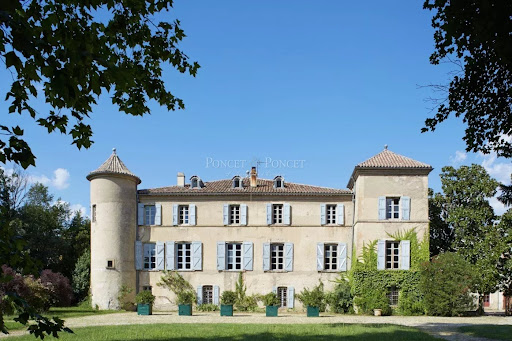


Overlooking the village at the gateway to the Cévennes, this listed Historic Monument ranks among the most remarkable historic estates in the Gard region. Originally built on medieval foundations dating from the 14th century and extensively remodelled during the 17th and 18th centuries, it possesses the rare distinction of having remained in the same family for nearly seven centuries. Set within more than seven hectares (17 acres) of enclosed grounds, the estate perfectly combines the elegance of a grand aristocratic residence with the richness of an exceptional landscaped heritage. Designed in the English style, the park features sweeping lawns, majestic century-old Cedars of Lebanon, ginkgo trees, historic bamboo groves, a traditional kitchen garden and ornamental gardens. Its remarkable hydraulic features include a monumental water wheel (noria) and an elegant 17th- and 18th-century nymphaeum, while a Palladian-inspired swimming pool blends discreetly into this setting of rare harmony. Offering approximately 1,100 sq m (11,840 sq ft) of living accommodation across four levels, the château eloquently reflects several centuries of architectural evolution. Its magnificent Italian-style staircase, richly decorated with stucco work and mythological bas-reliefs, is regarded as one of the finest examples of its kind in Languedoc. A succession of grand reception rooms reveals generous proportions, abundant natural light and beautifully preserved period interiors, while the formal dining room retains its early 18th-century Italian frescoes. The principal drawing room houses an exceptionally rare panoramic wallpaper by the celebrated Réveillon manufactory, official supplier to the Court of Versailles, preserved in an outstanding original condition. The lower levels reveal the château's medieval origins through vaulted cellars, historic kitchens, a Renaissance laundry room and an impressive collection of original service areas. Extending to more than 1,850 sq m (19,910 sq ft), the outbuildings include a former silk mill converted into an elegant reception hall, an orangery, a traditional silkworm house (magnanerie), a library housed within one of the towers, stables and an 18th-century gatekeeper's house, together offering exceptional scope for a wide range of prestigious residential, cultural or hospitality projects. Our Opinion This estate unquestionably belongs among the finest historic châteaux in the Gard. Very few properties combine such an unbroken family history stretching back to the Middle Ages, architecture of such remarkable integrity, interiors of exceptional quality and landscaped grounds of this scale. The harmonious balance between the grandeur of the château, the remarkable heritage value of its outbuildings and the beauty of its gardens gives the estate an outstanding identity, making it one of the region's most distinguished historic properties. The estate also enjoys an exceptionally privileged location. It lies just thirty minutes from Nîmes and its TGV high-speed rail station, forty-five minutes from the UNESCO World Heritage Site of the Pont du Gard, and less than one hour from Montpellier, Arles and Avignon. At the heart of one of France's richest regions for both historic heritage and contemporary culture, it is within easy reach of internationally renowned institutions including Carré d'Art in Nîmes, LUMA Arles, MO.CO Montpellier and the Fondation Maeght. The private airfield of Alès-Deaux, only fifteen minutes away, further enhances its accessibility. A comprehensive and recent restoration, carried out with unwavering respect for authentic materials and the spirit of the property, has restored the estate to its full splendour while seamlessly incorporating the standards of contemporary comfort.
…By Poncet & Poncet


BARNES Properties & Castles offers for sale this authentic castle from the 17th and 18th centuries, listed as a Historical Monument. Set in the heart of an estate of approximately 15 hectares, bordered by the Charente, this heritage ensemble offers a rare living environment, preserved and imbued with history. Away from any nuisances, the property benefits from a privileged location in the countryside, just 15 minutes from the city center of Angoulême and the TGV station, allowing a connection to the capital in just over 2 hours. The first amenities can be found 5 minutes away. A beautiful alley leads to the estate and leads to the entrance porch, which opens onto a large honor courtyard. Surrounding it are the castle and its many outbuildings, forming a closed ensemble of remarkable proportions. Different eras coexist harmoniously, composing a characterful architectural ensemble, whose charm has been preserved over the centuries. The main residence has retained numerous elements of ancient decor: fireplaces, 18th-century woodwork, old floors, frescoes, a period staircase, and a remarkable vaulted kitchen. Generous openings extend the interior spaces with beautiful views of the gardens and park. The reception rooms, both authentic and bright, offer beautiful volumes in a period decor. The upper floors accommodate no less than nine bedrooms. However, a significant part of the castle still needs restoration. This configuration offers future owners the opportunity to continue enhancing this historic residence and fully reveal its potential, in respect of its heritage character. The numerous outbuildings are another major asset of the property. Barns, former stables, and a large columned awning illustrate the traditional organization of large rural properties and currently offer multiple possibilities for use and transformation. Depending on the necessary authorizations, these spaces could notably accommodate equestrian facilities, reception areas, independent housing, workshops, or various tourist-oriented projects. The estate extends over approximately 15 hectares and consists of a wooded park, woods, and meadows. The entire estate benefits from a particularly preserved natural environment and enjoys the presence of the Charente at the property limits. Over the years, numerous preservation works have been undertaken, particularly on the roofs, facades, outbuildings, and certain decorative elements, thus contributing to the preservation of the residence. While significant work remains to be considered, particularly in the interiors, the property currently benefits from a solid foundation for an extensive restoration and enhancement project. A rare ensemble, steeped in history and endowed with remarkable potential, just a few minutes from Angoulême. Property not subject to DPE. Detailed file available upon request. Property presented by Jan Erik ALDERLIESTE "Information on the risks to which this property is exposed is available on the Géorisques website: www.georisques.gouv.fr"This description has been automatically translated from French.
…By Barnes Proprietes & Chateaux


PARIS Porte d'Auteuil/Maillot only 2 hours away A HILLSIDE GEM OVERLOOKING THE TOUQUES VALLEY Nestled on a hillside, overlooking the Touques Valley, at the edge of a carefully maintained woodland, this remarkable Seigneurial Manor, with a rectangular plan and listed as a Historic Monument (ISMH), offers an exceptionally peaceful and preserved setting in the heart of the Pays d?Auge. AN EXCEPTIONAL MANOR, A TESTIMONY TO HISTORY Built in the 15th century and enriched over the centuries (16th, 17th, and 18th centuries), this manor embodies the elegance of Augeron Renaissance architecture. Constructed with dressed stone, brick, and half-timber, it rises over four levels beneath a traditional tile roof, offering approximately 450 m2 of living space (4800 sq ft). The manor is oriented West-East, with its main façade facing west, bathed in the golden light of the evening and offering stunning panoramic views. The southern gable, built of dressed stone and reinforced with imposing buttresses, reflects the building?s robustness and grandeur. Opposite, the northern gable, made of brick, houses the entrance/mudroom, a spacious area with built-in closets, a cloakroom, and guest toilet. In addition to its habitable spaces, the property features a vast basement of over 90 m2, with remarkable ceiling height, offering numerous possibilities for conversion. ARCHITECTURE & INTERIOR DESIGN: AN IMMERSION IN RENAISSANCE ART The manor preserves an exceptional collection of 16th-century painted decorations, uncovered during recent restorations, showcasing the artistic refinement of the Renaissance in the Pays d?Auge. Ground floor: elegance and authenticity Grand dining room (approximately 53 m2), paved with stone slabs, featuring a fireplace adorned with 18th-century sculpted wood paneling and cabinets. Main living room (58 m2), with opposing large windows, featuring a monumental stone fireplace whose mantel is painted with an ancient fresco. The southern partition wall is decorated with an ornately carved Renaissance wooden door , alongside a fresco depicting the Battle of Marignan, restored after being discovered beneath layers of wallpaper?an exceptional 16th-century iconographic document. The beams, sleepers, and joists are finely decorated with ornamental paintings. Second salon (35 m2), ?modernized? during the Ancien Régime, featuring 18th-century wood paneling and cabinets, a refined carved stone fireplace, decorated with two angels surrounding a central medallion. Fully equipped kitchen, crafted in solid oak, with black granite countertops. Spacious entrance (mudroom), located at the northern gable, leading to the first level via an elegant oak staircase. First floor: refined private spaces Accessed via a stone spiral staircase, the first floor includes, connected by a corridor paved with 16th-century ceramic tiles: Majestic suite (38 m2) with a stone fireplace and private shower room, adorned with exceptional 17th-century murals, depicting Renaissance-inspired archways, floral and fruit motifs (melons, grapes, tulips, daisies), and Renaissance sculpted ornaments. Beautiful bedroom, currently used as an office, featuring a 14th-century stone fireplace, a remnant of the previous medieval dwelling, tiled floors, and painted vine and interlace motifs, as well as religious figures, on the wooden structures. Grand bedroom (over 40 m2) with sumptuous painted decorations and a remarkable stone fireplace, as well as an adjoining bathroom. A smaller bedroom with an ensuite bathroom, located in the 18th-century section, benefiting from a dual access staircase. Converted attic: space and comfort Large suite with a private shower room and WC, oak parquet flooring, and a warm, cozy atmosphere. Two additional bedrooms, sharing a common shower room. MODERN COMFORT & RESPECTFUL RESTORATION Despite its historical heritage, the manor enjoys modern comfort: Heating system powered by heat pumps (installed in 2024) High-tech security alarm system with outdoor su
…By Pays D'auge Immobilier (sarl)


Réf.4739 : Renaissance chateau listed as a Historic Monument and 83 acres for sale in Anjou In Anjou, built in the countryside on the outskirts of a small village, stands this magnificent Renaissance property. A large avenue of lime trees leads to the old carriage entrance that precedes the main courtyard. The property is located in the north of Maine-et-Loire, in a preserved rural area, away from major traffic flows and easily accessible. The village is set in a landscape of hedgerows and farmland. The neighbouring towns provide everyday amenities. Angers, 35 km away, is within easy reach, offering a direct link to Paris (A11 motorway and TGV station for Paris in 1 hour 25 minutes). The whole property offers a discreet, stable and rural setting, characteristic of the Anjou region. Angers (population 160.000) is just 15 minutes away by car. Angers is the capital of the Anjou region, with all the shops and services you need (university hospital, universities, TGV train station providing a 1h30 hour link to Paris). The town centre is magnificent, with its narrow streets, the imposing silhouette of its 13th-century castle, and the parks and gardens in the heart of the town. The town has also been awarded the title of France's top green town and is a great place to live. In other words: the gentleness of Anjou. It is one of the smallest Renaissance-style chateau in France. Built of schist and tuffeau stone and covered with slate, it faces south/north. It has a total surface area of 800 sqm spread over three levels of approximately 230 sqm each, extended by three half-floors in the east wing. The upper floors are accessed via an impressive straight stone staircase, supported by buttress walls and covered with brick vaults with white stone coffers, as well as a wooden spiral staircase. The façades feature large windows with crossbars and mullions. The chateau's roofs are very varied, illustrating the architectural richness of the building: pavilion, pepperpot and imperial. One enters the residence through a low semi-circular door with pilasters: - On the ground floor: guard room (67 sqm, ceiling height: 3.63 m), library (33 sqm), dining room (38 sqm), kitchen (36 sqm), utility room (7.6 sqm), toilet and washbasin; On the mezzanine floor: bedroom (42 sqm) and bathroom (8 sqm). - Upstairs: living room with painted wood panelling (72 sqm, ceiling height 3.51 m), 3 bedrooms (35, 28, 18 sqm), one with en-suite bathroom, another with dressing room, office (24 sqm), bathroom and shower room (11 sqm), WC and dressing room (9 sqm); On the mezzanine floor: bedroom (42 sqm), bathroom/shower room and toilet (8.5 sqm), dressing room in the tower. - On the second floor: billiard room (29 sqm), upstairs lounge (27 sqm), 7 bedrooms (from 11 to 28 sqm), 1 shower room; On the mezzanine floor: bedroom (44 sqm), bathroom/shower room and WC (8 sqm), dressing room in the tower. Attic above, vaulted cellar including the boiler room under the west wing and semi-underground cellar under the east wing. The chateau is sold furnished; the complete list is to be determined with the owner. The quality of the building's exterior architecture is exceptional. The interior lives up to this impression with architectural features characteristic of large country houses. To name but a few, there is the beautiful straight staircase with open risers, the monumental fireplaces, the mullioned and transom windows, and the consistent and skilful use of high-quality materials (terracotta, wood panelling, cut stone for the ornamentation, etc.). The two painted rooms upstairs are admirable. The paintings were created in 1648 for the wedding of a former owner of the château: The first includes classical motifs such as foliage, crowned busts of Roman emperors, but also still lifes of flowers and fruit, landscapes of Anjou, etc. The second is known as the "chambre des Amours" (chamber of love) because of the motifs with which it is decorated. This building, on a human scale, has all the features of a large Renaissance château. Without excessive decoration or extravagance, it authentically embodies a large Anjou residence, with no lack of architectural richness. It is an extension in Haut-Anjou of the prestigious splendour of the Châteaux of the Loire. OUTBUILDINGS : They include a U-shaped courtyard comprising: - A 4-room building with 2 woodsheds and 2 chicken coops; - At right angles: a barn, a large garage (125 sqm), a 2-room caretaker's lodge (70 sqm), electric heating, in need of refurbishment; attics above; - At right angles: a dilapidated 70 sqm dwelling, then the old stables (saddle room and 6 stalls); attic above. In the grounds: - A dovecote; - A kennel; - A shelter in the woods; - A well in the courtyard. LAND : Charming English-style park planted with numerous large trees (oaks, cedars, ash trees, chestnut trees, etc.) and ornamental shrubs. A beautiful avenue of lime trees leads to the chateau. - The entire area covers 83.5 acres and is divided as follows: - Approximately 23.5 acres of woodland (excluding avenues); - Four ponds measuring approximately 900 sqm, 1,200 sqm, 3.9 acres and 7.4 acres respectively; NB: these are geoportal measurements based on aerial views. These measurements may vary depending on the weather and the condition of the ponds. - 13.1 acres of buildings, parkland and avenues; - Approximately 34.6 acres of open meadows. Cabinet Le Nail: +33.(0)2.43.98.20.20 CPI 5301 2018 000 028 835 - CCI de la Mayenne We invite you to visit our website Cabinet Le Nail to browse our latest listings or learn more about this property.
…By Cabinet Le Nail


Fully listed 15th century château, remodelled in 18th century, with numerous interesting architecturals feautures : gothic fireplace, spiral staircase, chapel with frescos, private sitting room with Louis XV ornamental plasterwork, panelles bedrooms...Several outbuildings including orangery, barns, workshop, cellars, caretaker's accomodation, poll and poll-house. Set in 2,6 ha of superb listed gardens. Energy class : not required. Ref 845
…By Pierre Changarnier Immobilier


Located on the edge of a village near Courpière, in the Livradois-Forez Regional Natural Park, the estate includes a Renaissance castle, outbuildings, a pond and land for a total area of 4 ha 67 a 20 ca. The castle, built in the 16th century according to Renaissance principles and remodeled in the 17th century, is laid out as a quadrilateral surrounding an inner courtyard and flanked at its four corners by two round towers and two pavilions. Between the two towers, a vast terrace with a balustrade supported by three semicircular arches runs along the first floor. The old ditches, although dried up, are still clearly visible. A large body of water faces the terrace, fed by the Sauvagnon stream. In 1974 the current owners acquired the castle and saved it from ruin by carrying out major works from 1976 to 2000 on the main structure, the ground floor and the first floor. Access to the castle is through a beautiful pointed arch doorway leading to a covered passage with a barrel vault and then to the inner courtyard. On the ground floor: an old kitchen of 41.49 m² with ribbed vaulting and a monumental fireplace; a scullery of 5.64 m²; a square room of 13.15 m² in the round tower; a toilet of 6.58 m² with a washbasin; a 19.37 m² vaulted laundry room: sink, washing machine and fuel tank; a service spiral staircase leading to the first floor; three cellars, a workshop and the boiler room. A superb three-flight staircase with 17th-century Volvic stone arches serves the floors. On the first floor: a gallery (or armory) of 61.43 m². Three French doors open directly onto the 24 m² south-east facing terrace; a room known as the “Coat of Arms” measuring 12.38 m² with its exceptional painted decoration representing the coats of arms of the owning and allied families: Lodant, Uffan and La Fayette among others. Painted French-style ceiling. The cornice is brown and decorated with motifs and bordered by two green lines. The coats of arms are surrounded on the right by a cord and on the left by palm fronds. The lower part of the room is covered with a trompe-l'œil balustrade and the upper part is decorated with a frieze and masks in red and silver; a large, so-called “colonnaded” living room of 72.08 m². Nine massive columns with Corinthian capitals decorate the room. 18th-century wood paneling. Two French doors open directly onto the terrace; a 15.75 m² fitted kitchen in the round tower; a bathroom of 11.71 m²: two sinks, bathtub; a toilet of 0.96 m²; a blue room of 33.42 m². Superb marquetry rosette. In a niche, a faience stove. 18th-century woodwork. French-style ceiling; a corner bedroom of 31.09 m². Herringbone parquet flooring. Grey marble fireplace; an adjoining toilet of 0.65 m²: washbasin and bidet. A separate apartment has been created on the same level, accessible either from the colonnaded living room or via the service spiral staircase. It comprises: an entrance hall of 4.90 m²; a fully equipped kitchen of 4.03 m²; a dining room of 18.21 m²; a salon known as the “Muses Room” of 21.79 m². Remarkable painted coffered ceiling dating from the Louis-Philippe period. Herringbone parquet flooring; in the wall of the northeast tower, a charming oratory features a stucco decoration imitating Renaissance lambrequins and a cloudy sky with a dove dating from the late 18th century; a 4.29 m² interstitial space opening onto a balcony; a bedroom of 28.36 m². Grey marble fireplace. Herringbone parquet flooring; It is of course possible to combine the two apartments. The whole property offers approximately 388 m² of living space. On the second floor: approximately 400 m² of attic space suitable for conversion. Poplar timber frame. The roofs of the round towers were redone in 1976 and the rest has been regularly maintained. Central heating provided by two boilers. One Okofen pellet boiler dating from 2017 and an oil boiler used as a backup, dating from 2000. No energy performance certificate (DPE) as it is a listed building (ISMH). Connection to mains drainage and fibre optics. Its simple yet well-proportioned exterior, typical of the Renaissance, and the rich original features of its interior decoration justified its listing on the Supplementary Inventory of Historic Monuments in 1991: the entire château, including the bedroom with its marquetry parquet floor, the colonnaded drawing room, the coat of arms room, the salon of the muses, and the oratory. This listing allows, under certain conditions, for obtaining subsidies and tax relief for restoration work. A large common building was erected to the west, one wing of which is adorned with 6 semicircular bays and includes: a 48 m² garage; a garage with horse stalls of 71 m². Upstairs a hayloft of 172 m²; a sheepfold of 177 m² under a barrel vault which has retained a decoration of false rib vaults which may date back to the end of the 16th century; a stable of 27 m²; a stable of 190 m². Above it, a hayloft of 190 m². A dovecote. Of the 4 ha 67 a 20 ca of the property, approximately 3 ha are free meadows. The Sauvagnon stream crosses the property, splits into two branches to form an island and feeds the pond of approximately 2,500 m². The castle is built on the edge of a peaceful village located 10 km from Courpière, which offers all shops and amenities. The A89 motorway is 25 km away. The architectural qualities make this charming castle a rare witness to the Renaissance in Auvergne and with its vast volumes, its common and its park it will be the precious residence of true lovers of heritage or the ideal place for a tourist, cultural and event activity.
…By Pierre Changarnier Immobilier


A small, 18th-century château, listed as a Historical Monument, on the border of the Champagne and Lorraine regions. In the middle of the village, on the corner of two streets, the property is located in a small, tranquil valley, which is within immediate proximity to schools, a local shop and a bar-tobacconist’s, while, behind its stone wall and tall wrought-iron gates, it is articulated around a main courtyard extended, in the back, by an L-shaped garden featuring a swimming pool, a barn and an outbuilding. Meticulous and romantic in appearance, with a subtly integrated swimming pool, the garden has been decorated with a number of statues and stone benches, delicately placed among the wisteria and flowerbeds, whereas a chicken coop has been cleverly concealed at one end of the garden and, to the right of the courtyard, a beautiful 19th-century orangery abuts the neighbouring property and is currently used as a garage.
…By Patrice Besse


Réf.4802 : Chateau listed as a Historic Monument and its small chateau in Burgundy, in the heart of the Nièvre The château is situated in Burgundy, in the heart of the Nièvre region, between Nevers and Château-Chinon, on the outskirts of a small town of 900 inhabitants. Formerly the seat of a major medieval seigneury, the town developed on a rocky outcrop overlooking the Aron valley. The Nivernais Canal forms a loop within which the estate is situated. The Aron flows below. It is built on high ground and enjoys a magnificent view over the Nièvre countryside. The Morvan Regional Nature Park is nearby, a preserved natural area. The château is a 30-minute drive from Nevers and a 2 hour 40 minute drive from Paris. There is an aerodrome in Nevers, and a helicopter can land in the château grounds. The property comprises a 1,200 sqm château and a smaller 800 sqm château. THE CHATEAU : The château is built on a rectangular plan, over four storeys, with a slate gable roof. On the south-west façade, one can make out a former imposing chapel, now connected to the interior of the château, covered by a hipped roof, with two large pointed-arch windows. The main entrance is situated in the centre of a tall, projecting tower, spanning six storeys, topped by a hipped roof and housing a listed spiral staircase. The north-west façade, overlooking the terrace, is rendered in lime, featuring numerous mullioned windows in the larger sections and high-set dormer windows. The window frames are made of limestone. The south-east façade, offering a beautiful view of the Nièvre countryside, also features numerous windows, some of which are in a more classical 17th-C. style. A two-storey turret links the former chapel to the château. On the second and third floors there are twelve bedrooms, each with its own bathroom and wardrobe, ranging in size from 12 to 51 sqm. Beneath the roof of the former chapel lies a large 50 sqm study featuring a beautiful roof structure shaped like an upturned ship’s hull. Throughout the château, there are numerous preserved and restored architectural features, including floors, fireplaces, wood panelling, ceilings, and more. The interiors are very harmonious, of high quality, and perfectly respect this historic residence. THE SMALL CHATEAU : This is a 17th-C. building that originally housed outbuildings and large double-height stables. It has a rectangular layout over three storeys, plus an attic, and is covered with a slate Mansard roof. The main façade on the north-west side features a slight projection at its centre, with a pediment at the top, as well as at the ends, framed by stonework. The façades are lime-plastered. The interior surface area of the small château is approximately 800 sqm. THE 13TH-C. DEFENCE TOWER : This military defence tower has been converted into a self-contained flat. On the ground floor is a living room featuring antique terracotta tiles and a French-style ceiling. The tower contains various works by the designer and sculptor Pierre-Marie le Jeune, including a striking metal fireplace. A small kitchen has also been fitted out. Upstairs, there is a beautiful bedroom with a ‘sculpted bed’ and a glass ceiling revealing the magnificent roof structure, as well as a very contemporary bathroom with a glass bathtub. LAND : The park covers just over 12.3 acres. Around 1830, the landscape architect LAVENNE de CHOULOT designed an English-style park. It is through this park that one enters the estate. Heading south, we pass through a woodland with beautiful bridle paths that lead us to the edge of the Canal du Nivernais. From there, skirting the defence tower via a stone tunnel, we reach what was once the old kitchen garden, situated below the château’s terrace. Under the impetus of the current owners, this former kitchen garden has been transformed into a contemporary garden which has been awarded the ‘remarkable garden’ label. Water features have been created, resembling shattered fragments in which the sky and the château’s façade are reflected. Magnificent undulating rows of boxwood evoke the Nivernais bocage. This remarkable garden is bordered by a private canal running parallel to the Canal du Nivernais. Finally, a small French-style garden has been created on the upper terrace between the château and the 13th-C. tower. The views are magnificent, both from the lower garden towards the chateau terraces and from the upper gardens towards the Aron valley and the landscapes of the Nivernais countryside. This château is a truly historic family estate. Its size, location, surroundings, gardens and history make it a truly exceptional property. The high-quality restoration, which has been carried out with respect for the site’s history, means that a large family could move in immediately. The separation between the main château and the smaller château opens up a wide range of possibilities for activities without causing any disturbance. The development of an events business—such as conferences, corporate conventions, seminars, or private events like weddings, receptions, birthdays, etc.—is entirely feasible. It would also be possible to consider creating a hospitality (hotel) business. Finally, there is an opportunity to purchase additional land and buildings, subject to a price offer. Cabinet LE NAIL - Nièvre - Mr Bernard ROUYER : +33 (0)2.43.98.20.20 Bernard ROUYER, Individual company, registered in the Special Register of Commercial Agents, under the number 382 833 341. We invite you to visit our website Cabinet Le Nail to browse our latest listings or learn more about this property.
…By Cabinet Le Nail


Just 8 km from Angoulême and its high-speed rail station, the Château de Balzac enjoys a privileged location in a protected and easily accessible environment. Listed as a historical monument, it was the residence of Jean-Louis Guez de Balzac, the 17th-century writer and academician. Its history, architecture, and remaining period features give it a truly unique character. The main building offers nearly 1,000 m² of living space. It includes vast reception rooms, a remarkable 18th-century oval salon, a vestibule adorned with ancient frescoes, as well as numerous rooms that have retained their fireplaces, wood paneling, and parquet floors. The ship's hull-shaped roof structure is also one of the château's most remarkable features. Outside, the monumental colonnade structures the courtyard and gives the whole a distinctive identity. The outbuildings, including former stables, barns, and service buildings, offer numerous possibilities for conversion. The estate extends over approximately 15 hectares with a wooded park, bridle paths, woods, an old wash house, a fishpond, and a canal, all bordered by the Charente River. Preservation work has been carried out over the years on the roofs, facades, outbuildings, and some of the historic decorations. The interior of the main house remains to be fully restored. It now offers the opportunity to envision an ambitious restoration, respectful of the history of the place, to create a large family residence or develop a hospitality and event project. A rare property, ideal for a buyer with a passion for heritage, history, and characterful properties. Agency fees: 5% including VAT, payable by the buyer. Price excluding agency fees: €1,000,000. Information on the risks to which this property is exposed is available on the Georisques website: www.georisques.gouv.fr
…By Lafontaine Immobilier Angoulème


Sector ISIGNY SUR MER, the CABINET FAUDAIS presents this castle with open views of the marshes. This listed property is a history book of Norman heritage, it was built around the eleventh century belonging to the bishops of BAYEUX, Odon De Bayeux, half-brother of William the Conqueror occupied the building. Later it became a defensive domain, and was besieged many times during the Hundred Years' War. For history lovers, there are still many discoveries to be made! The castle is about 245 m2 living space with lounge/ living room with fireplace, kitchen, 4 bedrooms, 2 bathrooms. Former vaulted cellar. Various outbuildings to renovate, including an old chapel. All on 2.3 hectares of land.
…By Cabinet Faudais Saint-lo


Uzès area Superb Former fortified 13th century castle, ISMH-listed Historical Building, modified over the centuries, partially renovated with beautiful materials, 7 bedrooms, orangery with possibility of studio, swimming pool, beautiful park of 7795m², full of history, in the heart of a village, within walking distance to amenities, near town, airport, TGV, motorway and sea This historic property is excellently located in the greater Uzès area, Languedoc Roussillon, Occitanie, South of France. Built in the Middle Ages on the foundations of an old fortified castle, the additions through the centuries have left different features including the beautiful rooms with vaulted ceilings, a sumptuous Louis XIII staircase and the Empire lounge. Standing majestically in the heart of the village, you can admire the beautiful facade, its two entrance towers and the remains of its ancient ramparts. The rooms offer beautiful volumes with large windows, high ceilings, beautiful floors and fireplaces - in short, a feeling of well-being. This proves that a castle can both retain all its charm, character and authenticity while offering us all the modern comforts. You just have to impregnate this house of your own history! Description of the building The Castle ISMH-listed offers ??450m² of living area and a further 350m² to restore on 3 levels served by the majestic stone staircase that occupies the entire old dungeon. Ground floor: Entrance is through a beautiful Louis XIII door, hall 21.5m², bedroom 1 33m², bedroom 2 in a corner tower 13m², summer living room with kitchen 37m², bathroom, gym with sauna and shower 28m², WC, laundry area, remarkable large vaulted wine cellar. 1st floor: Access via a beautiful stone staircase, elegant gallery / hall 22m² which serves the various reception rooms, living room 50m² with rare 17th century wooden fireplace and French ceiling, library 23m² with 19th century fireplace, bedroom 3 28m² and its bathroom + dressing + WC 12m², dining room with vaulted semicircular ceiling (only 5 in France including 2 in the Gard) 43m ², fitted kitchen 25m ², bedroom 4 of 16m² leading through to a room in the tower 12m², bedroom 5 25m², office 22m², WC 1.5m², bathroom 11m², TV room 14m². 2nd floor: Its sumptuous staircase leads us now to the second floor where there are 2 large bedrooms, one of 34.5m² and bathroom 12.5m², many other large rooms with beautiful high ceilings just waiting for your ideas to find their story. A staircase still allows access to the top of the dungeon. Swimming pool 15.5m x 5.5m Outbuilding on 2 floors. There is an orangery on the ground floor with the possibility to consider a studio on the 1st floor. Grounds The two magnificent towers at the entrance of the property date back to the Seventeenth century and were reduced by half during the revolution. The gate opens onto a magnificent park of 7795m², with parts dedicated to 7 architects influencing architecture of the 20th century, where a work of art of each one stands. Many trees like hackberries, maple trees, plane trees and 177 boxwood hedges decorate this place, making it a place of well-being and pleasure. There is an automatic watering system and 3 wells. General Condition The castle was partly renovated 40 years ago; the roof was redone at this time also. The facades, roofs and two towers are listed in the inventory of Historic Monuments. Wooden single glazed joineries throughout. Central heating by heat exchange pump. Mains sewerage. Comment A magical place imbued with history of great French personalities! "DPE not required"
…By Ab Real Estate


Béziers area Exceptional Mansion 19th Century, 1450m2, protected MH, with 11 apartments including the unique main dwelling of 500m2, renowned architect, elevator, further detached stone house, swimming pool, orangery, garage, cellars, grounds 2983m2 with century-old trees, center of a small town, walking distance to amenities, near mountain and sea, interesting rental income, ideal investor, no co-ownership In the center of a small town in the region of Béziers, Languedoc Roussillon, Occitanie, South of France, this very beautiful Maison de Maître from 1880, MH - 'Listed Historical Building', offers an exceptional main dwelling and 10 other apartments for rent, plus an independent house but adjoining, with its own garden. This very elegant apartment offers 500m2 on the ground floor and 1st floor with its sumptuous entrance and totally private monumental staircase. Large reception rooms with beautiful fireplaces, authentic floors and high molded ceilings, all preserved and meticulously restored. To complete the comfort, there is a large sunny terrace, a covered terrace, orangery, garage and cellar with a view of its private garden with hundred-year-old trees which provide privacy and a water basin to be renovated. All apartments are serviced by an elevator and a staircase on the other side of the building. They come in all sizes and are of good standard under conventional leases and offer attractive rental income. Great potential for different business models with increasing income possibilities. It is highly unusual because there is no co-ownership! Ideal for an Investor. ..
…By Ab Real Estate


A listed castle, once belonging to the Joyeuse counts, in 7 ha of parklands 2½ hours from Paris and Brussels in a region known as Argonne-Ardennaise. The geographic location of Grandpré castle, standing on a rocky spur, was already an advantage in medieval times. In a dominant position, looking out over the Argonne region towards the roads through the Champagne countryside, it was one of the border areas essential to the young kingdom of France. The county, divided since the Crusades, was gradually reunited until it fell into the hands of a powerful character, Louis-de-Joyeuse, chamberlain at the court of Louis XII. Supporter of the Catholic League, his heir, Claude-de-Joyeuse, amassed spoils and fortune in the 17th century, thus enabling him to embellish the estate and leave his mark on the surrounding buildings: the church and other buildings necessary to the inhabitants of the county. Distinguishing themselves from many of their contemporaries, the Joyeuse counts made their mark through military careers (Marshals of France and Lieutenant-Generals of the king’s armies) and followed Louis XIV. It was during 1685 that major works were carried out (large appartements, stables, etc.) and financed courtesy of the titles and offices acquired by members of the Joyeuses family following their military successes during the Wars of Spanish Succession around 1700. Marriages arranged with the large families in the Champagne region did the rest. However, despite a well-founded land heritage, lineage strategies proved too fragile and the estate gradually became divided in the 18th century. Furthermore, the estate was little occupied prior to the fall of the monarchy in 1792. It was requisitioned by General-Dumouriez, a famous republican hero following the Valmy victory against the Austrians. He settled his general quarters there prior to it becoming a hospital set up for the revolutionary armies. Despite a token show of renovation under the First Empire and during the Restoration era, a lack of constant upkeep led to a fire that started in the gatehouse and the destruction of the castle in 1834. Only one pavilion was restored, it now forms the current castle. An outstanding collection of outbuildings align the street going up the hill. A monumental pavilion, in a central recess, provides access to the outbuilding courtyard. The castle and its parklands are then reached by passing under the semi-circular arched porchway of the gatehouse.
…By Patrice Besse


A Neo-Gothic chateau, listed as a Historical Monument & sold furnished, with its outbuildings & grounds, on nearly 15 ha, 15 km from Le Mans. Edified on the slope of a hill, Le Mans extends to the north of the property, past the woods, while behind tall pillars, the property is accessible via a tarmac driveway bordered by tall trees and flanked by an entrance pavilion, which houses the caretaker’s residence. Advancing through the landscaped grounds provides views, on one side, of the chateau’s symmetrical northern façade, whereas, arriving at the top of the hill, several outbuildings constructed in the 19th century can be seen set back from the chateau. They specifically include the orangery, today converted into a guesthouse, which faces the chateau’s southern façade on the other side of the courtyard, while, to the west, at a distance from the buildings -- on the site of the rose garden and its pools as shown in Edouard André's original plans -- a swimming pool has been added. As for the grassy grounds, they lead to a pond below, which reflects the tall trees’ foliage, whereas, following on from there, the walls of the former vegetable garden, where a tennis court has been created, close the property off from the outside. The chateau, listed as a regional Historical Monument, was edified in 1844 in a Neo-Gothic style, while its plaster-coated exteriors, mostly symmetrical and rather distinct to the north and south, are topped with pedimented dormers decorated with moulded stone and, specifically, coats of arms. With slate roofs, punctuated with finials, the chateau's interiors feature 18th-century inspired décor, which is, in turn, supplemented with Art Deco details. In addition, the grounds, designed in 1877, are also listed as a national Historical Monument, whereas their landscaped composition, emblematic of the passion for botany in the 19th century, is the result of the close collaboration between an industrialist from Sarthe and Edouard André, an internationally renowned landscape architect, who designed Paris’s Buttes-Chaumont Park.
…By Patrice Besse


SOLE AGENT. In the heart of the countryside, this castle has been standing there for centuries. Known since medieval times, it was in the 17th century that this fiefdom evolved to find the volumes that are those of the current buildings. Composed of a rectangular main building oriented along a north-south axis, it sports in the southwest corner a large round tower topped with a pepper pot, while a small rectangular pavilion set at right angles to the east extends the dwelling to the north. The interior garden is surrounded by many outbuildings, and offers an old dovecote in the middle. Listed as a Historic Monument, many restoration works were carried out on the main building. While mostly habitable (approximately 450 sq.mt), it still retains large convertible space that can be adapted to any project. On ground floor, the heated part offers a guard room with fireplace and stone floor (46 sq.mt) (height under ceiling : 4.45m), a room with wooden staircase and stone floor (12 sq.mt), a kitchen with terracotta tiles and access hatch to the cellar (16 sq.mt), a large dining room with terracotta tiles (40 sq.mt) (height under ceiling : 4.13m), a shower room-WC and storage room, a large living room with terracotta tiles and fireplace (50 sq.mt) (height under ceiling : 4.16m), a small living room with terracotta tiles and fireplace (35 sq.mt), an old entrance with terracotta tiles (11 sq.mt), a small bedroom (former boudoir) with terracotta tiles (10 sq.mt). In the unheated part, there is a corridor with terracotta tiles, a room used as a storage room, with terracotta tiles and fireplace (25 sq.mt). At the end of the corridor, a wooden staircase, access to the underground, an old kitchen with terracotta tiles with fireplace and vegetable garden (29 sq.mt), and the boiler room. On first floor (height under ceiling : 4.75m), in the heated part, there is a master bedroom with pine parquet flooring and fireplace (33 sq.mt), a bathroom/WC (4.50 sq.mt), a dressing room (4.80 sq.mt) with access to the second floor, a room above the boiler room, a landing with parquet flooring (16.60 sq.mt), a bathroom/WC above the kitchen (13 sq.mt), a large distribution corridor with terracotta tiles (43 sq.mt), a bedroom with terracotta tiles, a bedroom with parquet flooring (23 sq.mt), a bedroom with parquet flooring and fireplace (32 sq.mt), a bedroom with parquet flooring (23.50 sq.mt), a storage room with fireplaces on parquet flooring (19 sq.mt). In the unheated part, you have a landing with terracotta tiles, a room with parquet flooring and a fireplace, a room in the tower with a fireplace, and terracotta tiles (30 sq.mt), a staircase leading to the second floor (in the tower). The second floor contains, at the top of the stone spiral staircase, a room with parquet flooring and a fireplace (30 sq.mt), and another attic room above with exposed timber framing. Floor, timber framing, and roof were redone in 1996. The château is heated by a Viessmann oil-fired boiler (2019). Part of the ground floor is equipped with underfloor heating. The single-story caretaker's house offers modern comfort. It consists of a 15 sq.mt kitchen, a 25 sq.mt living room, two bedrooms, a bathroom, toilet, boiler room, and an entrance onto the outside of the enclosure. It has oil-fired central heating. Spacious outbuildings complete the building: a stable with four horse boxes, an old farmhouse awaiting restoration, a straw shed with a bread oven, a large covered courtyard, a large barn, and an old roofless dovecote. A large perimeter wall awaiting restoration partially encloses the park. It is complemented by a private driveway, an orchard, and a meadow to the side. Note the presence of three wells with pumps on the property. Set in a peaceful and quiet setting, this ensemble is located just 10 minutes from all shops and services, 1 hour from Poitiers and Niort (TGV and motorway stations), and 1.5 hour from Nantes (airport). Sale price including fees : 954,000 euros. Buyer's fees. Fee : 6 % VAT of the price excluding fees. Sale price excluding fees : 900,000 euros. Energy class : N/A. Climate class : N/A. Information on the risks to which this property is exposed is available on the Georisques website : www.georisques.gouv.fr
…By Agence Mercure Poitou-charentes-vendée


In South Touraine, an exceptional 100-hectare estate dominated by its 15th-century fortified château, flanked by a well and surrounded by 18th-century L-shaped outbuildings that have been converted into living quarters. Adjacent to this is the former farmhouse, organised around a square courtyard and extended by an entrance porch and an outbuilding. A beehive with 1,800 hives faces the château. The entire property is listed in the Inventory of Historic Monuments and is ideally situated just 10 minutes from all amenities, shops, the motorway, the TGV station, the hospital... The château, comprising a large main building flanked by round towers at each corner, has a floor area of 409 m². The ground floor comprises an entrance hall, a large living room, a small sitting room, a dining room, a kitchen, a utility room, a boudoir and a spiral staircase tower. On the first floor, a large landing leads to two large bedrooms measuring 31.5 and 40 m², another bedroom and two shower rooms with toilets. On the second floor, there is a landing, four bedrooms, a bathroom, a shower room and toilets. In the basement, are the vaulted cellars. The south-west outbuilding has been converted into a pleasant home comprising, on the ground floor, an entrance hall, a spacious 98 m² living room, a kitchen, a study and a further room. The first floor features a large landing, seven bedrooms, a shower room and a toilet. The attic on the second floor offers potential for conversion. The north-east annexe, converted into a dwelling, comprises on the ground floor an entrance hall, a double garage and storage rooms. Upstairs are a living room, a kitchen, six bedrooms and a bathroom with a toilet. The attic on the second floor is also suitable for conversion. The former farm comprises a 187 m² main house featuring, on the ground floor, a living room, a dining room with kitchen and a bathroom. On the first floor: four bedrooms; and on the second floor: a convertible attic. The farm buildings also include a 33.5 m² one-bedroom flat, a barn, a covered courtyard and outbuildings. A 300 m² outbuilding completes the estate. The 2.45-hectare grounds feature a driveway leading to 32 hectares of woodland and are surrounded by 65.7 hectares of farmland. Sale price including fees : 1,730,000 euros. Fees at seller's expense. Energy class : N/A. Climate class : N/A. Information on the risks to which this property is exposed is available on the Georisques website : www.georisques.gouv.fr
…By Agence Mercure Poitou-charentes-vendée


iad France - Maï Lavidalie offers you: In the heart of Corrèze, between Brive-la-Gaillarde and Limoges, discover a medieval castle listed as a Historic Monument. A place steeped in history, nestled in a calm and green environment, which will charm heritage lovers.Built on a rocky spur and surrounded by more than 7 hectares of woods and pastures, this castle enjoys a preserved natural setting, sheltered from the hustle and bustle, while remaining easily accessible.Constructed between the 11th and 18th centuries, it has traversed time while retaining many remarkable elements of its architecture: ramparts, vaulted cellars, remnants of the ancient crypt, and magnificent chimneys, all witnesses to its rich past.The main dwelling offers about 400 m² of living space, with one last area remaining to be developed according to your projects. The residence includes a kitchen, two spacious, light-filled living rooms, three bedrooms, and a bathroom. The whole is immediately habitable while offering great potential for development.In recent years, significant restoration and maintenance work has been carried out to preserve the castle and its authenticity. Upcoming roofing work is already scheduled by the owners, allowing for a serene outlook towards the future.Human-sized, this residence will be suitable for both a family wishing to live in an extraordinary place and history enthusiasts eager to preserve an exceptional heritage. It also offers the possibility of restoring the 18th-century dwelling to its original configuration by reconstructing a part now open to the terrace.More than a property, this is a piece of history that awaits you.Contact me today to arrange a visit and discover the full potential of this exceptional residence.Agency fees are the responsibility of the seller. A valid identification document will be requested during the visit, in accordance with Article L.561-5 of the Monetary and Financial Code. Information on the risks to which this property is exposed, including the legal obligation for clearing, is available on the Géorisques website: http://www.georisques.gouv.fr. This real estate announcement has been drafted under the editorial responsibility of Mrs. Maï Lavidalie, independent real estate agent (without holding funds), commercial agent of SAS I@D France registered with the BRIVE LA GAILLARDE RSAC under number 810917393, holder of the real estate canvassing card for the benefit of the company I@D France SAS.This description has been automatically translated from French.
…By Iad France


A 19th-century chateau to renovate for a tourist project, near to the Loire Valley chateaux in more than 2 hectares of parkland. Off a small road, a private lane crosses the moat and leads to a 16th-century postern listed as a historical monument, behind which there is a large lawned courtyard. On one side, the chateau, which was rebuilt in the 19th century, stands on a rocky outcrop. The five-storey edifice stretches from the ground floor to the attic level beneath the rafters, boasting a tuffeau stone facade and a slate gabled roof. On the main facade, two stone dormers with triangular pediments punctuate the roof. At the top of the tuffeau stone elevation, a denticulated frieze underlines the roof. Each level includes four vertically aligned windows, protected by wrought-iron guard-rails and topped by a cornice. The main residence and its two towers are framed by two small and lower wings with flat roofs crowned by stone balustrades. Except for the roofs of the terraces, which require renovation, the structure of the edifice is in a good state. However, it requires full renovation inside. The four storeys are connected by a stone spiral staircase housed in the larger, multi-sided, crenelated tower that flanks the facade. A more slender tower with a pepper-pot roof stands on the other side of the facade. Each level could be transformed into a large self-contained apartment, while the various terraces make it possible to create private outside spaces. The former carriage shed adjacent to the residence could also be transformed into a self-contained cottage. The same is true of the postern at the entrance and the tithe tower, both of which are bordered by the moat. A swimming pool that resembles a garden pond, set slightly away from the buildings, is surrounded by a lawn, while the tall trees ensure privacy.
…By Patrice Besse


Built in the late 16th century, the château is a fine example of Renaissance architecture in the Périgord Noir. Steeped in history and architectural elegance, this château is a rare and distinguished property located just outside the medieval jewel of Sarlat-la-Canéda, in the Dordogne department, Nouvelle-Aquitaine, southwestern France. This region is renowned for its medieval architecture, rolling countryside, and popularity among international buyers seeking prestigious heritage properties. This Renaissance château is best known as the childhood home of Étienne de La Boétie, the renowned political philosopher and confidant of writer and philosopher Michel de Montaigne. Constructed in the late 1500s, the château features a symmetrical rectangular plan with round towers at the corners, classic of the transitional style in the phase between fortified medieval castles and more domestic Renaissance châteaux. The main residence boasts a stone spiral staircase, large fireplaces, stone mullioned windows, and spacious rooms with high ceilings typical of its period. The ground floor opens with an elegant dining room featuring stone flooring and a central stone fireplace, creating a warm and authentic atmosphere. From here, you have direct access to the main living room, kitchen, guest WC, and the striking spiral staircase housed in the château’s southern tower. The adjoining annexe houses on the ground floor the fully equipped kitchen, laundry room, a half bathroom and a bedroom. The living room is generously proportioned, showcasing a second impressive fireplace, exposed timber beams, and double-aspect windows that flood the space with natural light while offering views of the gardens. The first floor features a spacious master bedroom, complete with a beautiful stone fireplace, a private ensuite half-bathroom, a separate WC, and double-aspect windows that offer serene views over the château’s gardens and the valley. Also on this level are two additional well-proportioned bedrooms, which share a charming family bathroom, and two further bedrooms and a WC in the annexe, making it an ideal layout for guests or family living. The property is equipped with gas central heating which is underfloor in the dining room. The property with its 5.1 hectares is complemented by a charming stone barn, featuring central double doors and an original stone floor that exudes rustic character. Inside, the historic wooden cow stalls remain intact, offering a unique glimpse into the property’s agricultural past. This versatile space presents excellent potential to be transformed into a workshop, studio, or stylish additional living accommodation, perfectly blending heritage with modern adaptability. The domaine is completed by a round stone dove cote. While some areas may require modernisation or restoration, these features offer a strong foundation for a luxury residence, boutique hotel, or heritage museum. This chateau offers a rare opportunity to acquire one of France’s most culturally significant Renaissance châteaux. It stands as both a living piece of French intellectual history and a stunning architectural landmark, making it a once-in-a-generation opportunity for discerning buyers. Sarlat-la-Canéda benefits from excellent transport links despite its rural setting. The nearest international airports are Brive (approximately 45 minutes) and Bergerac Airport (just over an hour), both offering regular flights to major European hubs such as Paris, London, Amsterdam, and Brussels. For long-haul connections, Toulouse and Bordeaux International Airports are each around two hours away by car. Rail services from Paris to Souillac or to Sarlat via Bordeaux.
…By Maxwell-baynes Residential And Vineyards - Christie's International Real Estate


iad France - Stéphane Thierry offers you: Exceptional property in the heart of Jarnac, listed as a Historic Monument (allowing you to benefit from tax and inheritance advantages). Built at the end of the 19th century at the request of Baptiste Vert, a major Cognac trader, the château, with its remarkable architecture and multiple facets, overlooks the park which slopes down to the Charente. The living space offers approximately 725 m² including, among other things, a reception room, a dining room, a kitchen, a library, an office, 8 bedrooms, 7 bathrooms, and a unique winter garden. Several rooms to renovate allow for an increase in the current capacity. Renowned artists have decorated the interiors: Théodore Levigne for paintings, Alexandre Charpentier for handles and locks, Henri Curcier for stained glass. The property retains a majority of original elements: coffered ceilings, painted ceilings, painted canvases, stucco, monumental marble staircase... The park of 2.1 hectares includes, at the foot of the terrace, rockeries pierced with caves and a private island on the Charente accessible by a small bridge. The basement of the Château consists of an approximately 80 m² garage, a boiler room, and several convertible spaces. An outbuilding of 100 m² offers you an open garage for 2 vehicles, a workshop space, and a large storage mezzanine. The property offers you calm and prestige. The property is listed as a historic monument. It allows you to benefit from tax deductions related to the property (works, costs related to its potential opening for visits...) as well as a total exemption from inheritance and gift duties. Agency fees are the responsibility of the buyer. Total price including fees: 1,480,000 euros. Price excluding fees: 1,436,000 euros. Fees including VAT borne by the purchaser (3.06% of the property's price excluding fees): 44,000 euros. A valid ID will be requested during the visit, in accordance with article L.561-5 of the Monetary and Financial Code. Information on the risks to which this property is exposed, including the legal obligation to clear brush, is available on the Géorisques website: http://www.georisques.gouv.fr. This real estate advertisement has been drafted under the editorial responsibility of Mr. Stéphane Thierry, independent real estate agent (without holding funds), commercial agent of SAS I@D France registered at the RSAC of ANGOULEME under number 848653317, holder of the real estate prospecting card on behalf of I@D France SAS.
…By Iad France
'%20stroke='%23DDAA3A'%20stroke-width='1.909'%20stroke-linecap='square'%20stroke-linejoin='bevel'/%3e%3c/svg%3e)
Receive by email any new listing that may match your search criteria
Your criteria :
By validating this form, you accept the general conditions of use of Le Figaro Properties.
These agencies offer a selection of luxury properties vente in France. Feel free to contact them for personalized assistance.


