Get early access to listings that match your criteria
Never miss an opportunity again. Our personalized alerts notify you instantly.

 English$ USD · m²


Located in Anthéor, in the heart of the Estérel mountains, this Art Deco–style waterfront villa offers a rare setting with direct access to the sea and panoramic views over the Mediterranean. With a surface of approximately 262 m², the property is spread over two levels and features a spacious living room, two bedrooms, an office, a dressing room, a utility room, and an independent studio. The landscaped plot of 732 m² includes a swimming pool and a sea-facing terrace, creating the perfect spot to enjoy the Côte d’Azur lifestyle. The villa requires a full renovation, providing strong potential for enhancement. Its prime location allows quick access to Cannes, Nice International Airport, and local amenities.
…By Solari Properties


Over three levels, this spacious property offers an entrance, kitchen, living room-diner with woodburner, two bedrooms, a dressing room, bathroom and independent WC on the ground floor. The first floor comprises a mezzanine - living room, one bedroom, a bathroom with WC, storage space and the attic, which could be transformed into another bedroom. The garden level offers a further bedroom, a shower room with WC, utility room and access to the garage. The pool and gardens of approximately 1930m² complete the ensemble. Situated only 35 minutes from the nearest ski station of the Pyrenean mountain range, in tranquil countryside, this property offers serenity, yet the nearest larger town with all amenities, like supermarkets, schools, doctors, and so much more, is only a 10 minute drive away. At the foot of the Pyrenees mountains lies Oloron-Sainte-Marie, just 20 minutes from the property. This beautiful town, with over 10,500 inhabitants, is one of the oldest towns in the Béarn region, located in southwestern France at the confluence of three Pyrenean valleys and two mountain streams, the Gave Ossau and the Gave Aspe. Two thousand years of history await discovery in Oloron-Sainte-Marie, including the Treasury of Sainte-Marie Cathedral, the Grède Tower, the Heritage House, and the Notre-Dame Crypt. Visitors linger on in this town of art and history, drawn to its rich heritage, particularly in its three historic districts.
…By Sophie Folley Immobilier


Located in a privileged environment in Saint-Jean-de-Braye, this cubic house from 2024 offers approximately 150 m² of living space on a plot of about 450 m². This creation with clean lines allows you to enjoy the comfort of a new construction, compliant with the latest energy standards, without enduring the delays or uncertainties of a construction site. The living room of approximately 52 m², bathed in light thanks to its south-facing exposure, integrates a fully equipped high-end kitchen. The sleeping area consists of three spacious suites with custom wardrobes, each with its own shower room or bathroom with toilet. An independent toilet is also available, along with an office space of approximately 15 m². Outside, a roof terrace, with no overlooking neighbors, of more than 100 m² offers an unobstructed view of a park. A tiled garage of approximately 30 m² with a motorized door and a parking space on the property complete this property. Technical features: individual underfloor heating, air conditioning, double-glazed aluminum windows, electric shutters. Ideal location for family life: nursery and primary schools 350 meters away, middle school and high school 1.5 km away. Restaurant 800 meters away, supermarket 1.5 km away. Shops and services in the immediate vicinity: bakeries, butchers, swimming pool, media library, hairdressers. A rare, modern, and bright property in a sought-after setting, combining comfort, volume, and construction quality. Contact your dedicated agent Céline LEPIT EI (RSAC 979411485 - Orléans Registry) at 06.23.22.61.34 for a first visit. Fees are borne by the seller. Information on the risks to which this property is exposed is available on the Géorisques website: www.georisques.gouv.fr. Fees are borne by the seller. Energy class A, Climate class A Estimated amount of annual energy expenses for standard usage: between €701.00 and €950.00 for the years 2021, 2022, and 2023 (including subscriptions). Information on the risks to which this property is exposed is available on the Géorisques website: georisques.gouv.fr. Your TEAM INFINITY advisor: Céline LEPIT Commercial agent (Individual business) RSAC 979411485This description has been automatically translated from French.
…By Maison Infinity


Located on one of the quietest and most residential streets in the Prince-Marmottan neighborhood, this elegant Art Deco home, fully renovated in 2022, offers an exceptional living environment for a family, just a few minutes from Paris. The spaces are thoughtfully designed, and the finishes are top-of-the-line. The home features four bedrooms, including one on the ground floor with a private shower room, beautiful living areas extending onto a ground-level terrace, and a 30 square meters rooftop terrace with trees and unobstructed views over the rooftops. The basement completes the property with a home theater, a wellness area, and a wine cellar. Private garage with an electric charging station. The Prince-Marmottan neighborhood is one of the most sought-after locations: renowned private and public schools, green spaces, local shops, and direct access to Paris via Metro lines 9 and 10. LAURA PROFFIT – EI – Commercial agent - RSAC No: 2022AC00026 – Paris +33625997084 [email protected]
…By Junot Jasmin-auteuil


This beautiful architect-designed house, located in the hills above Sauveterre de Béarn, offers magnificent views of the Pyrenees and the surrounding countryside. The property was built in 2005 and is currently divided into two separate living spaces: a 103m² one-bedroom apartment on the ground floor and a 127m² three-bedroom apartment on the garden level, it could easily be converted back into a single family home. In excellent condition, and with an excellent energetic performance rating, the ground floor comprises an entrance hall, living room, dining room opening onto a terrace/balcony with panoramic views, kitchen, mezzanine/office, bedroom with dressing room and en-suite bathroom, two WCs, utility/boiler room and a garage (equipped with an electric vehicle charging point). The garden level, with its own independent access, offers a large open-plan living/dining/kitchen area, three bedrooms, a bathroom with separate shower, a utility room with shower, a WC and a store room. The 4011m² garden, with a variety of trees and shrubs, completes the property. Sauveterre de Béarn is a medieval town ideally situated between the Atlantic coast and the Pyrenees (one hour to both).
…By Sophie Folley Immobilier


At La Palme, discover this beautiful Mediterranean property developing approximately 250 m² of living space, set on a generous plot of 3,080 m². A rare property, offering beautiful volumes, numerous outbuildings, and an outdoor area perfectly designed to fully enjoy the Mediterranean lifestyle. From the entrance, the house reveals beautiful spaces and a pleasant layout. The ground floor revolves around a large bright living area, widely open to the outdoors and benefiting from direct access to the pool. A convivial and warm space, ideal for hosting family and friends. This level also offers two master suites, one of which is particularly spacious with a large fitted dressing room, a gym that can also be used as an office, as well as a beautiful bathroom equipped with an Italian shower, a whirlpool bathtub, a double sink unit, and a toilet. A separate, fitted kitchen completes this space, accompanied by a back kitchen and a laundry room. An independent toilet and a first double garage also complement the ground floor. Upstairs, a hallway with storage leads to two large bedrooms, both benefiting from access to the balcony. From there, you can enjoy a small view over the sea and the mountains. A shower room with toilet completes this floor. Outside, the property reveals all its potential. The vast plot of 3,080 m² hosts a pleasant pool equipped with a telescopic cover, allowing for enjoyment over an extended period of the year. Attached to it, a true summer kitchen offers an ideal space for outdoor meals and moments of conviviality. A shower room with toilet also complements this space. The property also has a shelter for campervans as well as a second double garage with a pit, offering numerous possibilities for parking several vehicles, tinkering, storing, or accommodating recreational vehicles. Regarding amenities, the house benefits from a borehole, thermal solar panels ensuring hot water production, motorized gates, and programmable shutters in the main room, providing comfort and practicality for everyday life. With its 250 m² of living space in a very quiet neighborhood, its 3,080 m² plot, its saltwater pool, its two double garages, its outdoor spaces, and its numerous amenities, this property offers a particularly complete and sought-after living environment. A rare house in La Palme, ideal for a family seeking space, comfort, and a true Mediterranean way of life. A rare find on the market. Visit without delay. Contact me at 0628511430.This description has been automatically translated from French.
…By Immophare


In a privileged environment, at the heart of a private domain and just a few minutes walk from the beaches of Capicciola and Villata, this superb architect villa benefits from a particularly sought-after location. It seduces with its contemporary architecture, beautiful volumes, and large openings offering a remarkable panoramic view of the sea and mountains. The living spaces extend naturally to beautiful terraces and a heated swimming pool, in a preserved setting conducive to relaxation. With an area of approximately 250 m² of living space, it offers 4 bedrooms, including two suites, an independent shower room, and a fitted room of over 56 m² with a private shower room offering the possibility of a gym, cinema, or an additional bedroom. Several additional spaces in the basement complement its features, including a 40 m² garage, bike storage, cellars, etc. This unique property is to be discovered without delay to fully appreciate its character.This description has been automatically translated from French.
…By Fines Homes & Estates


When the renovation of an authentic 1820 semi-detached farmhouse in Haute-Savoie transforms it into a rare gem that combines generous volumes, absolute comfort, and a breathtaking panoramic view Spread across three levels (excluding technical areas), this exceptional property reveals a contemporary interpretation of Alpine living at the heart of the prestigious Les Portes du Soleil domain. Bold architectural choices enhance the interiors creating a warm and resolutely elegant setting. The heart of the farmhouse is an exceptional living area, bathed in natural light, where the original timber framework stands as an iconic feature. Combined with the central fireplace, it defines the room and creates a convivial and refined atmosphere, perfect for unwinding after a day in the mountains or sharing special moments with family or friends. The open-plan kitchen blends sleek design, premium materials, and high-end appliances, in perfect harmony with the living area. The generous terrace extends the living space and offers unobstructed views of the mountain peaks, as well as optimal sunshine throughout every season. A spectacular staircase leads to the bedrooms: three of them, true cocoons-like retreats, are nestled under the eaves, while the other three enjoy the privacy of the lower level. The bedrooms feature ample storage and refined bathrooms/shower rooms, enhanced by noble material choices and careful finishing touches. For well-being and entertainment, the farmhouse also includes a sauna and a TV/cinema room. Every detail, from the generous entrance halls to dedicated ski storage, high-end finishes and subtle lighting, has been considered to enhance the cosy and luxurious atmosphere. The interior layout and decoration have been thoughtfully designed and curated by Champ Perdu, Morzine (champ-perdu.com). Ideally located in a charming hamlet, this newly renovated farmhouse enjoys a peaceful setting with stunning views, just a short distance from local amenities and ski lifts.
…By Century 21 Call Home


Nestled in an unspoilt Alpine setting just 15 minutes from Praz-de-Lys/Sommand and under an hour from Geneva Airport, this beautifully renovated Haute-Savoie farmhouse offers four independent homes, an indoor pool, breathtaking mountain views and outstanding lifestyle or rental investment potential.
…By Century 21 Call Home


In a preserved environment of the Luberon, this charming property offering more than 233sqm of living space on an exceptional 2.3hectares land with a tennis court unfolds. Nestled in this grand natural setting, it offers an unobstructed view of the region's iconic landscapes. A rare place where absolute tranquility and authentic beauty reign. The interior is appealing with its generous volumes and warm atmosphere. It notably offers five en-suite bedrooms, a spacious bright living room, a welcoming dining room, as well as several living areas blending elegance and Provençal character. On the outside, a large terrace allows to fully enjoy the surrounding panoramas. The 11mx5.5m swimming pool and its pool house blend harmoniously with the whole, inviting relaxation. A rare property, ideal for lovers of nature, tranquility, and local charm. Information on the risks associated with this property are available on the Georisques website: www.georisques.gouv.fr.
…By Junot L’agence Des Alpilles Et Du Luberon Goult


In a rare and preserved environment, discover this magnificent property offering a unique living environment on the edge of a private 13-hectare lake. Built in the heart of a landscaped park with no overlooking neighbors, this house is charming for its generous volumes and brightness. The large living room of about 80 m² opens onto a spectacular cathedral-style lounge over 5 meters high, creating an elegant and warm atmosphere. The house offers 4 bedrooms, including 2 on the ground floor, as well as 2 shower rooms and a bathroom equipped with a spa bathtub. A large mezzanine completes the set and can accommodate, according to your wishes, a home office, a home cinema, a playroom, or a library. Outside, a large west-facing terrace will allow you to enjoy each evening beautiful sunsets over the surrounding nature. The assets of this property are exceptional: Direct access to a private 13-hectare lake Swimming, fishing, windsurfing, and non-motorized water sports allowed Calm and secure environment No overlooking neighbors Remarkable natural setting Private wooded park with rare species accessible to co-owners, ideal for walks, jogging, and outdoor activities A rare property on the market, intended for lovers of nature, tranquility, and privileged spaces, only 30 minutes from Reims. -Horizontal co-ownership -Property tax: 1800 euro (including TOM) -Annual co-ownership charges: 55 euros -No ongoing procedures -Energy performance: B Greenhouse Gas Emissions: A Information on the risks to which this property is exposed is available on the Géorisques website Ad written by , Specialized Real Estate Advisor registered with the RSAC of REIMS EI number RSAC 429 063 928 Phone +33 Email: [email protected]
…By Concilio-immobilier Luxury


Equestrian property in the heart of nature – A haven for riders and horses Discover a unique property where nature, comfort, and equestrian passion blend perfectly. Nestled in a green oasis, this property is ideal for nature lovers and riders looking to live close to their horses.A bright and comfortable living environment The main house has been designed to offer optimal comfort in a natural setting. The numerous openings allow light to flow through, illuminating every space. With high-quality insulation and an efficient heating system, you benefit from exceptional energy efficiency while keeping your costs under control.The spacious and warm living areas invite you to fully enjoy this cocoon. Unpack your bags and let yourself be seduced by the atmosphere where every detail has been carefully designed for your well-being.A paradise for your horses On the exterior, everything is ready to welcome your horses in the best conditions:Spacious and organized paddocks, surrounded by wooden fences, providing abundant fresh grass year-round. Heated automatic waterers, ensuring a constant water supply even in winter. Safe and functional spaces for the well-being of your mounts. The estate is also surrounded by natural paths, perfect for beautiful horseback rides, in complete harmony with the surrounding nature.Living in harmony with nature This property is a true invitation to an eco-responsible life close to nature while enjoying modern and practical amenities. Whether you are a passionate rider or simply love open spaces, it will meet all your expectations.Ready to welcome you, this exceptional property awaits only you. Come and experience privileged moments where comfort, serenity, and equestrian passion merge as one. The Marcel Pagnol Primary School and Louis Pergaud College are less than 10 minutes by car. You will find tennis courts just a few minutes away. There are also restaurants, bakeries, shops, two post offices, four grocery stores, and butchers-charcuteries.Information regarding the risks to which this property is exposed is available on the Géorisques website: www.georisques.gouv.fr. The fees are the responsibility of the seller.This advertisement is presented to you by Jean Michel THELLIEZ KW EI, an independent real estate agent (without holding funds), commercial agent registered at the RSAC of Blois under number 494 402 175.Contact our KW INFINITY real estate agency for more information about this house for sale in DHUIZON.Fees are the responsibility of the seller. Energy class B, Climate class A Estimated annual energy expenses for standard use: between €2270.00 and €3110.00 for the years 2021, 2022, and 2023 (subscriptions included). Information on the risks to which this property is exposed is available on the Géorisques website: georisques.gouv.fr. This property is offered to you by a commercial agent (Individual enterprise).Your TEAM INFINITY advisor: Jean-Michel THELLIEZ Commercial agent (Individual enterprise) RSAC 494402175 RCP Allainz No. ORIAS: 200066131 / 20006133This description has been automatically translated from French.
…By Maison Infinity


The Lez Agency presents exclusively 'Villa Serena':In Pérols, nestled on the edge of the Étang de l'Or, just 5 minutes from Montpellier and the beaches of Carnon, this contemporary BBC villa from 2012 offers 84 m² of living space (87 m² on the ground) in an simply exceptional environment. A true living postcard, it boasts breathtaking panoramic views of the pond while enjoying immediate access to the tram (900m), shops, and schools.Built according to the new flood prevention standards, the house is situated more than 2.5 meters above the water level, ensuring peace and safety.The exterior is appealing with a superb 35 m² terrace facing the pond, as well as a 40 m² garden in front of the villa.Inside, the features are in line with the setting: A large, bright living room with an American kitchen, red granite central island, wine cellar, American refrigerator, and built-in espresso machine; A ground floor bedroom overlooking the garden; Upstairs, a master suite of over 25 m², with an en-suite bathroom including an Italian shower, large jacuzzi, and dressing room.Comfort is assured all year round thanks to: A reversible air conditioning system with a heat pump; A solar hot water system.Additionally, the villa has: A closed box of 15 m² with water and electricity; An outdoor parking space.A rare property, between nature and city, that will delight lovers of exceptional views and quality amenities.To discover without delay. For more information or to arrange a visit, contact Laurie by phone or SMS at 07 87 17 60 48 or by email at [email protected] class B, Climate class A Estimated amount of annual energy expenses for standard use: between €900.00 and €1310.00 for the years 2021, 2022, and 2023 (subscriptions included). Information about the risks to which this property is exposed is available on the Géorisques website: georisques.gouv.fr. This property is offered to you by a commercial agent (Sole Proprietorship).Your AGENCE DU LEZ advisor: Laurie SANTISE Commercial agent (Sole Proprietorship). Experts in the neighborhoods of Port Marianne, Ecusson, Antigone, Agriculture, Beaux Arts, Boutonnet, Lepic, Saint Martin, Arceaux, Nouveau Saint Roch, Gare, Aiguelongue, La Pompignane, Chamberte, Les Aubes, Richter, Hospitals - Universities, Lironde, Aiguerelles, Lattes, Castelnau-le-lez, PérolsThis description has been automatically translated from French.
…By Agence Du Lez


This property is located just a few kilometres from the village of Bonnieux, in a peaceful but not isolated setting, with splendid panoramic views over the Luberon and the surrounding countryside. If you're looking for a renovation project in Provence, this is the property for you! Set in more than 2 hectares of gently sloping land planted with trees, in the heart of the Golden Triangle, this is the perfect retreat for your family and friends, or for a professional project in our beautiful tourist region. The village of Bonnieux is just 5 minutes away by car, so you can enjoy all the amenities, as well as traditional restaurants, seasonal entertainment and the weekly market. Not forgetting the other hilltop villages of the Luberon, such as Lacoste and the château of the Marquis de Sade, or Gordes, voted the most beautiful village in the world. Property for sale at our Bonnieux agency. Details of the risks to which this property is exposed are available on the Georisks website: http://www.georisques.gouv.fr
…By Janssens Immobilier Knight Frank Bonnieux


On the hillside of Castellaras, one of the most exclusive residential areas in the Cannois hinterland, just a few minutes from Mougins, exceptional villa renovated by a renowned architect. The magnificent 5,110 m² plot offers an incomparable 260° panoramic view of the sea, the bay of Mandelieu and the Estérel hills! The villa's entrance hall leads directly to a large dining room with high ceilings, as well as a top-of-the-range open kitchen, the focal point of your convivial moments, with direct access to the terraces from every room. The master suite with dressing room and spacious bathroom also opens onto a terrace via French windows. A few steps further up, you'll discover the cosy living room with fireplace. A large bay window leads to a balcony from which you can enjoy a breathtaking panoramic view! On the garden level are three magnificent bedrooms, each with its own shower room and WC, ideal for guests or family. Behind the kitchen, a modern laundry room with plenty of storage space leads to the garage, further underlining the property's high level of comfort. The heated swimming pool with jacuzzi, facing south-west, overlooks an olive grove and offers an exceptional atmosphere, perfect for relaxing! The recently renovated poolhouse is equipped with an attractive kitchen, shower and toilet, allowing you to enjoy Mediterranean living to the full. Just 10 minutes from restaurants, golf courses and international schools, as well as close to Cannes and Nice airport, this property is the ideal location for a luxury residence!
…By John Taylor - Valbonne


Villa with an approximate living area of 290 m², located in Cannes in a dominant position, benefiting from a pleasant sea view. It includes, on the ground floor, a master suite with dressing room and bathroom, as well as four other bedrooms, three of which have their own bathroom. On the first floor, discover a living room, a dining room, a fully equipped kitchen, as well as a second master suite with dressing room and bathroom. The villa is complemented by a 1,270 m² plot of land with a swimming pool and a garage.
…By John Taylor - Cannes


Located at the entrance to Saint-Tropez, in a private estate in Gassin, this beautiful contemporary villa has been completely renovated and offers approximately 310 m² of living space with stunning sea views. Very bright and perfectly arranged around a central patio, the house comprises a large living area with main lounge, TV lounge, study and open-plan kitchen, all opening onto two large terraces facing the sea. The sleeping area comprises a master suite with balcony, bathroom and dressing room, as well as three other en-suite bedrooms with their own shower rooms. Outside, you will enjoy a heated swimming pool, a pool house, a sauna and a pétanque court. A double garage, a laundry room and plenty of storage space complete the amenities. Léa HEPP - Agent commercial - EI - RSAC 898 326 897 Agency fees payable by vendor - Léa HEPP - Agent commercial - EI - RSAC 898326897
…By Barnes Saint-tropez


Discover this exclusive, magnificent 1926 classic bourgeois home, offering 160 sq m of living space on a beautiful 378 sq m lot, complete with a full basement of over 50 sq m and two 16 sq m garages. Located less than a 10-minute walk from downtown Suresnes, it enjoys a prime, whisper-quiet location. You will love the immediate proximity to shops, restaurants, the T2 Tramway (Suresnes Longchamp station just 250 m away), the Suresnes Mont Valérien train station (L and U lines 700 m away), and local schools. The true standout feature of this property is its breathtaking panoramic view of Paris and the Eiffel Tower. On the outside, a 75 sq m front yard, a beautifully landscaped 175 sq m terraced backyard with a 25 sq m patio, as well as a second-floor balcony offering unobstructed views of the capital, invite you to relax and take in this unique setting. The interior of the house, spread across three levels, stands out for its excellent overall condition, abundant natural light, and perfectly preserved and maintained period charm. The main level features a spacious entryway leading to a sun-drenched, 30 sq m front-to-back living room, an office space, and a kitchen. On the second level, a landing leads to two beautiful, spacious bedrooms (15 sq m each), a large full bathroom, and a second bathroom with a shower. The finished top floor, with its charming sloped ceilings, hosts two additional lovely bedrooms (12 and 15 sq m) arranged around a large landing—perfect for kids' rooms, a playroom, or hosting guests. A 5 sq m bonus room offers the potential to create another bathroom on this level. The property is rounded out by a highly functional full basement that includes a wine cellar, a workshop, a laundry room, and an extra storage cellar. On the street side, the two large garages (16 sq m each) boast high ceilings, making them ideal for building storage mezzanines. Individual gas heating (Frisquet boiler) / Annual gas & electricity consumption: approx. 3,500 / Property tax: €1,544 A rare find in the area. You are guaranteed to fall in love with this family home that perfectly combines historic charm, exceptional views, and a prime location!
…By Coldwell Banker Alcapa Invest


ONDRES – EXCEPTIONAL OCEANFRONT VILLA – PANORAMIC SEA VIEWS – 6 BEDROOMS – SWIMMING POOL – GARAGE This recent contemporary villa enjoys an absolutely unique setting, directly facing the ocean in a prime frontline position, offering breathtaking panoramic sea views and an outstanding lifestyle. Designed with generous volumes, the property features six bedrooms, carefully conceived to combine comfort, privacy and high-end finishes. The living areas are filled with natural light thanks to large openings, seamlessly extending towards the outdoor spaces and the ocean, creating an elegant and serene atmosphere. Outdoors, the villa offers a beautifully integrated swimming pool, perfectly positioned to enjoy long summer days and unforgettable sunsets overlooking the Atlantic Ocean. A garage and private parking complete this rare property. A truly exceptional home, combining a prime location, contemporary architecture and the art of seaside living, just minutes from Hossegor and Biarritz. This villa is presented by Yoann BARCOS, Luxury Real Estate Consultant (RSAC 940 936 225). Asking price: €1,499,000, including agency fees Agency fees payable by the buyer: €84,849 (5.99%) Net seller price: €1,414,151 Energy performance: Energy rating: A – 62 kWh/m²/year Greenhouse gas emissions: A – 1 kg CO₂/m²/year Estimated annual energy costs: between €724 and €980 Information regarding potential risks to which this property is exposed is available on the Géorisques website: www.georisques.gouv.fr View our full property selection at hossegor.immoba.fr
…By Coldwell Banker Surfin' Realty


In Saint-Paul-de-Vence, some houses are not simply visited — they are experienced. Set against the village’s eastern ramparts, this characterful residence was once the home of André Verdet, the renowned poet and artist closely associated with Saint-Paul-de-Vence. He left behind the imprint of his imagination, together with several frescoes that remain as fragments of an artistic story still alive within these walls. From the moment one enters, the stonework, vaulted passages, traditional terracotta tiles and exposed beams evoke centuries of history. Arranged over three levels, the house unfolds through a succession of charming rooms punctuated by arches, artworks and openings onto the surrounding landscape. Light flows freely throughout, gliding across the walls, revealing the textures and lending each space its own distinctive energy. Nothing here feels entirely still. The rooms seem to converse with one another, while the windows frame the hills like living paintings. A fireplace, intimate corners and beautifully preserved architectural features enhance the unique soul of this home — at once a retreat, a place of inspiration and a vantage point over nature. On the top floor, the terrace opens the house to the sky. From here, the eye travels across the hills and mountains, with a glimpse of the Mediterranean in the distance. As the sun begins to set, the landscape is bathed in changing light, appearing almost to extend the frescoes found within the house. More than a village house, this is a place shaped by poetry, memory and light: a rare and deeply authentic Saint-Paul-de-Vence residence, intended for those seeking not merely an address, but an emotion. Energy class : F – Climat class : C / estimated annual costs for standard use : between €3 946 and €5 338 (ref year 2021) Information on the risks to which this property is exposed is available on the Geohazards website : www.georisques.gouv.fr Represented by Amélie DOLLÉ, acting in his capacity as authorized service provider, with full powers for the purposes hereof.
…By Barnes Saint-paul-de-vence


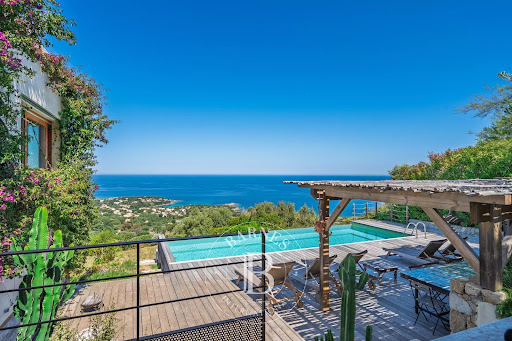

RV2181 - Corbara Located in Corbara, a heavenly setting ideally nestled between the sea and the mountains. This villa with panoramic sea views offers approximately 1,722 sq ft of living space, featuring a bright living area with lounge and kitchen opening onto a large terrace. The property also includes 4 bedrooms, each with its own private shower room. The villa is set on landscaped grounds of approximately 21,797 sq ft, with a swimming pool, pétanque court, and carport. In the heart of the Balagne region, Corbara boasts unspoiled natural surroundings, just a short distance from some of the area’s most beautiful beaches and from Calvi-Sainte-Catherine International Airport. Agency fees are payable by the seller.
…By Barnes Corse


Spéracèdes, nestled in the heart of the village in a peaceful setting, this house of approximately 173 sq.m enjoys superb panoramic views of the sea, hills, the village bell tower and the hilltop village of Cabris. On the ground floor, it offers a kitchen, a dining room and a large, bright living room with a fireplace, all opening onto a large sun-drenched terrace. A bedroom and a shower room complete this level. Upstairs, there are two superb bedrooms, each with its own shower room and an access onto a roof terrace. A large hallway that could be used as an office completes this level. Built on a plot of approximately 1,286 sq.m, suitable for a swimming pool and embellished with around thirty olive trees. Annex: a garage and a cellar.
…By Spéracèdes Immobilier


This renovated villa offering 220 sqm of living space is in a privileged location 10 minutes west of Aix-en-Provence. Benefiting from a panoramic view, it includes a living/reception room bathed in sunshine, a fully equipped kitchen, a master suite with a shower room, three spacious further bedrooms including two suites enjoying open views, and three bathrooms. Set in a leafy 1762 sqm plot with a salt-filter swimming pool as well as several parking spaces. The interior photos are non-binding as renovation is in process.
…By Daniel Feau Aix & Pays Varois


This prestigious villa in Villefranche-sur-Mer is a haven for lovers of the Côte d'Azur. The ground floor features a bright, spacious living room and adjoining dining room, perfect for meals with family or friends. The kitchen is equipped with all the necessities for gourmets. An additional bedroom, a modern bathroom and a practical storage room complete this floor. A separate WC adds a touch of convenience. On the first floor, you'll discover two elegant bedrooms, each with its own character and magnificent views of the surrounding area. Two sumptuous bathrooms offer optimum comfort, while natural light floods every corner of the floor. A separate studio apartment completes the 1st floor. The exterior of the property is equally impressive with a vast lush garden surrounding the property, creating an oasis of tranquillity, a terrace to enjoy sunny days, a refreshing swimming pool and breathtaking panoramic views of the Mediterranean Sea and the Côte d'Azur. This villa is a real jewel on the Côte d'Azur, combining refined design with a privileged location. Don't miss this unique opportunity to own a prestigious residence on this exclusive estate. For more information or to arrange a viewing, please contact us. Live the Mediterranean dream in an oasis of calm and beauty.
…By Michaël Zingraf Christie's International Real Estates Saint-jean Cap Ferrat


Character property with outbuildings on a wooded parkIn a peaceful environment, this charming renovated farmhouse stands on a closed and wooded plot of 1,922 m². It offers an entrance, a living room with an insert fireplace, a fitted kitchen, an office, and a ground-floor bedroom with a bathroom and WC. Upstairs, three bedrooms and a bathroom with WC complete the ensemble. An approximately 60 m² guest house to renovate, a barn, a stable, and a pantry enrich this property with great potential. An authentic place, ideal for nature and space lovers.Fees included of 3.88% VAT at the expense of the buyer. Price excluding fees €258,000. Energy class D, Climate class D Estimated amount of annual energy expenses for standard use: between €2,030.00 and €2,800.00 over the years 2021, 2022, and 2023 (subscriptions included). Information about the risks to which this property is exposed is available on the Géorisques website: georisques.gouv.fr.This description has been automatically translated from French.
…By Agence Du Chateau
'%20stroke='%23DDAA3A'%20stroke-width='1.909'%20stroke-linecap='square'%20stroke-linejoin='bevel'/%3e%3c/svg%3e)
Receive by email any new listing that may match your search criteria
Your criteria :
By validating this form, you accept the general conditions of use of Le Figaro Properties.
These agencies offer a selection of luxury properties vente in France. Feel free to contact them for personalized assistance.
As part of your search for a luxury property, discover our catalog of 19,257 luxury houses with a terrace in France, offered from $205,631. Outdoor meals or summer receptions, the terrace extends the house outdoors. Property listings are found in particular in Provence-Alpes-Côte d'Azur, Aquitaine and Rhône-Alpes. The houses listed in our listings offer attractive living areas measuring between 1 m² and 52,000 m².
Set down your suitcases without waiting: our catalog brings together 1,908 furnished luxury houses in France, with a starting price of $229,756. From the living room to the bedrooms, each residence is tastefully furnished and ready to live in. Property listings are particularly numerous in the following areas: Provence-Alpes-Côte d'Azur, Rhône-Alpes and Aquitaine. The average price of this furnished stock stands at $10,872 per square meter. Living areas reach 40,000 m² for our largest properties.
As part of your search for properties of excellence, browse our privileged selection of 19,225 luxury houses with a pool in France available from $229,756. These exceptional residences enjoy prime locations, particularly in Provence-Alpes-Côte d'Azur, Aquitaine or Languedoc-Roussillon. Whether the architecture of these houses incorporates a covered indoor aquatic space or a vast outdoor pool, each property flourishes amid remarkably landscaped grounds measuring between 5,000 m² and 13,300 ha.
Your receptions deserve a setting to match: discover 432 luxury houses with a reception room in France, starting at $278,487. These residences combine family privacy with spaces dedicated to major events. Family gatherings, business dinners or parties with friends naturally find their place there. The fashionable addresses are located in Provence-Alpes-Côte d'Azur, Aquitaine and Languedoc-Roussillon. Depending on the property, the property area extends up to 230 ha.
The beach as an extension of the garden: this is the spirit of 3,606 luxury houses by the sea in France, for sale from $364,163. Your life there will be organized to the rhythm of the coastline, between sea bathing and walks. Provence-Alpes-Côte d'Azur, Corse and Aquitaine enliven the local market. In these residences, the minimum recorded living area is 39 m².
The sea horizon as a guiding thread: explore the 3,989 luxury houses with sea views in France, with prices starting at $290,595. The sea accompanies your days, from sunrise to the last light. A daily privilege that few addresses can claim. Browse the listings in Provence-Alpes-Côte d'Azur, Corse or Bretagne first. In terms of dimensions, the living areas start at a minimum of 39 m² and the grounds at 1 ha.
Anchor your daily life at the water's very edge: this is what the 280 luxury houses right on the water in France allow, for sale from $382,926. These rare residences provide direct access to the shore, with no obstacle to cross. In the geographical area, Provence-Alpes-Côte d'Azur, Bretagne and Corse account for a significant share of our listing catalog. The average price per square meter stands at $16,334. Expect living areas measuring between 42 m² and 126,804 m². In our selection of listings, a property can have up to 32 rooms.
Within our catalog, 149 luxury houses listed as historic monuments in France are for sale, starting at $264,219. These residences perpetuate exceptional architectural expertise. Acquiring one means continuing a story that began long before you. Your search can focus on Provence-Alpes-Côte d'Azur, Centre and DOM-TOM. The properties recorded in our listings have between 1 and 18 bedrooms. The grounds in our collection measure 2.5 ha. This can rise to 112 ha depending on the property.