Get early access to listings that match your criteria
Never miss an opportunity again. Our personalized alerts notify you instantly.

 English$ USD · m²
Life in France is the epitome of luxury living! Dine at your choice of Michelin-Starred restaurants. Drink world-famous wines at the vineyards in Bordeaux. See the Mona Lisa at the Louvre Museum. Sip on rosé on a yacht on the Mediterranean. Shop high-end fashion, or stroll through charming European streets. Check out our real estate in France and live the high-life everyday!


iad France - Maria De Lourdes Charetteur offers you: PLOGOFF - HOUSE - 355M² - Sea view - PARKING - VERY GOOD CONDITIONVirtual visit in 3D on request with signed visit voucher. Stunning full sea view from all rooms. In excellent condition, this house located in Plogoff at Pointe du Raz offers a surface area of 355 m² on a plot of 3,103 m², with a full south exposure that guarantees good light throughout the day. A true single-level living with a master bedroom with shower room is a real plus for this house.Built in 2013, it spreads over 2 levels and offers a careful interior distribution. The entrance leads into a living space composed of a living room and a lounge with a beautiful fireplace, bright thanks to the south orientation. The fitted and equipped kitchen pleasantly completes this set. A mezzanine adds an original architectural touch.The upper floor with a library mezzanine hosts 4 comfortable bedrooms, whose well-sized volumes are suitable for a large family. 1 shower room and 1 independent toilet ensure daily comfort. For the little extra, you have the possibility of running a business with a large parking area of 900 m² with access for people with reduced mobility.In terms of amenities, the house is equipped with electric heating distributed by radiators and a fireplace, and a septic tank. Outside, a terrace benefits from the south exposure, while a garage and a parking space secure the parking spaces. The plot of 3,103 m² offers an unobstructed setting around the house.Contact us to arrange a visit and discover this property in full.Agency fees are to be borne by the buyer. Price including fees: 790,000 euros. Price excluding fees: 760,000 euros. Fees inclusive for the buyer (3.95% of the property's price excluding fees): 30,000 euros. A valid identification document will be required for the visit, in accordance with Article L.561-5 of the Monetary and Financial Code. Information about the risks to which this property is exposed, including the legal obligation for clearing, is available on the Géorisques website: http://www.georisques.gouv.fr. This real estate advertisement has been drafted under the editorial responsibility of Mrs. Maria De Lourdes Charetteur, independent real estate agent (without holding funds), commercial agent of SAS I@D France registered at the RSAC of QUIMPER under number 907572614, holding the real estate canvassing card on behalf of the company I@D France SAS.This description has been automatically translated from French.
…By Iad France


iad France - Lucie Galard offers you: Less than 5 minutes from the CENTER of Langeais, this elegant architect-designed house from the 1980s provides a rare living environment, in the heart of a fully enclosed estate of nearly 3 hectares. Its beautiful volumes, brightness, and unique architecture enchant from the moment you enter. The ground floor features generous reception rooms — a summer lounge, a winter lounge, and a dining room — open to the terraces and nature, as well as a separate kitchen with a back kitchen. The sleeping area includes two bedrooms, an office, and a bathroom (with shower and bathtub). Upstairs, a mezzanine, a third bedroom with a balcony, and a bathroom complete the set. Outside, the property reveals numerous spaces: a heated pool of 10 x 5 m with a heat pump, a games room with shower and toilet, a carport for several vehicles, and outbuildings for storing wood or accommodating animals. A character property offering remarkable potential, in a preserved and confidential environment. A rare place for lovers of space, nature, and architecture. Agency fees are the responsibility of the seller. A valid form of identification will be required during the visit, in accordance with article L.561-5 of the Monetary and Financial Code. Information on the risks to which this property is exposed, including the legal obligation to clear brush, is available on the Géorisques website: http://www.georisques.gouv.fr. This real estate advertisement was drafted under the editorial responsibility of Mrs. Lucie Galard, independent real estate agent (without holding funds), commercial agent of SAS I@D France registered with the Tours RSAC under number 807758339, holder of the real estate canvassing card on behalf of the company I@D France SAS.This description has been automatically translated from French.
…By Iad France


iad France - Angélique Provot offers you: LUISANT Charming house 138 m² Pool Landscaped land of 850 m²In the heart of one of the most sought-after neighborhoods of Luisant, just a few steps from shops, schools, and amenities, and only a 15-minute walk from the city center of Chartres, this elegant character house offers a privileged living environment where the charm of the old perfectly matches the comfort of today.Built on a magnificent closed and landscaped plot of 850 m², this family home develops approximately 151 m² of living space and seduces with its generous volumes, brightness, and quality of its amenities.Upon entering, a welcoming hall with an integrated closet leads you to a superb reception room of approximately 48 m², enhanced by a fireplace and widely open to the outdoors. This warm living space, bathed in light, naturally invites conviviality. An independent, functional, and elegant kitchen harmoniously completes this level.The ground floor features a true master suite, designed as a space of comfort and privacy. It includes a dressing room, a bathroom equipped with a bathtub, a walk-in shower, and offers direct access to a terrace, providing a pleasant extension to the garden.Upstairs, three comfortable bedrooms, one of which is very spacious, offer generous volumes for the whole family. A contemporary shower room with a suspended toilet completes this night space.The exteriors have been carefully designed to fully enjoy each season. The landscaped garden features a pool perfectly integrated into its environment, as well as two terraces, creating different relaxation and reception areas in a calm and green setting.The total basement is a real asset, providing many storage spaces, a workshop, a cellar, and a technical room. An independent garage completes the ensemble.AmenitiesSought-after residential neighborhood.151 m² of living space.Closed and landscaped land of 850 m².Master suite with dressing, bathroom, and terrace access.Reception room of approximately 48 m² with a fireplace.Three bedrooms on the upper floor.Pool.Two terraces.Total basement.Independent garage.Gas heating.Thermal solar panels.Fiber optic.Sewage system.Shops, schools, and transport accessible on foot.City center of Chartres just a 15-minute walk away.Chartres train station 25 minutes on foot.Rare in the area, this house will appeal to buyers looking for a privileged environment, generous spaces, and a sought-after quality of life, just at the gates of Chartres.A private visit will allow you to discover all its charm and fully appreciate its features.Agency fees are to be borne by the seller.Presentation of a valid identity document will be requested upon the visit, in accordance with Article L.561-5 of the Monetary and Financial Code. Information on the risks to which this property is exposed, including the legal obligation for clearing, is available on the Géorisques website: http://www.georisques.gouv.fr.This real estate advertisement has been drafted under the editorial responsibility of Ms. Angélique Provot, independent real estate agent (without holding funds), commercial agent of SAS I@D France registered with the RSAC of Chartres under number 517602686, holder of the real estate solicitation card on behalf of the company I@D France SAS.
…By Iad France


iad France - Kenny Caïus offers you: Exceptional house – 153 m² – Two houses combined – SURESNES (92)Nestled at the back of a courtyard, sheltered from view, this atypical house of 153 m² is a true haven of peace in the heart of Suresnes, just a stone's throw from Mont-Valérien, its parks, and schools.Its uniqueness adds to its value: the property combines two houses organized around a souplex, a courtyard, and a terrace, offering beautiful bright spaces and remarkable flexibility of use.The spaces: The pavilion consists of approximately 6 rooms, including 4 bedrooms, and stands out for its design focused on comfort and versatility: 2 separate equipped kitchens, 2 bathrooms + independent WC, numerous closets and storage spaces, several reading and resting corners.The souplex offers 2 large spaces that can be arranged as bedrooms, a gym, or spaces for teleworking or a high-end co-living project.A unique and modular configuration: The property has 2 independent entrances, complemented by a 3rd entrance via a hallway connecting the two houses. With everything being doubled (bathrooms, water heaters, access…), it is entirely possible to re-divide the two lots according to your project.This rare modularity opens up a wide range of possibilities: Large family close to nurseries, schools, universities, and parks; Mixed use: live in one house and run a freelance business in the other; Mixed use: occupy one house and rent the second (traditional or seasonal rental); Classic co-living: up to 8 easily adaptable bedrooms, yielding a rental potential of approximately €4,800/month; Seasonal rental / Airbnb: €6,000 to €8,000/month of potential income; Luxurious co-living; Traditional rental: €3,100 to €3,800/month of potential income; A particularly attractive investment; ☀️ Equipped with photovoltaic solar panels.This description has been automatically translated from French.
…By Iad France


iad France - Olivia Marquès offers you: HOUSE - ESTAQUE - MARSEILLE - SEA VIEW - 194m2 - SWIMMING POOL - TERRACE 4 BEDROOMS - INDEPENDENT STUDIO - GARAGE 100m2 (5 vehicles)\n\nIn absolute calm, this house is designed with noble materials and benefiting from high-end services, it consists of a vast living room of 60 m² with open kitchen and pantry, 4 bedrooms including a superb master suite with dressing room and bathroom.\n\nThe house also has an independent studio, an immense garage, a cellar, and a patio.\n\nOutside, the pool, relaxation areas, and various terraces allow you to fully enjoy the unobstructed view of the sea.\n\nJust a 5-minute drive from the beaches, schools, and the village, with quick access to the highway, this property perfectly combines comfort, space, and quality of life.\n\nPrice: 750,000 €\n\nFor more information, do not hesitate to call me. Olivia Marquès\n\nAgency fees are the seller’s responsibility. A valid ID will be requested at the visit, in accordance with Article L.561-5 of the Monetary and Financial Code. Information on the risks to which this property is exposed, including the legal obligation for clearing, is available on the Géorisques site: http://www.georisques.gouv.fr. This real estate ad has been written under the editorial responsibility of Ms. Olivia Marquès, independent real estate representative (without holding funds), commercial agent of SAS I@D France registered at the RSAC of Marseille under number 880415898, holder of the real estate canvassing card on behalf of I@D France SAS. This description has been automatically translated from French.
…By Iad France


iad France - Géraldine Lachize offers you: SUPER CANNES - Californian villa with panoramic sea view! In the heart of the prestigious Super Cannes estate in the charming town of Vallauris-Golfe Juan on the border of Cannes, this elegant contemporary villa of approximately 280 m² offers an exceptional sea view, in a sought-after residential environment of the Côte d'Azur. Built on a beautiful landscaped plot of about 3,438 m², a large part of which is classified as green space, the property benefits from a true natural setting ensuring tranquility, privacy, and the absence of future constructions nearby. Vast terraces seamlessly extend the living spaces and overlook a superb pool of 12 x 6 meters, inviting you to fully enjoy this unique panorama. Spread over two levels, the villa offers generous volumes and a particularly functional layout. The ground floor features a spacious, bright living area with an open-plan kitchen leading to the terraces and pool area, a master suite with a large dressing room and bathroom, a guest room with an ensuite shower room, a wine cellar, an independent WC, and an additional space that can be converted into an office, private gym, wellness area, or workshop. Upstairs, a second living room with a fireplace and open kitchen opens onto a spacious terrace which also offers a magnificent panoramic sea view. Three bedrooms, each with their own shower room, along with an independent WC complete this level. With its five bedrooms, beautiful reception spaces, and modular configuration, this property is perfectly suited for a large family seeking comfort and intimacy. Its layout also allows for the creation of two independent living spaces, an ideal solution for hosting family and guests or for a multigenerational residential project. Outside, a partially covered parking area can accommodate up to five vehicles within a fully enclosed and secure property. The amenities are on par with this address: underfloor heating, reversible air conditioning, bioclimatic verandas, electric blinds and shutters, motorized gate, security system with video surveillance, and the possibility of extension of about 60 m² (subject to applicable planning permissions). Prime location: In the heart of the Super Cannes estate. About 6 minutes from the beaches of Golfe-Juan. About 12 minutes from La Croisette in Cannes. About 20 minutes from the Old Course Golf in Mandelieu. About 25 minutes from Nice International Airport. A rare property offering a spectacular panorama, generous living spaces, and a privileged setting, co-exclusivity.This description has been automatically translated from French.
…By Iad France

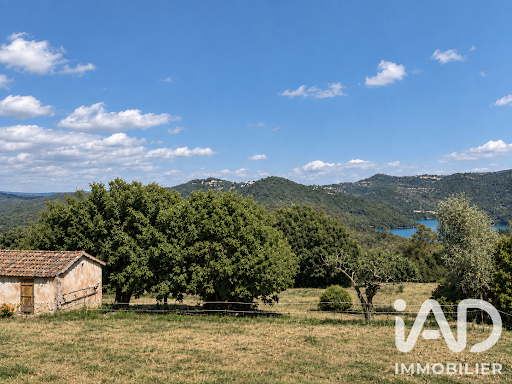


iad France - Katia Labat offers you: MONTAUROUX – CHARACTER ESTATE OF OVER 40 HECTARES – VIEW OF THE LAKE OF SAINT-CASSIENAnd what if TRUE LUXURY was SPACE? Thomas Pesquet would not disagree…On the HILLS OF MONTAUROUX, this ESTATE of over 40 hectares in one block benefits from VARIED ORIENTATIONS, mainly EAST and SOUTH, in the heart of a PRESERVED NATURAL ENVIRONMENT, between WOODED AREAS, ancient AGRICULTURAL TERRACES, OLIVE GROVE, and VIEW of the LAKE OF SAINT-CASSIEN.A FEELING OF ELSEWHERE, without being far from everything: the lake of SAINT-CASSIEN is only 10 MINUTES away, the CROISETTE of CANNES 40 MINUTES, and NICE International AIRPORT 45 MINUTES.Nearly half of the property is WOODED, including trees over 150 years old, while about 8 HECTARES with a GENTLER TOPOGRAPHY could be suitable for various agricultural uses, such as the development of an OLIVE GROVE, in continuation of the approximately 120 OLIVE TREES ALREADY PRESENT.A WELL complements the RESOURCES of the ESTATE, as well as a HISTORICAL BASIN around which a true RELAXATION SPACE with a SWIMMING POOL could be imagined, amidst beaches and surrounding nature. And to complete the picture, the view of Lake SAINT-CASSIEN gives the estate a very UNIQUE SIGNATURE.In the heart of the property reveals an ANCIENT SHEPHERD'S HUT from the 18th century, developing approximately 607 m² of floor area, of which nearly 280 m² are currently converted into living space. The living area features GENEROUS LIVING SPACES, FOUR comfortably sized BEDROOMS ranging from 12 to 17 m², as well as THREE BATHROOMS. The BUILDING has preserved markers of its history, with STONE WALLS, BEAMS, and BEAUTIFUL VOLUMES. The STONE also hides beneath the FAÇADE COATING, revealing the possibility of RESTORING ITS ORIGINAL CHARACTER.And the POSSIBILITIES do not stop at already inhabited spaces. On the ground floor alone, over 105 m², currently divided between CELLAR, STORAGE SPACES, SHED, and WORKSHOP, already offer GREAT PROSPECTS FOR DEVELOPMENT. On the first floor, a SPECTACULAR CATHEDRAL ROOM of about 62 m², then on the second floor an ATTIC of about 140 m², further enrich the possibilities for arrangement. In total, there are more than 300 m² currently UNDEVELOPED AS LIVING SPACE that allow for IMAGINING a NEW DISTRIBUTION: ADDITIONAL SUITES, SPACIOUS LIVING ROOM, INDEPENDENT SPACES to host family and friends, ROOMS DEDICATED TO LEISURE, or simply MORE LIVING SPACE… The property underwent RENOVATIONS in 2000 and 2006, notably including REWIRING, installation of DOUBLE GLAZING, and UNDERFLOOR HEATING, as well as ROOF REPAIRS.A new phase of renovation will reveal all the CHARM OF THE BUILDING and BRING TO LIFE its MANY YET UNEXPLOITED VOLUMES.This is undoubtedly where the TRUE INTEREST of this property lies: rather than an estate already fully shaped according to the tastes of its previous owners, it offers the FREEDOM TO CREATE A PLACE THAT REFLECTS YOU, while PRESERVING its SOUL and AUTHENTICITY while bringing it the COMFORT and BENEFITS of today.PRIMARY or SECONDARY RESIDENCE, large FAMILY HOUSE, project around the OLIVE TREE, or simply a desire to PRESERVE a vast NATURAL ESTATE: here, nothing imposes a single way of experiencing the places.PASSED down over the years, this PROPERTY already HAS ITS STONES, ITS LANDS, and ITS HISTORY. It is up to its future owner to imagine the next steps: TO LIVE, RENOVATE, CULTIVATE, TRANSMIT... With over 40 hectares and 600 m² of built area, the FIELD OF POSSIBILITIES is suitable for the PLAYING FIELD.My name is Katia, I am INDEPENDENT, and very AVAILABLE. Another ADVANTAGE for you is that my mobile number is displayed on your screen, so take advantage of it! CONTACT ME and let's talk about your PROJECT.Agency fees are payable by the seller. A valid identification document will be requested at the visit, in accordance with Article L.561-5 of the Monetary and Financial Code. Information on the risks to which this property is exposed, including the legal obligation of clearing, is available on the Géorisques site: http://www.georisques.gouv.fr. This real estate advertisement has been drafted under the editorial responsibility of Ms. Katia Labat, independent real estate agent (without holding funds), commercial agent of SAS I@D France registered with the RSAC of Antibes under number 532103868, holder of the real estate canvassing card on behalf of the company I@D France SAS.This description has been automatically translated from French.
…By Iad France


In the heart of Périgord, in a valley crossed by the Crempse, this former mill has been completely restored in respect of its original architecture. Exposed stone walls, old beams, terracotta tiles, fireplaces: the character is intact, and the comfort is that of today.This description has been automatically translated from French.
…Private owner


Nestled in a peaceful and privileged setting, close to the village of Opio and its amenities, this elegant villa of approximately 323 m² is set on landscaped grounds of 2,034 m². It immediately impresses with its remarkable volumes, abundant natural light, and open views extending towards the sea. The heart of the home is an exceptional reception area of approximately 150 m², ideal for entertaining. The garden level also includes an independent bedroom. Upstairs, there are four further bedrooms, including a principal suite with a glimpse of the sea and access to a large terrace, perfect for enjoying the Mediterranean lifestyle. A practical laundry room completes this level. Designed for outdoor living, the property features a fully equipped summer kitchen and a beautiful wooden terrace, ideal for al fresco dining. The property also includes a charming registered outbuilding of approximately 23 m²: an original stone cottage from the estate, comprising a bedroom, shower room, WC, and kitchenette. It is ideal for guests or as an independent living space. Only minutes from the lively village of Valbonne, this rare property combines authentic charm, generous living spaces, and an exceptional quality of life. Energy class: A – Climate class: A / Estimated annual energy expenditure for standard use: between €1,520 and €2,130 (reference year 2023). Information on the risks to which this property is exposed is available on the website: www.georisques.gouv.fr Property located in an area subject to the legal obligation to clear vegetation. Represented by Caroline Bertignon-Metout, acting in her capacity as authorized service provider, with full powers to enforce these terms. Agency fees payable by vendor - Montant estimé des dépenses annuelles d'énergie pour un usage standard : 1520€ ~ 2130€ - Jessica ZAHOV - Agent commercial - EI - RSAC GRASSE 913421475
…By Barnes Mougins


Nestled on the heights of Mougins, in the highly sought-after Les Colles district, this exceptional estate enjoys a privileged setting combining absolute tranquillity, lush greenery and open views over the surrounding hills, the medieval village of Mougins and the Mediterranean Sea. Set on more than one hectare of south-facing grounds, the property benefits from a remarkable natural environment enhanced by lush Mediterranean vegetation and numerous centuries-old olive trees. From its elevated position, it offers a rare sense of privacy and serenity while remaining close to local amenities and the main attractions of the French Riviera. Offering approximately 600 sqm of living space, the estate comprises three independent buildings: a main stone bastide, a separate guest house and a single-storey caretaker’s house. The main bastide features generous volumes and bright living spaces. It includes elegant reception areas with a double living room opening onto the outdoors, a fully equipped kitchen, and four bedrooms, including one conveniently located on the ground floor. The independent guest house offers three additional bedrooms, providing family and guests with complete privacy and comfort. A caretaker’s house completes the property, allowing for discreet service or dedicated staff accommodation. The landscaped outdoor areas invite residents to fully embrace the Provençal lifestyle, with a swimming pool, a covered garage for two vehicles and numerous additional parking spaces. The gardens, composed of Mediterranean species and remarkable olive trees, create a peaceful and refined atmosphere. Ideally located just minutes from the historic village of Mougins, the property benefits from close proximity to art galleries, artists’ studios and renowned restaurants such as the iconic Moulin de Mougins. Golf enthusiasts will appreciate the nearby prestigious Cannes-Mougins Golf Club and Royal Mougins Golf Club, while families benefit from easy access to international schools, including the renowned Mougins School. The estate also enjoys excellent connectivity, with convenient access to the A8 motorway, Sophia Antipolis technology park and the main routes towards Cannes, Antibes and Nice, while preserving the authentic charm of the Mougins countryside. Offering significant potential for renovation, reconfiguration or extension, this rare property represents a unique opportunity to create a bespoke estate in one of Mougins’ most prestigious locations, where nature, heritage and the refined Riviera lifestyle come together. Additional information: The property is located in an area subject to mandatory brush clearing regulations. Information on potential risks affecting this property is available on the website: www.georisques.gouv.fr To access a selection of comparable off-market properties, please do not hesitate to contact Barnes Mougins at +33 4 22 78 07 10. Catherine Mendelson Consultant – Agent commercial E.I 511 854 705 Agency fees payable by vendor - Montant estimé des dépenses annuelles d'énergie pour un usage standard, établi à partir des prix de l'énergie de l'année 2021 : 9390€ ~ 12720€ - Catherine MENDELSON - Agent commercial - EI - RSAC 511 854 705
…By Barnes Mougins


Just a few minutes from the village and the main roads, this single-storey villa of approximately 160 sq m offers a pleasant, functional and comfortable living environment, perfectly suited to family life. The property comprises a beautiful living area with an open-plan kitchen, three bedrooms, each with its own shower room or bathroom, a laundry room and a guest toilet. A large basement completes the interior spaces, offering numerous possibilities for storage or conversion, whether as a gym, leisure area, wine cellar or workshop. Outside, the villa benefits from a carport, a traditional swimming pool and a landscaped garden set on approximately 1,404 sq m of land. The garden provides a green and peaceful setting, ideal for enjoying sunny days and entertaining family and friends outdoors. Its location is a real asset, just a few minutes' walk from the old village of Mougins, renowned for its picturesque cobbled streets, shaded squares, fine dining restaurants and art galleries. The area is served by several bus routes, with a stop in the immediate vicinity providing access to Cannes and Grasse. Food lovers will also appreciate the proximity of Le Moulin de Mougins, an iconic address housed in a former 16th-century mill. Golf enthusiasts will benefit from the proximity of Cannes-Mougins Golf Country Club and Royal Mougins Golf Resort, both just a few minutes away by car. A sought-after location offering the best of Mougins while remaining close to amenities and the main attractions of the French Riviera. Information on the risks to which this property is exposed is available on the Geohazards website : www.georisques.gouv.fr Nathalie BUBICIC Consultant – Commercial Agent E.I. RSAC : 443 574 678 To access a selection of comparable off-market properties, please do not hesitate to contact Barnes Mougins at +33 4 22 78 07 10. Agency fees payable by vendor - Montant estimé des dépenses annuelles d'énergie pour un usage standard, établi à partir des prix de l'énergie de l'année 2021 : 1580€ ~ 2190€
…By Barnes Mougins


Located in one of the most sought-after estates in Mougins, this fully renovated villa offers open views over the greenery, close to the Cannes/Mougins Golf Course. Approximately 380 sqm, it features a spacious living room, an open-plan kitchen with dining area, and 4 en-suite bedrooms including a master suite with dressing room, office, and double bathroom. Set on a 1,500 sqm plot with a heated swimming pool, putting green, and fully equipped pool house with summer kitchen. Gym, garage for 2 cars, and an independent apartment complete the property. Agency fees payable by vendor - Montant estimé des dépenses annuelles d'énergie pour un usage standard, établi à partir des prix de l'énergie de l'année 2026 : 2040€ ~ 2770€
…By Barnes Mougins


Located within a sought-after gated and landscaped residential estate in the Saint-Martin area, this elegant Provençal-style villa of approximately 500 sqm enjoys a peaceful and verdant setting, close to shops, golf courses, and international schools. The double-height entrance opens onto generous living spaces comprising a double reception room with fireplace, a dining area, and a fully equipped kitchen. The sleeping quarters offer four en-suite bedrooms, each with its own bathroom or shower room. The 300 sqm lower level includes a games room, wine cellar, office, and a garage accommodating up to four vehicles. Outside, the beautifully landscaped garden, featuring a pond, benefits from excellent sun exposure and provides a tranquil living environment surrounded by lush greenery. The estate enjoys a privileged location, just minutes from the charming villages of La Roquette-sur-Siagne and Mouans-Sartoux. Everyday amenities are within easy reach thanks to the nearby Saint-Martin retail area, offering shops, restaurants, a pharmacy, and a cinema. Families will appreciate the proximity of Saint-Martin nursery and primary schools, as well as La Chênaie secondary school and its nearby sports facilities. Nature and outdoor enthusiasts will enjoy the Valmasque health trail and the prestigious Royal Mougins Golf Resort, one of the Riviera’s most renowned golf courses. This highly desirable residential area, characterised by large wooded plots offering privacy and tranquillity, perfectly embodies the Mougins lifestyle, combining preserved nature, serenity, and convenient access to local amenities. Property subject to the co-ownership system. No pending proceedings. Number of units: 54. Average annual charges: € 700 per year. Energy class : A - Climat class : A / estimated annual costs for standard use : between €1,800 € and €2,500 (ref year 2021). Information on the risks to which this property is exposed is available on the Geohazards website : www.georisques.gouv.fr Property located in an area subject to compulsory brush clearance. Nathalie BUBICIC Consultante – Agent commerciale E.I RSAC : 443 574 678 To access a selection of comparable off-market properties, please do not hesitate to contact Barnes Mougins at +33 4 22 78 07 10. Agency fees payable by vendor - Montant moyen de la quote-part de charges courantes 700 €/yearly - Montant estimé des dépenses annuelles d'énergie pour un usage standard, établi à partir des prix de l'énergie de l'année 2021 : 1800€ ~ 2500€ - Les informations sur les risques auxquels ce bien est exposé sont disponibles sur le site Géorisques : www.georisques.gouv.fr
…By Barnes Mougins


Located in a peaceful and leafy residential area of La Roquette-sur-Siagne, this approximately 115 sqm Provençal-style house enjoys a tranquil setting and open views. On the ground floor, the property comprises an entrance hall, a living room with fireplace opening onto a veranda, a separate kitchen, a bedroom with fitted wardrobe, a bathroom and separate toilets. Upstairs, two bedrooms and a shower room with toilet complete the sleeping area. Outside, the terraced garden features several terraces and a swimming pool area, providing a pleasant setting for enjoying the warmer months. A double garage completes the property. The different levels of the garden offer the possibility of creating separate areas for relaxing, dining outdoors or entertaining, while enjoying the peaceful surroundings. The house is in good overall condition and benefits from a convenient location close to local amenities and the village centre. The area is served by the Sillages bus network, including routes 662 connecting Grasse and Cannes and 665 towards Sophia Antipolis and Mouans-Sartoux. The Ranguin and Mouans-Sartoux TER railway stations are also just a few kilometres away. The heart of the village, with its local shops, market and restaurants, is quickly accessible, as are the hiking trails along the Siagne Canal. Mougins, its golf courses and old village, as well as Cannes and the Croisette, are all easily reached by car. The location offers the perfect balance between a peaceful residential setting and easy access to the Riviera’s main attractions, business centres and beaches. Information on the risks to which this property is exposed is available on the Geohazards website : www.georisques.gouv.fr Property located in an area subject to compulsory brush clearance. Nathalie BUBICIC Consultant – Commercial Agent E.I RSAC : 443 574 678 We hold an extensive selection of off-market properties that are not listed online. To access these confidential opportunities, please don't hesitate to contact our consultants at your BARNES Mougins agency. Agency fees payable by vendor - Montant estimé des dépenses annuelles d'énergie pour un usage standard, établi à partir des prix de l'énergie de l'année 2026 : 2120€ ~ 2880€ - Les informations sur les risques auxquels ce bien est exposé sont disponibles sur le site Géorisques : www.georisques.gouv.fr
…By Barnes Mougins


Discover this magnificent property located in one of the most sought-after and confidential areas of Mougins, offering a privileged setting, absolute tranquility, and outstanding value-enhancement potential. Built on a south-facing plot of approximately 1 hectare, it enjoys an exceptional natural environment, surrounded by lush Mediterranean vegetation and century-old trees. The estate comprises a main bastide, an independent guest house, and a caretaker’s house, offering around 600 sqm of living space. The entire property provides an ideal foundation for a high-end renovation project, allowing volumes, features, and layouts to be reimagined to create a fully bespoke, exceptional residence. The main bastide features generous, light-filled reception rooms as well as several comfortable suites, including one on the ground floor. The guest house offers complete privacy for family and guests, while the caretaker’s house ensures discreet service and enhanced security. Outdoors, the property boasts a swimming pool set within beautifully maintained Mediterranean gardens, a closed garage, and ample parking spaces. Thanks to its elevated position and its potential for extension or redevelopment, this rare property represents a unique opportunity for a prestigious renovation and value-enhancement project, further enhanced by breathtaking panoramic views over the old village of Mougins and the Mediterranean Sea.
…By Sophie Peirano Real Estate


Discover this beautiful house located opposite the floral city, near Parc Montsouris. With a living area of 141 m2, the house offers 5 rooms including on the ground floor a living space of 60 m2 consisting of a living room, a dining room with a retractable glass roof, and an open and equipped kitchen; a first floor consisting of two bedrooms, an office, a shower room, separate toilets, and a laundry room; a second floor consisting of a master suite of 30 m2 that can be divided into two bedrooms and its shower room & toilet. The house also has a healthy and finished basement of 17 m2. The main advantages: House in excellent condition, completely renovated in 2026 (new roof, facade renovation) Reversible air conditioning on all levels Renovated fireplace with insert in 2026 Ceiling height Beautiful brightness Individual house (no co-ownership charges) Sought-after neighborhood (quiet and green) Proximity to transport (buses 21 and 67 in 5 minutes; RER A and circular tramway in 10 minutes; Lines 6, 7, and 14 in 15 minutes) and amenities Possibility of parking rental (105 €/month)This description has been automatically translated from French.
…Private owner


The advertiser did not provide an english description for this listing.
…By Activ Patrimonia


To discover, this pleasant traditional house in R+1, perfectly maintained, located in a sought-after residential area, immediately close to shops, schools and amenities.From the entrance, you will be charmed by its beautiful brightness and volumes. The ground floor offers a spacious living room of approximately 53 m² comprising a living room, dining room and open kitchen, ideal for sharing moments with family or friends.An adjacent pantry completes this space and provides true everyday storage comfort.Upstairs, the sleeping area consists of three comfortable bedrooms, a bathroom, and a shower room, making it particularly functional for a family.The house has an excellent level of maintenance and requires no work. You can move in immediately and fully enjoy its features.In terms of comfort: air conditioning in the living room and on the first floor, central heating powered by town gas, quality double glazing, manual roller shutters and an electric shutter on the patio door, VMC, fiber optic, and electrical installation in excellent condition.The roof is in perfect condition, the facades are particularly well-kept, and the garage is insulated. The construction also benefits from a double cornice.Energy performance: DPE C.Property tax: 1,200 euros.A well-maintained, comfortable, and easy-to-live-in property, ideal for a family seeking a house without work in a pleasant and practical area for everyday life.A visit is essential!“Information about the risks to which this property is exposed is available on the Géorisques website: www.georisques.gouv.fr”This description has been automatically translated from French.
…By Artemis Immobilier


Price reduction for this superb exclusive opportunity located in the sought-after Groules area of Antibes, in a dominant position within a gated estate. This villa of approximately 215 sqm offers a privileged lifestyle set on a beautiful plot of around 1,550 sqm. The south-facing house is primarily appealing due to its superb living area, consisting of a very large living room and dining room, offering generous volumes and beautiful brightness. This reception space opens directly onto the terraces and the pool area, creating a pleasant continuity between the interior and exterior. The spacious independent fully equipped kitchen also benefits from direct access to the terrace and the pool, ideal for fully enjoying the outdoors. The villa offers a total of five bedrooms, harmoniously distributed throughout the house, allowing for comfortable accommodation for family and guests. Built with quality materials, it is a true masonry house, known for its solidity and generous volumes. Nevertheless, the property requires updating, offering beautiful personalization potential. Outside, the garden of about 1,500 sqm features a mirror pool, a pool house, and wide terraces conducive to relaxation. Amenities also include a large garage with basement, an electric gate, and an automatic watering system, all within a secure estate. A rare property in this sought-after area of Antibes, offering space, comfort, and a privileged residential environment.This description has been automatically translated from French.
…By 3g Immo Prestige


Generous, light-filled living spaces open seamlessly onto the outdoors and a beautifully landscaped garden planted with a variety of trees and flowering species. The ground floor features a spacious and welcoming living room with a wood-burning stove, a conservatory, a kitchen with dining area, as well as a large bedroom and a shower room, offering the comfort of single-level living. Upstairs, several bedrooms, a large home office and an open-plan space enjoy a peaceful and relaxing atmosphere, particularly well suited to remote working with the sea nearby. The property also benefits from a garage, workshop, utility room and ample storage space. Today, the house successfully combines period charm with more contemporary volumes, creating a fluid and practical layout equally suited to a primary residence or a holiday home. Life here can be enjoyed entirely on foot: strolls along the harbour, days at the beach, restaurants, cafés, water sports and shoreline fishing all form part of everyday life. With its ever-changing coastal light, fresh sea air and warm, welcoming atmosphere, this is a rare opportunity to enjoy an exceptional quality of life on the Brittany coast. (4.00 % fees incl. VAT at the buyer's expense.)
…By Belles Demeures De Bretagne


Immobilier.notaires® and notary office SAS GMH NOTAIRES offer :Apartment for sale - NEUILLY SUR SEINE (92200)- - - - - - - - - - - - - - - - - - - - - -- - - - - - - - - - - - - - - - - - - - - -Visits: By appointment.Contact: 06.87.29.51.33- - - - - - - - - - - - - - - - - - - - - -A notary real estate ad of SAS GMH NOTAIRES - Notaries in Issy-les-Moulineaux - N° SIRET : 43286992300016- - - - - - - - - - - - - - - - - - - - - -Immobilier.notaires® : Value, buy & sell with notaries everywhere in France. 12.000 notaries, experts and negotiators assist you in your real-estate project with confidence.
…By Gmh Notaires


The advertiser did not provide an english description for this listing.
…By Alp Select Immo


Set in a beautiful rural landscape of rolling hills, woodland and pasture this old stone Farmhouse stands alone, overlooking the valley and its own small lakes and the river below. The older part of the house (approx..187m2 habitable space) has been renovated over the years retaining much of its original character and the huge 1 bed apartment (approx.. 88m2) was converted on the first floor of the original attached barn, retaining the ground floor for extensive garage and storage space. Every room in this house has spectacular views and the balconies and terraces are perfect for profiting to the max! Situation: The beautiful Charente region, 16270 not far from a village with a bar-restaurant and a bakery; 3 sizeable towns within a 10-20 minute radius; 15 mins from the lakes of the Haute Charente; 35 mins from the city of Angouleme (TGV) and 40 mins from Limoges Airport. Description: Renovated farmhouse in good order approx.187m2, laid out as follows: Ground Floor: tiled throughout, Entrance hall (4m2~) with original oak staircase, open to the modern fully fitted Kitchen, with a lovely stone fireplace and wood burning stove; open-plan living room (43m2~) with exposed beams, wood burner and access to the garden and the balcony; Shower room (6.9m2~ Shower, WC, basin with bespoke oak cabinet, bidet); Large pantry/back kitchen (20m2~) with direct access to the garage. First Floor: Small Landing with staircase to attic; Bed 1 (19.2m2~), parquet floor, 2 fitted wardrobes and a small balcony over-looking the garden; 3 inter-linking bedrooms (12.8, 13.9 & 21m2~), the second with a fitted Dressing Room (5m2~) and the 3rd would make a bathroom (as it is directly over the ground floor shower room); Large office 28m2 with a Sauna this room forms the link between the older part of the house and the apartment: 1st Floor Apartment (approx.88m2), all on one level and tiled throughout. The spacious open-plan, mansard living room (env.64m2) takes full advantage of the oak frames of the old barn and has lovely views across the fields and woodland; the kitchen is fully fitted and equipped; small mezzanine Office up in the rafters; Bedroom (15.4m2~) with built-in wardrobe and picture window over the valley; large Bathroom (8.4m2~ with bath, walk-in shower, basin, bidet, fitted cupboards and plumbing for a washing machine). The living room has patio doors onto a very large, partially covered, Balcony (c40m2) with stunning views and stairs down to the garden and a large ground floor storage space of approx. 42m2. Attached to the house (on the ground-floor of the original barn): Large Garage of approx.65m2 with height for a camping car etc; 30m2~woodstore; 30m2 storeroom and boiler room. Roof reviewed 2022; Double glazing; Wooden Shutters; Heating via Geothermic air heat pump (c2008), Wood-burning stove and a wood burner; Electric water heaters (immersion and instant c2000); non-conforming septic tank; Taxe Fonciere: 618EUR/annum. Energy: D/GHGE: B (May 25). Outbuildings: Lovely old stone building housing a working Bread Oven and several small stables, perfect for garden storage. Land of approx. 8 ¾ Acres (33126m2); private, gated driveway; lovely mature garden with an area for a veg plot; in-ground, covered Swimming Pool with superb views down the valley; fields; small wooded plot and 3 small lakes with a spring; part of the land borders a small river containing trout. J&S IMMO - YOUR LOCAL AGENCY - Alison Laming - Sales Agent - 65, Avenue de la République - 16260 CHASSENEUIL-SUR-BONNIEURE Email [email protected] +33 5 45 68 05 50 OFFICE +33 6 26 94 80 51 MOBILE PRICE INCLUDING AGENCY FEES: EUR395,200 (4.00% agency fees payable by the buyer) - NET SELLER PRICE: EUR380,000 nformation on the risks to which this property is exposed is available on the Géorisques website: www.georisques.gouv.fr
…By J&s Immo


ANNECY SOTHEBY’S INTERNATIONAL REALTY presents, in the village of Bourdeau, within an exclusive contemporary residence, an elegant garden-level apartment offering more than 130 sq.m of living space. Designed with great attention to detail and featuring high-quality finishes throughout, this property opens onto a spacious living area of more than 62 sq.m, extended by a pleasant terrace of over 15 sq.m, creating an ideal setting for enjoying outdoor living. The sleeping quarters comprise a primary suite with a walk-in dressing room, shower room and WC, two generously proportioned bedrooms, a bathroom, a separate WC, and a laundry room. A private storage room of approximately 10 sq.m and a parking space complete this property. ANNECY SOTHEBY’S INTERNATIONAL REALTY, specialist in the sale and rental of exceptional properties in the Annecy area, the Aravis mountains, Aix-les-Bains and the surrounding region.
…By Annecy Sotheby's International Realty


ANNECY SOTHEBY’S INTERNATIONAL REALTY presents, in the charming village of Bourdeau, just moments from Lake Bourget, a magnificent 160 sq.m penthouse apartment within an exclusive contemporary residence. The living area with open-plan kitchen, offering more than 60 sq.m of space, opens onto a generous terrace of over 32 sq.m benefiting from triple east-, west- and north-facing exposure, providing abundant natural light and an exceptional living environment. The main level also features two bedrooms, a study, a shower room, a separate WC, and a laundry room. Upstairs, the primary suite includes a walk-in dressing room, a shower room, a separate WC, and direct access to a second terrace of more than 12 sq.m, enjoying open views over the surrounding greenery. The apartment also benefits from a private storage room of more than 15 sq.m and a parking space. Set within an intimate residence comprising just five homes, built with high-quality materials and showcasing contemporary architecture, this property stands out for its privileged setting and carefully appointed finishes. ANNECY SOTHEBY’S INTERNATIONAL REALTY, specialist in the sale and rental of exceptional properties in the Annecy area, the Aravis mountains, Aix-les-Bains and the surrounding region.
…By Annecy Sotheby's International Realty
'%20stroke='%23DDAA3A'%20stroke-width='1.909'%20stroke-linecap='square'%20stroke-linejoin='bevel'/%3e%3c/svg%3e)
Receive by email any new listing that may match your search criteria
Your criteria :
By validating this form, you accept the general conditions of use of Le Figaro Properties.
These agencies offer a selection of luxury properties vente in France. Feel free to contact them for personalized assistance.
With sunny weather and views of the turquoise Mediterranean Sea, nothing beats life in the South of France. Discover the luxury real estate in France and choose between historical French castles in wine country, lavish villas in Nice, or elegant seaside properties in Saint-Tropez.
If you prefer an action-packed life in a city with rich culture, romantic scenery, and endless things to do, Paris is the place for you! Home to some of the most upscale real estate in France, find your dream Parisian apartment overlooking the Eiffel Tower.